For a first trip, the best things to do in Portland, Oregon come down to a short list: a morning in Washington Park for the free International Rose Test Garden and the Portland Japanese Garden, an hour or two inside Powell’s City of Books, a walk across the Willamette River bridges, and dinner at a food cart pod on the east side. Nearly everything else the city offers, from the trails of Forest Park to the Portland Art Museum’s new Rothko Pavilion, is a matter of fitting Portland to the weather, your budget and where you’re staying.
The picks are for visitors with one to four days, and the caveat that matters most is weather: the best attractions are outdoors, and from November through January Portland averages more than 5 inches of rain a month. So every pick comes with a rain note, and prices, hours and ticket rules were checked on September 23, 2026, against the operators’ and agencies’ own websites.
On this page: At a glance · Top picks · Neighborhoods · Free things · Costs · Rainy days · Seasons · One to three days · At night · With kids · Day trips · Getting around · FAQ
Portland’s best things to do at a glance
Use this table to build a shortlist. Costs are adult prices as of September 2026, and “Allow” means time on site, not travel time.
| What | Where | Cost | Allow | If it rains |
|---|---|---|---|---|
| International Rose Test Garden | Washington Park | Free; parking $2.40 an hour | 45 minutes | Skip it in a downpour |
| Portland Japanese Garden | Washington Park | $22.50; closed Tuesdays | 1.5 to 2 hours | Good in drizzle |
| Oregon Zoo | Washington Park | $26; advance online tickets only | 3 to 4 hours | Mostly outdoors |
| Pittock Mansion | West Hills | $17 for the house; grounds free | 1 hour | The house is indoors |
| Forest Park | Northwest | Free | 1 to 4 hours | Open, but muddy |
| Powell’s City of Books | West End, by the Pearl | Free to browse | 1 to 2 hours | Ideal |
| Lan Su Chinese Garden | Old Town Chinatown | $18 | 1 hour | Covered walkways |
| Portland Saturday Market | Waterfront Park | Free entry; Saturdays only | 1 hour | Bring a hood |
| Waterfront loop | Both riverbanks | Free | 1 to 1.5 hours | Save it for a dry spell |
| Portland Aerial Tram | South Waterfront | $9 round trip; no Sunday service | 30 minutes | Pointless in low cloud |
| OMSI | Central Eastside | $22.50; closed most Mondays | 3 hours | Ideal |
| Portland Art Museum | Downtown | $27.50; free for 17 and under | 2 to 3 hours | Ideal |
| Food cart pods | East side and North Portland | Pay by the dish | 1 hour | Pick a covered pod |
| Multnomah Falls | Columbia River Gorge | Free; timed permits to drive in summer | Half a day with travel | Fuller after rain |
Two scheduling traps: the Japanese Garden is closed on Tuesdays, and the Aerial Tram doesn’t run on Sundays or holidays. The good news is that MAX Red and Blue Line trains run straight from Old Town and downtown to Washington Park, so the gardens and the city center fit into one car-free day.
What should you put at the top of the list?
These eight are the ones worth building a first trip around. Each comes with what it costs, how long to allow and when to skip it.
Washington Park: roses, a Japanese garden and a zoo in one stop
Washington Park covers 410 acres of the West Hills just west of downtown and holds more of Portland’s headline sights than anywhere else: the International Rose Test Garden, the Portland Japanese Garden, Hoyt Arboretum, the Oregon Zoo and the World Forestry Center. You could fill a day here, but most visitors do better choosing two or three.
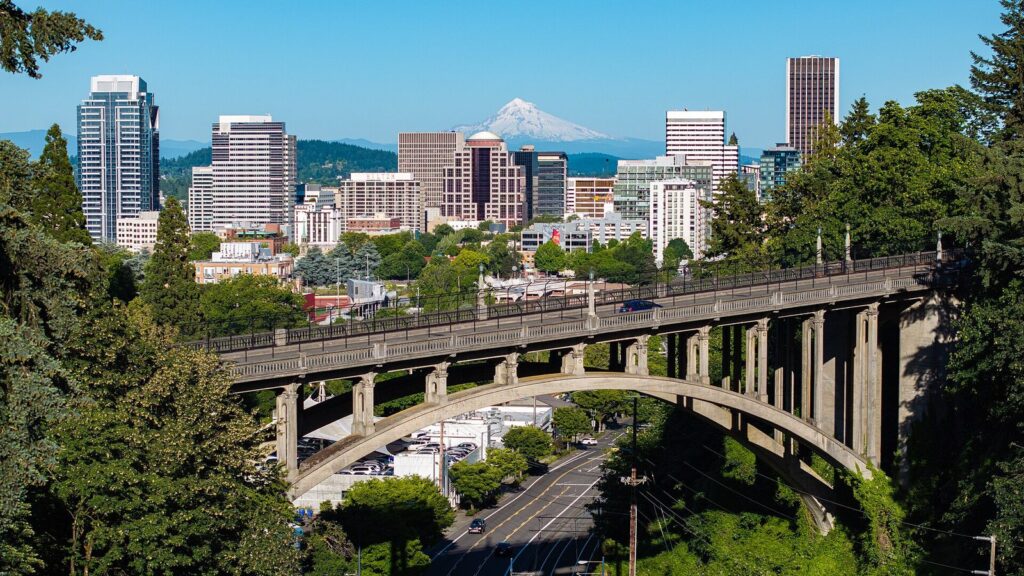
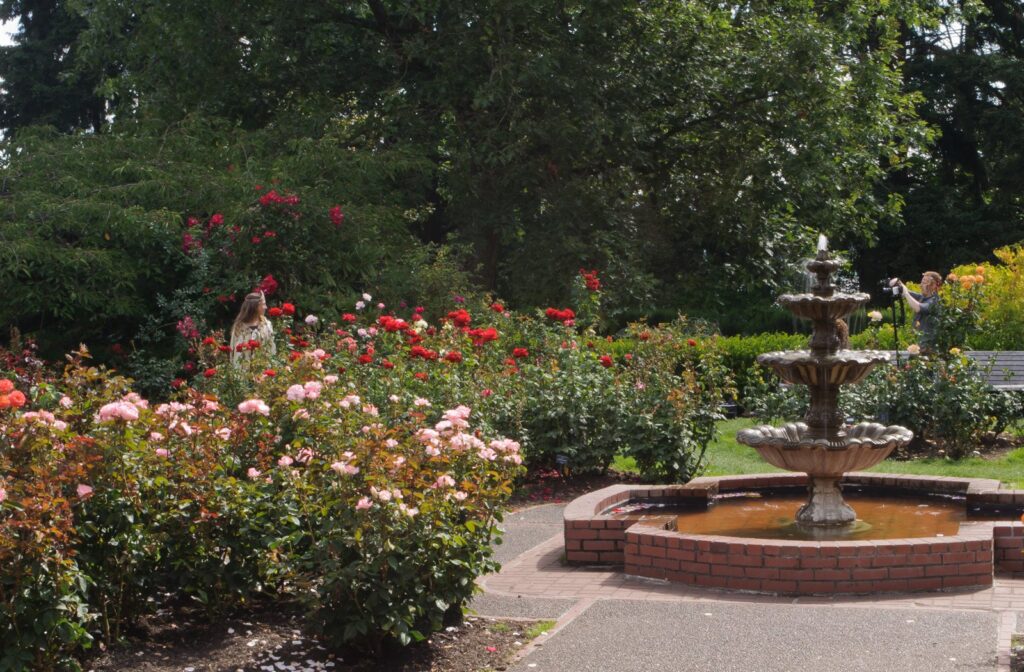
The Rose Test Garden is free, open from 5 a.m. to 10 p.m., and holds more than 10,000 rose bushes of over 610 varieties. Dedicated in 1924, it still works as a test garden for new roses. The bloom runs from late May into October and peaks in June, and from Memorial Day through Labor Day a free tour leaves the Rose Garden Store at 1 p.m. One catch: from May through August the garden stays closed until 10 a.m. every other Wednesday. On a clear day, Mount Hood rises behind the downtown towers from the upper terraces, which is the photo everyone came for.
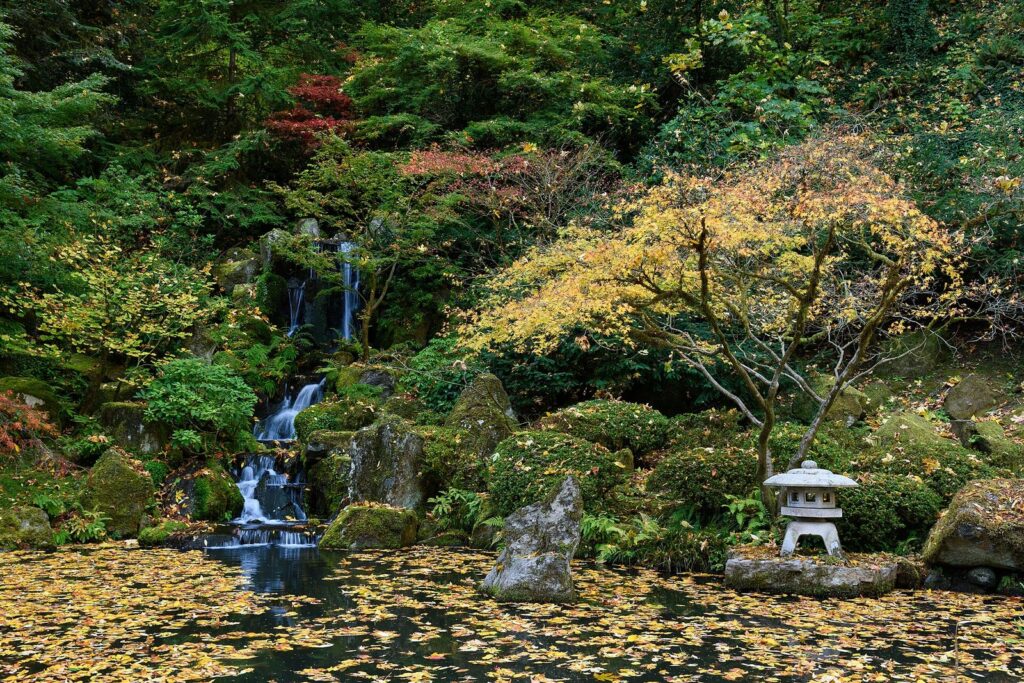
Up the hill, the Portland Japanese Garden ($22.50 for adults) is the paid attraction in the park most worth the money: paths wind past a pond, a waterfall, raked gravel and deep moss, and the city disappears for an hour. When we checked, it was open from 10 a.m. to 5:30 p.m. every day except Tuesday. Book up to 10 days ahead for summer weekends and for October, when the maples turn.
The Oregon Zoo sits beside the MAX station at the south end of the park; adult tickets cost $26 and must be bought online in advance. Hoyt Arboretum, between the zoo and the gardens, is free year-round, with more than 2,300 species of trees and plants along its trails.
Getting there: MAX Red and Blue Line trains reach Washington Park station every 15 minutes. The platform is 260 feet underground, the deepest transit station in North America, and just outside the elevators you can board the park’s free shuttle, which loops to every major attraction on a seasonal schedule. Parking costs $2.40 an hour, up to $9.60 a day, from 9:30 a.m. to 8 p.m., and the lots fill on sunny weekends.
Verdict: if you do only one thing in Portland, make it the Rose Garden and the Japanese Garden together, on a weekday morning.
Powell’s City of Books and the Pearl District
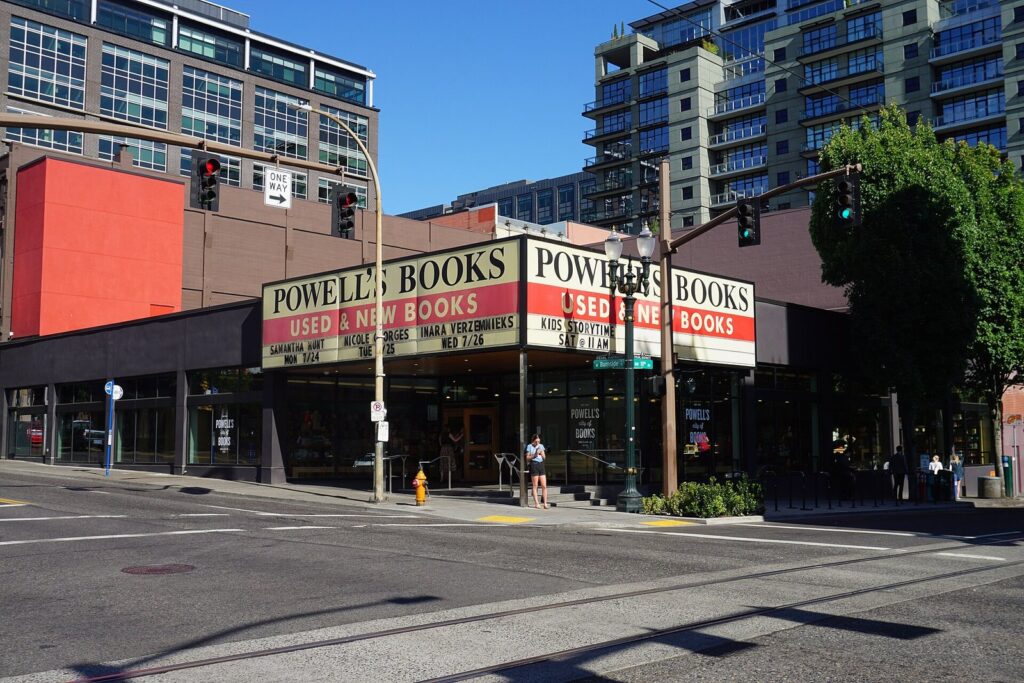
Powell’s City of Books fills a city block at West Burnside Street and 10th Avenue, and it’s open every day from 10 a.m. to 9 p.m. New and used books share the same shelves, and the store is organized into color-coded rooms, so pick up a map as you walk in. The Rare Book Room keeps shorter hours, 10 a.m. to 5 p.m. Browsing costs nothing, which makes Powell’s one of the best rainy-day moves in the city and one of the easiest places to lose two hours.
Walk north from Powell’s and you’re in the Pearl District, a former rail yard and warehouse area that’s now galleries, shops, restaurants and condominium towers. It’s pleasant rather than thrilling on an ordinary afternoon. The better time to go is the first Thursday of the month, when galleries stay open into the evening and the Portland Art Museum, a 15-minute walk south, is free. In summer, the fountain at Jamison Square fills and drains like a tide pool, and small children refuse to leave it.
Lan Su Chinese Garden and Old Town Chinatown
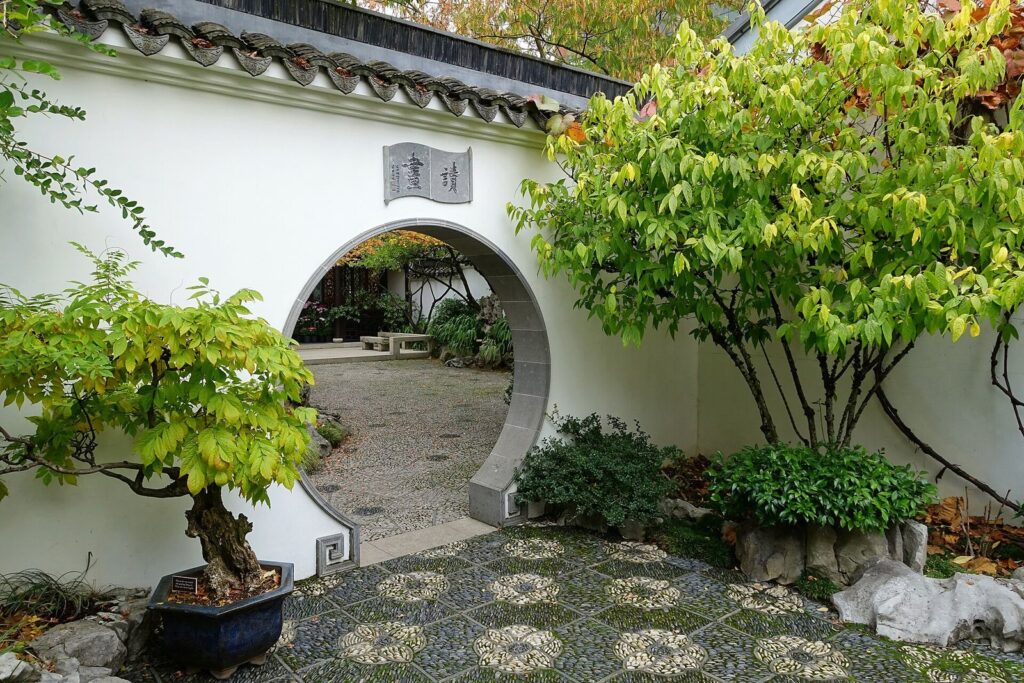
Lan Su takes up one walled block in Old Town Chinatown, and inside the walls the city goes quiet: a lake, bridges, courtyards paved in pebble mosaics, and covered walkways that make it one of the best choices on a wet day. It was built by artisans from Suzhou, Portland’s sister city in China. The garden is open daily from 10 a.m. to 5:30 p.m. (last entry at 5), adult admission is $18, and there’s a free parking lot next to it. The Yun Shui Teahouse inside serves traditional tea, and a pot by the window while rain falls on the lake is about as Portland as an afternoon gets.
Lan Su is about a 15-minute walk from Powell’s, and the Portland Saturday Market is under 10 minutes beyond it, beside the Burnside Bridge. The market’s craft, art and food stalls are free to wander, but in 2026 it runs on Saturdays only, 10 a.m. to 5 p.m., through December 19, whatever older guides say about weekends.
Think twice if gardens aren’t your thing and you have only an hour downtown; spend it at Powell’s and on the river instead.
The waterfront loop across the bridges
The Willamette River splits Portland in two, and the quickest way to understand the city is to walk a loop along both banks. Start in Tom McCall Waterfront Park downtown, walk north to the Steel Bridge and cross on its lower-deck walkway, then come south along the Vera Katz Eastbank Esplanade. The Esplanade runs 1.5 miles from the Steel Bridge to the Hawthorne Bridge and includes a 1,200-foot floating walkway, the longest of its kind in the United States, which rises and falls with the river. Cross back on the Hawthorne Bridge, which opened in 1910 and is the oldest working vertical-lift bridge in the country, and you’ve covered about 3 miles.
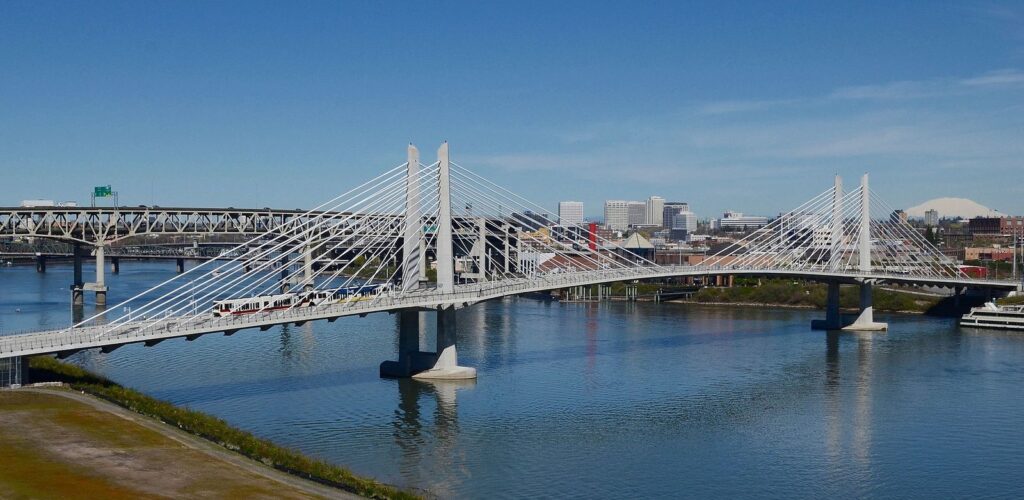
For a 5-mile version, continue down the east bank to OMSI, cross on Tilikum Crossing and return north through South Waterfront. On a Saturday, finish at the market by the Burnside Bridge. After dark, Tilikum’s lights change color with the river’s speed, height and temperature.
Verdict: walk the short loop on your first afternoon. It’s free, and nothing orients you faster.
Food cart pods
Portland’s food carts gather in lots called pods, and a pod is the best cheap meal in the city: several kitchens around shared seating, so everyone in a group gets exactly what they want. Two of the most useful sit a block apart on the east side. Hawthorne Asylum, at 1080 SE Madison Street, has more than 20 carts, a bar and a permanently covered, heated seating area, which matters from October to May. Cartopia, at 1207 SE Hawthorne Boulevard, has been feeding people since 2008 and is the late choice: the pod is open until midnight on Fridays and Saturdays and until 10 or 11 p.m. the rest of the week. In North Portland, Prost Marketplace on Mississippi Avenue sits beside Prost!, a German-style beer bar.
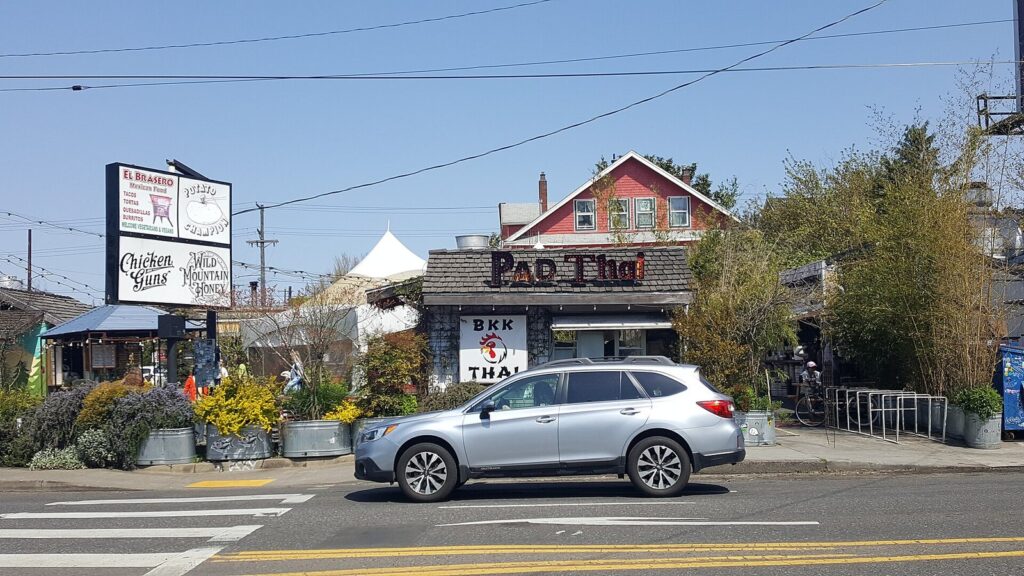
Each cart sets its own hours, so check a cart’s social media before planning a meal around it. Pods turn over faster than restaurants, too: the big downtown pod on SW Alder Street that older articles still mention closed in 2019 to make way for a hotel tower.
An east side neighborhood street
Downtown holds most of the attractions, but the east side is where Portland spends its evenings. Choose one commercial street, ride out and walk it for a couple of hours, eating and browsing as you go.
- SE Hawthorne Boulevard, roughly between 30th and 50th avenues, is the street for vintage clothing, used records, bookshops and cafes. TriMet’s line 14 bus runs its length, and the Hawthorne Asylum and Cartopia pods sit at its west end.
- SE Division Street, from about 20th Avenue east, is the restaurant street. The FX2 Division bus runs frequent service there from downtown.
- NE Alberta Street, the heart of the Alberta Arts District, is lined with murals, galleries and small independent shops.
- N Mississippi Avenue is shorter and denser, with bars, music venues and shops within a few blocks and Prost Marketplace on the same street.
Verdict: if you only have time for one, pick Hawthorne if you like to shop, Division if you like to eat, and Alberta if you’re there for murals and galleries.
Forest Park and Pittock Mansion
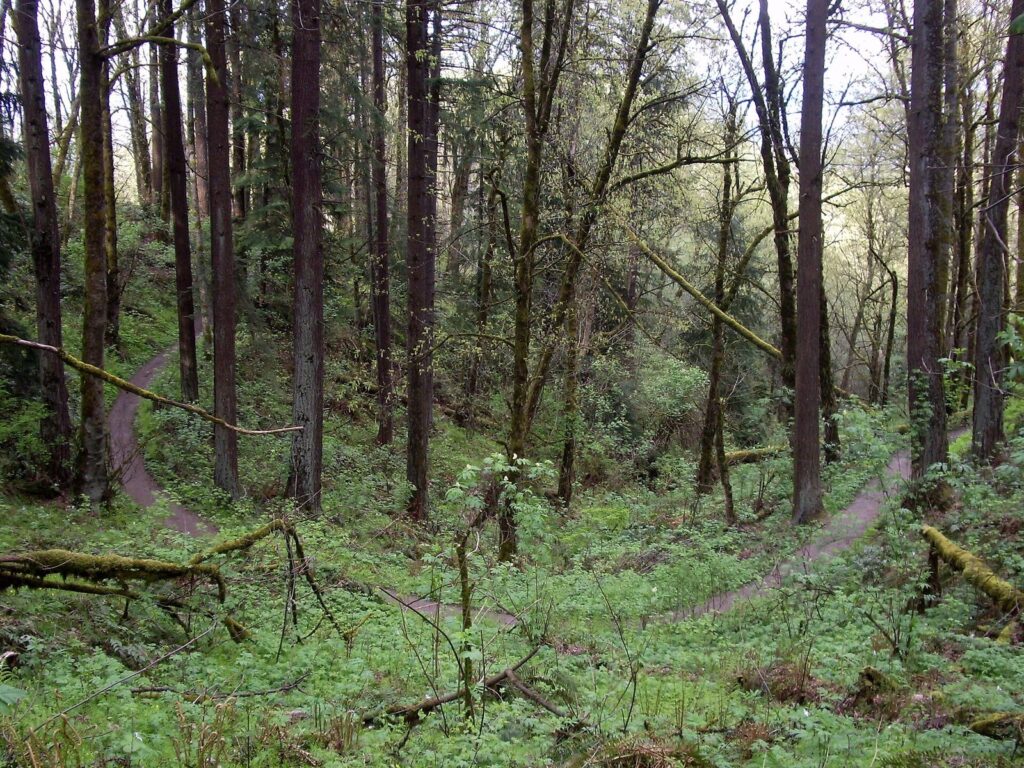
Forest Park covers 5,200 acres on the city’s northwest edge, making it one of the largest urban forests in the country. It has more than 80 miles of trails, open from 5 a.m. to 10 p.m. and free, and its spine is the 30-mile Wildwood Trail. You don’t need to go far to get the feel of it. The classic visitor hike starts at the Lower Macleay trailhead on NW Upshur Street, follows Balch Creek past a moss-covered stone ruin known as the Witch’s Castle, then climbs to Pittock Mansion, roughly 5 miles round trip with a steady uphill.
Pittock Mansion is a French Renaissance-style house finished in 1914 for Henry Pittock, publisher of The Oregonian, and now a house museum ($17 for adults; hours vary by month, and it closes for maintenance days in January). The grounds are a public park open daily until 9 p.m., and the view is the real draw: downtown below you and, on clear days, as many as five Cascade peaks, from Mount Hood and Mount St. Helens to Adams, Rainier and Jefferson. Drivers will find free parking on the gravel turnouts.
Think twice if it has rained hard for days: the trails get slick, and downed trees or slides can close sections, so check the city’s Forest Park page for closures.
The Portland Aerial Tram
The Aerial Tram links South Waterfront with the Oregon Health & Science University campus on Marquam Hill, rising 500 feet over 3,300 feet of cable in a ride of a few minutes. It’s commuter infrastructure, which is exactly why it’s fun. A round trip costs $9 and is good until closing on the day you buy it, children 6 and under ride free with a paying adult, and on a clear day the upper terminal looks across the river to the east side and the Cascades. The tram runs weekdays from 5:30 a.m. to 9:30 p.m. and Saturdays from 9 a.m. to 5 p.m. It doesn’t run on Sundays or holidays. The Portland Streetcar stops by the lower terminal.
Which part of Portland fits your plans?
Portland addresses start with a compass prefix, N, NE, SE, S, SW or NW, which tells you roughly where a place is before you look it up. Burnside Street divides north from south, and the Willamette River divides east from west. For planning a day, it’s easier to think in the clusters below.
| Area | Best for | Getting there from downtown |
|---|---|---|
| Downtown | Portland Art Museum, Pioneer Courthouse Square, Waterfront Park, the Portlandia statue | You’re there; the blocks are short |
| Old Town Chinatown | Lan Su, the Saturday Market, the “Portland Oregon” White Stag sign | Walk, or MAX Red or Blue Line |
| Pearl District | Powell’s, galleries, Jamison Square | Walk, or Portland Streetcar NS Line |
| Northwest 21st and 23rd avenues | Shops, cafes, and the trailheads into Forest Park | Portland Streetcar NS Line |
| Washington Park and the West Hills | Gardens, the zoo, Hoyt Arboretum, Pittock Mansion | MAX Red or Blue Line |
| South Waterfront | The Aerial Tram, riverside paths, Tilikum Crossing | Streetcar NS Line or MAX Orange Line |
| Central Eastside | OMSI, brewery taprooms, the Eastbank Esplanade | Streetcar Loop or MAX Orange Line |
| Southeast: Hawthorne, Division, Belmont | Vintage shops, restaurants, cart pods, Mount Tabor | Line 14 or FX2 bus |
| North and Northeast: Mississippi, Alberta, St. Johns | Small shops, murals, and the Gothic towers of the St. Johns Bridge | TriMet buses; St. Johns is the farthest out |
Downtown is worth an hour on foot even if you’re staying elsewhere. Start at Pioneer Courthouse Square, the brick plaza nicknamed Portland’s living room. A few blocks south, the hammered-copper Portlandia kneels above the Portland Building’s entrance; among hammered-copper statues in the country, only the Statue of Liberty is bigger. By the river, Mill Ends Park, 2 feet across in the median of SW Naito Parkway at Taylor Street, has been listed by Guinness as the world’s smallest park since 1971. It takes 30 seconds to see, which is the joke.
Staying downtown puts the first six rows within a walk or a short ride; the east side is a bus ride away and far livelier after 5 p.m. Parts of downtown and Old Town also have visible homelessness and empty storefronts. That’s no reason to skip them by day; at night, stick to busy streets and use ordinary big-city sense.
What can you do in Portland for free?
A surprising share of the best list costs nothing but transit fare. Here’s what’s free, with the catch for each.
- International Rose Test Garden. Free, from 5 a.m. to 10 p.m. The catch is parking at $2.40 an hour, which you avoid by taking MAX and the park shuttle.
- Forest Park and the Witch’s Castle. The Lower Macleay Trail is the easy way in, and the stone ruin is about a mile up the creek.
- Pittock Mansion’s grounds. The house costs $17, but the lawn and viewpoint are a public park, open daily until 9 p.m.
- The waterfront loop and Tilikum Crossing. Three to five miles of river, bridges and skyline for nothing.
- Powell’s City of Books. Browsing is free. Leaving without a book is the hard part.
- Portland Art Museum on First Thursday. Admission is free from 10 a.m. to 7 p.m. on the first Thursday of each month, and always free for anyone 17 or younger.
- Mount Tabor Park. A park on a volcanic cinder cone in Southeast Portland, with open reservoirs and a summit that draws a crowd at sunset.
- Portland Saturday Market. Free to wander on Saturdays from 10 a.m. to 5 p.m. through December 19, 2026.
- River swimming in summer. Poet’s Beach, by the Marquam Bridge on the west bank, has a roped swim area in summer. There’s no lifeguard, and the city tests the water weekly.
A free day in Portland doesn’t have to feel like a compromise. Try the Rose Garden and Hoyt Arboretum in the morning, Powell’s at midday, the waterfront loop in the afternoon and Mount Tabor for sunset. Your only cost is transit, and TriMet caps that at $5.60 for the day.
What do Portland’s paid attractions cost?
Here’s what the paid headliners charged in September 2026, with the catches that trip people up.
| Attraction | Adult | Children | Hours and catches |
|---|---|---|---|
| Portland Japanese Garden | $22.50 | $16.50 ages 6 to 17; 5 and under free | 10 a.m. to 5:30 p.m.; closed Tuesdays |
| Oregon Zoo | $26 (ages 12 and up) | $21 ages 2 to 11; under 2 free | Advance online tickets only; 9:30 a.m. to 5:30 p.m. through Oct. 31, then shorter hours |
| OMSI | $22.50 (ages 14 and up) | $15.50 ages 3 to 13 | Closed most Mondays; open until 7 p.m. Saturdays; planetarium and submarine tour cost extra |
| Portland Art Museum | $27.50 | Free for 17 and under | 10 a.m. to 5 p.m.; closed Mondays; free on the first Thursday |
| Lan Su Chinese Garden | $18 | $15 ages 6 to 18; 5 and under free | Daily, 10 a.m. to 5:30 p.m. |
| Pittock Mansion | $17 | $14 ages 6 to 18; under 6 free | Hours vary by month; closed some holidays and January maintenance days |
| Portland Aerial Tram | $9 round trip | Free for 6 and under with an adult | Closed Sundays and holidays |
In daily terms, the Japanese Garden, Lan Su and unlimited transit come to $46.10 per adult before food. Seniors pay less almost everywhere: $19.50 at the Japanese Garden, $17 at Lan Su, $15 at Pittock and $24.50 at the art museum.
What is there to do in Portland when it rains?
Portland’s rainy reputation is half right. The airport averages 36.9 inches of precipitation a year under NOAA’s 1991 to 2020 climate normals, which is less than New York City gets. What Portland has instead is frequency: about 157 days a year with measurable precipitation, concentrated from November through March and falling more often as drizzle than downpour. July and August are the opposite, averaging barely half an inch each.
Rain changes the order of your plans more than the plans themselves. Locals mostly walk in it with a hooded jacket, and umbrellas are rarer than you’d expect. When it’s properly wet, these are the moves that work:
- Powell’s City of Books. A full block of indoor browsing, with a cafe.
- OMSI. The science museum on the east bank is built for a long, wet afternoon; the planetarium and the tour of the USS Blueback, a retired Navy submarine, cost extra.
- Portland Art Museum. The Mark Rothko Pavilion, opened on November 20, 2025, now joins the museum’s two buildings, and the Oregon Historical Society’s museum is across the street.
- Lan Su Chinese Garden. Covered walkways and a teahouse make this the rare garden that’s better in the rain.
- The Japanese Garden in light rain. Drizzle deepens the moss and thins the crowds. Save it for a dry day only if the forecast is a real downpour.
- A covered cart pod. Hawthorne Asylum’s heated, covered seating turns a wet night into a good one.
Think twice about the Aerial Tram and the Rose Garden terraces when the clouds sit low; the views are the point of both. In winter storms, check TripCheck, the state’s road-conditions site, before driving to the Gorge or the mountain, because ice and closures happen.
What’s worth doing in each season?
The weather figures are NOAA averages for Portland International Airport.
| Season | Typical weather | Worth planning around |
|---|---|---|
| Spring (March to May) | April highs average 62°F; frequent showers | Cherry blossoms along the waterfront, usually late March into early April; rhododendrons at Crystal Springs; the first roses and the Rose Festival’s opening in late May |
| Summer (June to August) | July and August highs average about 82°F, with about half an inch of rain a month | Roses at their peak in June; the Rose Festival (May 22 to June 28 in 2026); the Waterfront Blues Festival around the Fourth of July; river swimming; daylight past 9 p.m. near the solstice |
| Fall (September to November) | October highs average 64°F; the rain returns in earnest by November | Maples at the Japanese Garden and Hoyt Arboretum, usually best in late October; roses still blooming into October; harvest outings on Sauvie Island |
| Winter (December to February) | December and January highs average in the upper 40s; December is the wettest month at 5.77 inches | Museums, Powell’s and holiday lights; the Christmas Ships parade on the rivers in December; the Portland Winter Light Festival in February |
For most visitors the sweet spot is July through September, dry and warm, though it’s also when Washington Park’s lots fill. Late May and June bring the roses at their best and the Rose Festival, whose format changes from year to year; in 2026 it merged the Grand Floral and Starlight parades into a single Saturday-evening parade on June 6. The ticketed Waterfront Blues Festival ran July 2 to 4 in 2026, free for children 12 and under with an adult. Late September and October bring fall color and weather still good enough for the trails.
Winter is the quiet season, and it’s fine for a trip built around museums, bookstores, food and theater. Snow is rare, averaging about 4 inches a year, but when it does fall, the hilly city tends to stop.
How much fits into one, two or three days?
One day. Washington Park in the morning (the Japanese Garden opens at 10), then MAX back downtown for lunch and Powell’s, a walk to Lan Su, the short waterfront loop and dinner at a pod on Hawthorne. Nothing in it needs a car.
Two days. Add Forest Park and Pittock Mansion on the second morning. In the afternoon, ride the Aerial Tram (not on a Sunday) and walk over Tilikum Crossing to OMSI, or spend it at the art museum instead. Finish with dinner on Division Street and Mount Tabor at sunset.
Three days. Leave the city. The Columbia River Gorge is the closest big payoff and works by bus. If it rains, don’t cancel anything; swap the waterfront loop for a museum and move the gardens to the driest morning.
What is there to do in Portland at night?
Portland’s nightlife runs more to neighborhood bars than nightclubs, but there’s plenty to do after dark.
- Summer evenings outdoors. The Rose Garden stays open until 10 p.m., and Mount Tabor’s summit is a popular place to watch the sun go down.
- The lit-up riverfront. Tilikum Crossing’s lights shift with the river, and the “Portland Oregon” sign on the White Stag Building glows over the west end of the Burnside Bridge. Its leaping stag’s nose turns red for the holidays.
- Late food. Cartopia’s carts serve until midnight on Fridays and Saturdays.
- Beer. Brewery taprooms cluster in the Central Eastside, close enough together to walk between.
- Performances. The Arlene Schnitzer Concert Hall is home to the Oregon Symphony, and the Keller Auditorium hosts touring Broadway shows.
- Games. The Timbers (MLS) and Thorns (NWSL) play at Providence Park, right on the MAX line. At the Moda Center, the Trail Blazers play through the winter, and the Portland Fire, the city’s new WNBA team, played their first season there in 2026.
One practical note: MAX and the buses run late, but not all night, so check the last train back before you settle in.
What works best with kids?
The Oregon Zoo and OMSI are the obvious anchors, and both reward an early start. Beyond those, the Aerial Tram is a hit (children 6 and under ride free), the Portland Art Museum is free for anyone 17 and under, and on hot days the Salmon Street Springs fountain in Waterfront Park and the Jamison Square fountain in the Pearl are free splash parks in all but name. Hoyt Arboretum has paved paths that work with a stroller.
One warning for anyone working from an older list: the Portland Children’s Museum has closed permanently. Build a rainy morning around OMSI instead.
Which day trips are worth leaving the city for?
Distances are approximate drives from downtown, assuming clear roads.
| Destination | Distance | Without a car? | Go for |
|---|---|---|---|
| Multnomah Falls and the Columbia River Gorge | About 30 miles east | Yes: the Columbia Gorge Express bus, seven days a week | The 620-foot falls, Vista House at Crown Point, waterfall hikes |
| Hood River | About 60 miles east | Yes: the same Gorge bus | Orchards, breweries, windsurfing on the Columbia, Mount Hood views |
| Mount Hood and Timberline Lodge | About 60 miles east | Possible by bus from Sandy, far easier by car | Alpine views, summer hiking, winter snow |
| Cannon Beach and Haystack Rock | About 80 miles west | Much easier by car | Tide pools at low tide, long beach walks |
| Willamette Valley wine country | About 25 miles southwest to the Dundee Hills | With a tour or a designated driver | Pinot noir tasting rooms, often by reservation |
| Silver Falls State Park | About 1.5 hours south | No | The Trail of Ten Falls |
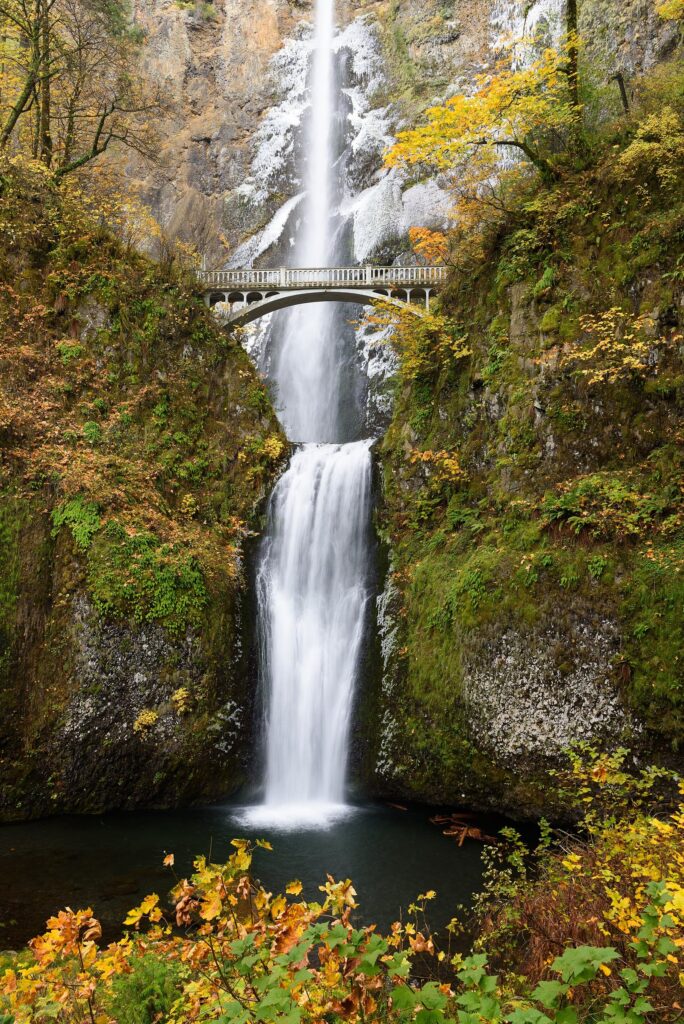
The Gorge is the best first day trip: it’s close, it works without a car, and it’s good in every season. In summer, driving to Multnomah Falls from Interstate 84 requires a timed-entry permit from Recreation.gov; in 2026 that season ran from May 22 through September 7, and the Historic Columbia River Highway approach had its own rules. The Columbia Gorge Express bus runs seven days a week from Gateway Transit Center, with stops at Troutdale, Multnomah Falls, Cascade Locks and Hood River. On very congested days it can skip the Multnomah Falls stop, so keep Cascade Locks as a backup. Check TripCheck for road conditions before any drive to the mountain or the coast.
How do you get around without a car?
You don’t need a car for anything on this page except the longer day trips.
- From the airport. The MAX Red Line runs from PDX to downtown in about 39 minutes, with trains every 15 minutes for most of the day.
- Fares. An adult fare is $2.80 for 2.5 hours on MAX, buses and the Portland Streetcar. Tap a contactless bank card or phone at the reader, and fares cap at $5.60 a day and $100 a month, as long as you use the same card or phone each time. Youth and Honored Citizen fares are $1.40.
- Portland Streetcar. The NS Line runs from Northwest 23rd Avenue through the Pearl District and downtown to South Waterfront, and the Loop lines cross the river on the Broadway Bridge and Tilikum Crossing. A TriMet fare covers it.
- Walking. Downtown blocks are just 200 feet on a side, so even 10 blocks is only about half a mile.
- Bikes. Biketown, the city’s orange bike share, is handy for the waterfront loop and the flat east side.
Two money notes. Oregon has no sales tax, so the price on the tag is the price you pay, which makes Portland a good place to buy the thing you’ve been putting off. And as in most big cities, never leave anything visible in a parked car, especially at trailheads and viewpoints.
Portland FAQ: planning what to do
What is Portland, Oregon best known for?
Roses (it’s the City of Roses), gardens, Powell’s City of Books, food carts, craft beer and coffee, and the bridges over the Willamette. It’s also known for how close wild country sits: Forest Park inside the city limits, and the Columbia River Gorge, Mount Hood and the coast within about two hours.
How many days do you need in Portland?
Two full days cover the highlights: Washington Park, Powell’s, Old Town, the waterfront and an east side neighborhood. A third day adds the Columbia River Gorge, the easiest big-scenery outing from the city, and four or five make room for Mount Hood or the coast, both far easier with a car.
Do you need a car to see Portland?
Not for the city. MAX runs from the airport to downtown and on to Washington Park, the streetcar covers the Pearl and South Waterfront, and fares cap at $5.60 a day. A car helps for Mount Hood, the coast and wine country; the Gorge has a bus that runs seven days a week.
Is the Portland Saturday Market open on Sundays?
Not in 2026. It runs on Saturdays only, from 10 a.m. to 5 p.m., at Tom McCall Waterfront Park beside the Burnside Bridge, and the season lasts through December 19. Guides that call it a weekend market are out of date.
When is the best time to visit Portland?
July through September for dry, warm weather, since July and August each average only about half an inch of rain. Late May and June are best for roses and the Rose Festival, and October for fall color at the Japanese Garden. Winter is wet and quiet, which suits a museum-and-bookstore trip but not a trip for the views.
Sources and verification
Prices, hours, schedules and ticket rules in this guide were checked on September 23, 2026, against the agencies and operators listed below. The guide is compiled from those sources and does not claim first-hand visits. Hours and prices change, so confirm with the operator before you go.
- Portland Parks & Recreation: Washington Park
- Portland Parks & Recreation: International Rose Test Garden
- Explore Washington Park: parking and free shuttle
- Portland Japanese Garden: hours and admission
- Oregon Zoo: hours and tickets
- Pittock Mansion: visit and the grounds
- Portland Parks & Recreation: Forest Park
- Hoyt Arboretum: visit
- Powell’s City of Books
- Lan Su Chinese Garden: visit
- Portland Saturday Market: hours and directions
- Portland Parks & Recreation: Eastbank Esplanade
- Portland Aerial Tram: hours and fare
- OMSI: visitor information
- Portland Art Museum: admission
- Cartopia Food Carts
- Portland Parks & Recreation: Mill Ends Park
- Portland Parks & Recreation: Poet’s Beach
- Crystal Springs Rhododendron Garden: hours and admission
- TriMet: fares and MAX to and from PDX
- Columbia Area Transit: Columbia Gorge Express
- Recreation.gov: Multnomah Falls timed entry
- ODOT TripCheck: road conditions
- Waterfront Blues Festival: festival information
- KGW: Portland Rose Festival 2026 schedule
- Portland Fire (WNBA)
- NOAA NCEI: U.S. climate normals, 1991 to 2020
Portland Tourism Guide is an independent publication, not affiliated with Travel Portland, the City of Portland or any business named here.
Photo credits
- Downtown Portland, the Vista Bridge and Mount Hood: photo by Spicypepper999, Wikimedia Commons (CC0)
- International Rose Test Garden: photo by InSapphoWeTrust from Los Angeles, California, USA, Wikimedia Commons (CC BY-SA 2.0)
- Powell's City of Books: photo by Michael Barera, Wikimedia Commons (CC BY-SA 4.0)
- Lan Su Chinese Garden: photo by Daderot, Wikimedia Commons (CC0)
- Tilikum Crossing: photo by Steve Morgan, Wikimedia Commons (CC BY-SA 4.0)
- Cartopia food cart pod: photo by Another Believer, Wikimedia Commons (CC BY-SA 4.0)
- Wildwood Trail, Forest Park: photo by EncMstr, Wikimedia Commons (CC BY-SA 3.0)
- Heavenly Falls, Portland Japanese Garden: photo by King of Hearts, Wikimedia Commons (CC BY-SA 4.0)
- Multnomah Falls: photo by King of Hearts, Wikimedia Commons (CC BY-SA 4.0)