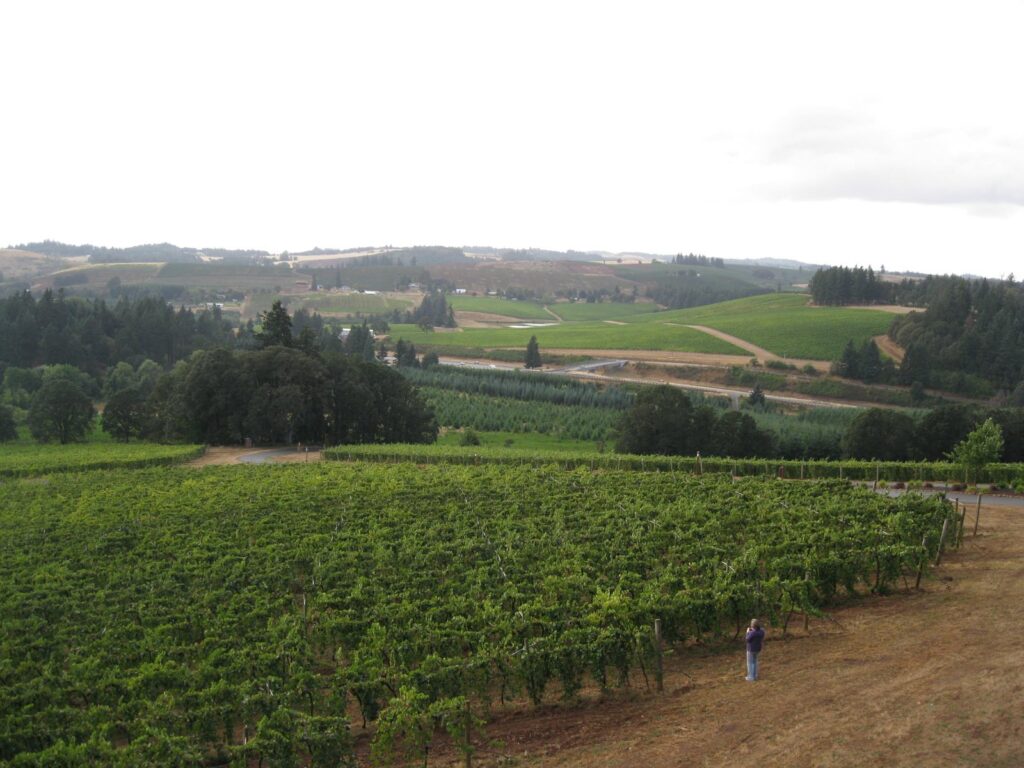
The easiest way into Willamette Valley wine country from Portland is a day trip to the northern valley, where the Dundee Hills, Newberg, Carlton and McMinnville sit 45 minutes to about an hour southwest of downtown. Book two tastings, put lunch between them, and settle who’s driving before you leave. More than 700 wineries share this valley, most of them built around pinot noir, so the hard part is choosing, not finding one.
This page is for visitors weighing a self-drive day against a tour, a hired driver or the bus, and for anyone in the group who doesn’t drink. The caveat that matters most: a wine day involves driving between rural tasting rooms, and Oregon’s legal limit is a blood alcohol level of 0.08%, so plan the transport first and the wineries second. Details were checked on September 24, 2026 against the operators’ and agencies’ own websites.
On this page: At a glance · Which part to visit · The wines · Who drives · Choosing a tour · By bus · Reservations and fees · Towns · Walkable towns · A realistic day · Other day plans · Food · For non-drinkers · Urban wineries · Comfort and access · Seasons and events · Costs · Tasting etiquette · Staying over · FAQ
Willamette Valley wine country at a glance
| Question | Short answer (checked September 2026) |
|---|---|
| How far | The Dundee Hills are about 25 to 30 miles and 45 to 60 minutes from downtown; the northern valley is about an hour |
| What to drink | Pinot noir first, then chardonnay, pinot gris and sparkling wine |
| How many stops | Two or three tastings, with lunch between them |
| Tasting fees | Often $20 to $35 for four or five wines, commonly waived with a bottle purchase; many estates charge more |
| Reservations | Expected at many tasting rooms, especially on weekends and in harvest season |
| Who drives | A designated driver, a hired car or a tour; the fare-free Yamhill County bus for walkable towns |
| Best months | Late September and October for harvest; late spring for new releases and green vines |
| Non-drinkers | The Spruce Goose museum in McMinnville, Champoeg’s riverside trails and the towns themselves |
If you’re still choosing between wine country, the Columbia River Gorge, Mount Hood and the coast, our comparison of day trips from Portland sets them side by side.
Which part of wine country should you visit?
The Willamette Valley runs about 150 miles along its river, from Portland to just south of Eugene, and it’s Oregon’s oldest wine region, home to about two-thirds of the state’s wineries and vineyards. Its modern wine story began in the 1960s, when a handful of winemakers bet that the valley’s cool climate and old volcanic and sedimentary soils could grow pinot noir to rival Burgundy’s. Today the valley holds eleven smaller wine appellations, or AVAs, nested inside it, from the Chehalem Mountains and Dundee Hills to the Eola-Amity Hills near Salem.
For a day from Portland, you’ll almost certainly end up in the northern valley, in Yamhill County, where the densest cluster of wineries and towns sits within an hour of the city. Here’s how the main areas compare.
| Area | Towns nearby | What it’s like | Best for |
|---|---|---|---|
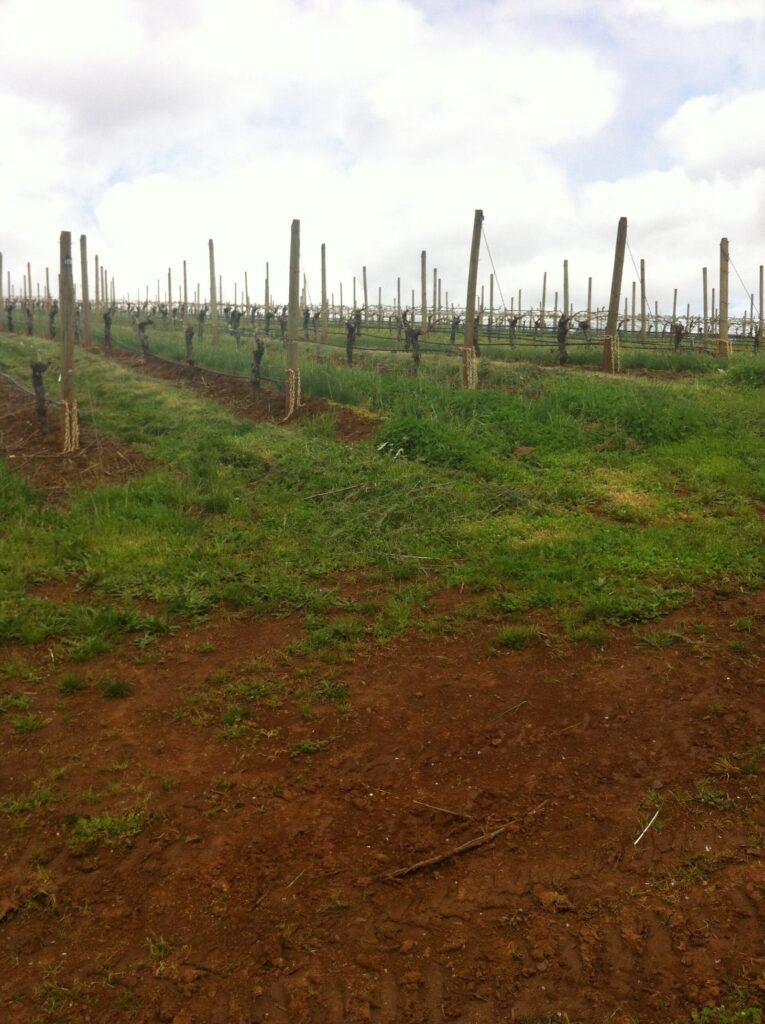
| Dundee Hills | Dundee, Dayton | Steep hills of red volcanic soil with views over the valley; many of the region’s best-known estates | A classic first visit |
| Chehalem Mountains and Ribbon Ridge | Newberg, Sherwood | The closest hills to Portland, with ridge-top tasting rooms | A shorter day |
| Yamhill-Carlton | Carlton, Yamhill | Rolling farmland and a small, walkable town full of tasting rooms | Tasting without much driving |
| McMinnville | McMinnville | The valley’s largest town, with a historic main street and the aerospace museum | Mixed groups and non-drinkers |
| Eola-Amity Hills | Amity, Salem | Windier hills farther south, closer to Salem and Silver Falls | Combining wine with Silver Falls |
Verdict: for a first visit, spend the morning in the Dundee Hills and the afternoon in McMinnville or Carlton, where you can walk between tasting rooms. Save the Eola-Amity Hills for a trip that also includes Silver Falls.
What makes the valley’s wines different?
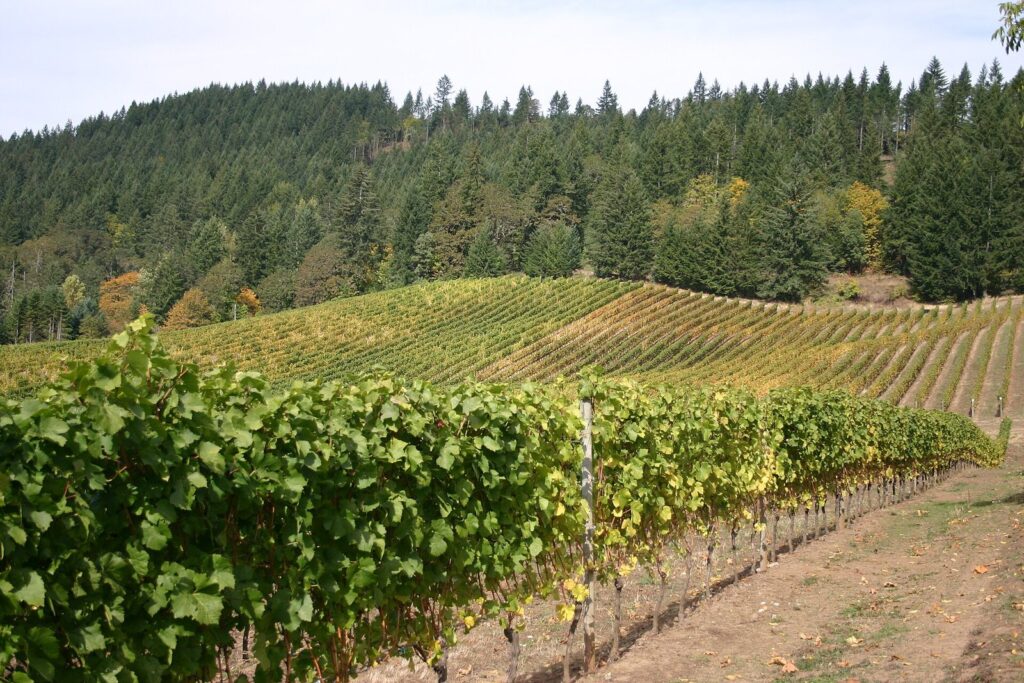
Pinot noir is the valley’s signature, and the reason is climate. The northern Willamette Valley has warm, dry summers and long, cool autumns, which let a thin-skinned grape ripen slowly without losing its freshness. Chardonnay has become the valley’s other star, and pinot gris, riesling and sparkling wines made in the traditional method all have their specialists. Vintages vary more here than in hotter regions, so a tasting room pouring two or three years of the same wine side by side is showing you something real.
Soil is the other story, and it’s why the appellations exist. The Dundee Hills sit on red volcanic soil, visible in every cut bank along the winding roads, while much of the Yamhill-Carlton and Ribbon Ridge areas grows on older marine sediments. Winemakers argue that the volcanic sites give brighter, redder fruit and the sedimentary ones darker, earthier wines, and tasting a pinot from each on the same day is the easiest way to decide for yourself. Farther south, the Van Duzer Corridor and the Eola-Amity Hills are shaped by cool afternoon wind pulled in from the Pacific through a low gap in the Coast Range.
How do you get there, and who drives?
Settle this before anything else. The wineries are spread across hills and back roads, tasting pours add up faster than people expect, and rideshare pickups can be scarce among the vineyards, especially late in the day. There are five realistic ways to do it:
| Option | How it works | Good for | Watch out for |
|---|---|---|---|
| A designated driver | One person skips or spits every tasting and drives your own or a rental car | Couples and friends on a budget | Someone has to volunteer, and mean it |
| A small-group tour | An operator picks up in Portland and visits two to four wineries | Solo travelers, first-timers | Fixed wineries and pace; compare how many tastings are included |
| A private driver or hired car | You pick the wineries; a driver handles the roads | Groups splitting the cost | Book ahead in harvest season |
| The Yamhill County Transit bus | A fare-free bus from Tigard to Newberg, Dundee and McMinnville | Walkable town tasting rooms | You can’t reach hilltop estates on foot |
| Driving yourself and tasting | Not a plan | Nobody | Oregon’s 0.08% limit, and back roads in the dark |
By car, the main route runs southwest from Portland on OR 99W through Tigard, Sherwood and Newberg to Dundee and McMinnville. The Newberg-Dundee Bypass, part of OR 18, lets you skip much of the stop-and-go through Newberg’s and Dundee’s main streets, which matters on Saturday afternoons, when 99W through Newberg crawls. The Dundee Hills take about 45 to 60 minutes from downtown in light traffic.
If you’re choosing between a tour and self-driving, a useful rule: two wineries and a relaxed lunch work well with a designated driver, while three or more tastings, or a group where everyone wants to drink, are what tours and drivers are for.
How do you choose a wine tour?
Tours range from shared vans visiting three pre-set wineries to private cars that follow your own list, and the price differences mostly come down to group size and what’s included. Before you book, ask a few questions:
- Are tasting fees included? Some tours fold them into the price and some don’t, which can change the real cost by a lot.
- How many wineries, and for how long at each? Three stops with an hour each is relaxed; four or five means rushing.
- Is lunch included, or scheduled? A tour without a real meal break is a long day on an empty stomach.
- Where does pickup happen? Downtown hotel pickup saves time; a single meeting point may not.
- How big is the group? Smaller groups get into smaller, family-run tasting rooms that can’t take a bus.
A middle path is a hired driver: some services supply a driver for your own car, or a car and driver for the day, and you pick the wineries and book the tastings yourself. It costs more than a shared tour for one or two people, but for a group of four or more it’s often the best value and the most flexible.
Can you visit wine country without a car?
Yes, within limits. Yamhill County Transit’s Route 44, with an express variant called the 44X, runs Monday through Friday between Tigard Transit Center and McMinnville Transit Center by way of Newberg and Dundee, with some trips starting in Sherwood, and a separate Saturday Route 44 schedule is posted. All of the county’s buses are fare-free for now, so the ride costs nothing. TriMet buses connect downtown Portland with Tigard Transit Center for a standard $2.80 fare, valid for 2.5 hours.
The bus works best for tasting rooms in town. McMinnville’s downtown and Newberg’s and Dundee’s main streets have tasting rooms within walking distance of bus stops, and Carlton’s small cluster is a short hop from McMinnville. What the bus can’t do is climb into the hills to the estate wineries, so a bus day is a town day. Check the current timetable before you commit, since the last bus back to Tigard sets the length of your afternoon. For TriMet fares and routes, see our guide to getting around Portland, Oregon.
Do you need reservations, and what does tasting cost?
Plan on reservations. Many tasting rooms work by appointment, especially on weekends and through the harvest season, and the best-known estates in the Dundee Hills can fill days ahead. Weekday visits are easier, and a few town tasting rooms still take walk-ins. When you book, ask how long the tasting lasts; most run about an hour, and some estate experiences with food run longer.
The Willamette Valley Visitors Association’s beginner’s guide describes a typical flight as four or five wines for $20 to $35, often waived if you buy bottles or join the wine club. Treat that as a floor rather than a price list: fees vary widely by winery, and seated or food-paired tastings cost more. Two tastings per person, plus lunch, is the realistic budget for a day. The Willamette Valley Wineries Association, a nonprofit with more than 230 member wineries and vineyards, keeps a directory that’s a good place to start picking.
Think twice if you’re arriving on a fall Saturday without bookings. Harvest weekends are beautiful and busy, and wandering from door to door without appointments usually means a lot of driving and not much tasting.
What are the wine towns like?
Newberg
Newberg is the gateway, the first sizable town on 99W and the base for the Chehalem Mountains and Ribbon Ridge wineries in the hills around it. Its downtown has tasting rooms, cafés and restaurants within a few blocks, and it’s the natural lunch stop on a morning spent in the northern hills. Herbert Hoover spent part of his boyhood here, in the Hoover-Minthorn House.
Dundee and Dayton
Dundee is a string of tasting rooms and restaurants along 99W, with the Dundee Hills rising right behind it; many of the valley’s most famous estates are a short, winding drive up from the highway. Dayton, just south, is a tiny town with a historic square and a few well-regarded places to eat, and it makes a quiet alternative lunch stop.
Carlton
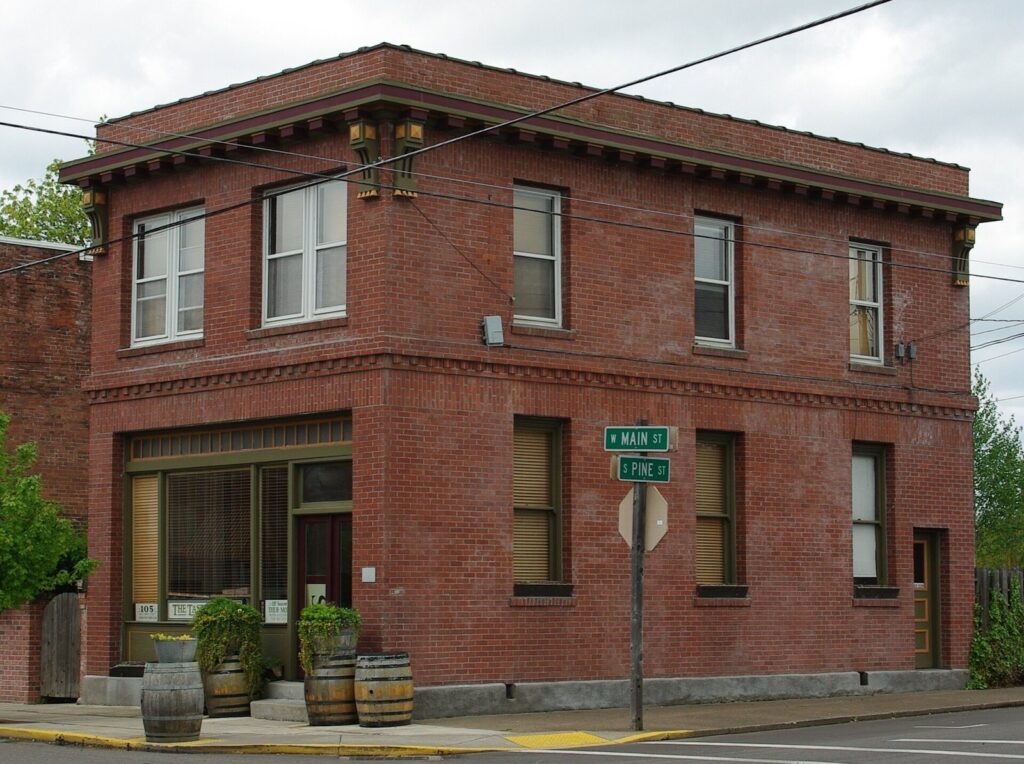
Carlton is the walker’s wine town: a few blocks of Main Street and the streets around it hold a cluster of tasting rooms, so you can park once and taste on foot. It’s surrounded by the Yamhill-Carlton appellation’s rolling farmland, and every September it hosts the Carlton Crush harvest festival.
McMinnville
McMinnville is the valley’s biggest town and the best base for a mixed group. Its historic downtown along NE Third Street is lined with tasting rooms, restaurants, bakeries and shops in old brick buildings, all within an easy walk. On the edge of town, the aerospace museum that houses the Spruce Goose gives non-drinkers something big to do, literally.
Amity and the Eola-Amity Hills
Farther south toward Salem, the Eola-Amity Hills catch the wind that funnels through a gap in the Coast Range, which growers credit for the area’s bright, structured wines. It’s a longer drive from Portland but a natural pairing with Silver Falls State Park, east of Salem.
Which wine towns can you explore on foot?
If you’d rather taste without driving between stops, pick a town, park once, and walk. These work best:
McMinnville’s Third Street
McMinnville’s historic downtown runs along NE Third Street, a tree-lined main street of brick and stone buildings, many from the late 1800s and early 1900s, now filled with tasting rooms, restaurants, bakeries and shops. Park on or near Third, walk one side and return on the other, and you can fit two or three town tasting rooms around a long lunch without touching the car. It’s also the easiest wine town for a mixed group, because there’s plenty to do for anyone who isn’t tasting.
Carlton
Carlton is small enough to see in an hour and has enough tasting rooms to fill an afternoon. Park on Main Street and wander the few surrounding blocks, where former storefronts and warehouses now pour wine from the Yamhill-Carlton hills around the town. On a weekday it’s quiet and friendly; during the Carlton Crush in September it’s busy and festive.
Newberg and Dundee
Newberg’s downtown has tasting rooms, cafés and restaurants within a few blocks of each other, and it’s the closest of the wine towns to Portland. Dundee’s tasting rooms line 99W itself, which makes them easy to find but less pleasant to walk between, since the highway traffic is constant. Use crosswalks, and consider driving between Dundee stops with your designated driver even when they look close.
What does a realistic wine country day look like?
Here’s a day that works with a designated driver, assuming two booked tastings:
- 9:30 a.m. Leave Portland on 99W, ahead of the weekend traffic.
- 10:30 or 11 a.m. First tasting in the Dundee Hills, while the palate is fresh and the view is clear.
- 12:30 p.m. Lunch in Dundee, Dayton or McMinnville. Eat properly; it’s the best thing you’ll do for the afternoon.
- 2 p.m. Walk McMinnville’s Third Street or visit the aerospace museum, depending on the group.
- 3:30 p.m. Second tasting in Carlton or the Yamhill-Carlton hills.
- 5 p.m. Head back, using the Newberg-Dundee Bypass to skip the worst of 99W, and eat dinner in Portland.
Door to door, that’s six to eight hours. If you want a third tasting, drop the museum, not lunch. For how a wine day fits into a longer stay, our Portland itineraries suggest where to slot it.
Where do you eat in wine country?
Lunch is the part of the day most people underplan. Several estates serve food-paired tastings or small plates, which count as both lunch and a tasting, but they book up first. The towns have more choice: McMinnville’s Third Street and Newberg’s downtown have restaurants and bakeries within a short walk of tasting rooms, and Dundee and Dayton each have a handful of good places. On busy weekends, reserve lunch as well as the tastings.
A picnic is another option, since some wineries welcome them and others don’t, so ask when you book. The valley is serious farm country, too: Oregon grows nearly all of the country’s hazelnuts, and farm stands along the back roads sell nuts, berries and produce in season, which make better souvenirs than another bottle for anyone flying home.
Two other ways to spend the day
A car-free town day
Ride TriMet to Tigard Transit Center in the morning and board Yamhill County Transit’s Route 44 toward McMinnville; check the day’s timetable first, because the Saturday schedule differs from the weekday one. Get off in McMinnville, walk NE Third Street for two town tastings and a long lunch, and catch a bus back with time to spare before the last departure. It’s a slower day than a car-based one and it skips the hilltop estates, but nobody has to stay sober, and the bus itself costs nothing.
Wine and waterfalls
If half the group wants wine and half wants a hike, head south instead. Spend the morning on Silver Falls State Park’s Trail of Ten Falls, or a shorter loop to South Falls, then drive west toward Salem for an afternoon tasting in the Eola-Amity Hills and dinner in town before the drive home. It’s a long day with more driving than a Dundee Hills trip, so it suits a group with one enthusiastic driver and two booked stops.
Is wine country worth it for non-drinkers?
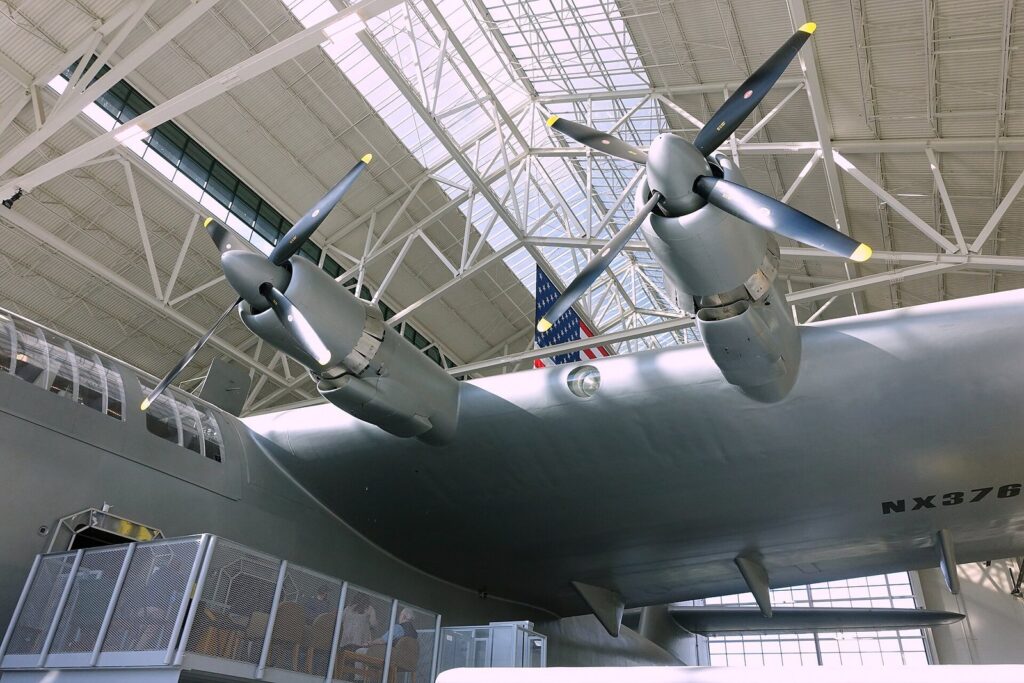
Yes, if you plan for them rather than parking them in a tasting room with a glass of water. McMinnville’s big draw is the museum long known as the Evergreen Aviation & Space Museum, which now calls itself the North American Aerospace Museum. It’s home to Howard Hughes’s giant wooden flying boat, the H-4 Hercules, better known as the Spruce Goose, and every visitor can walk into its cargo hold and see the length of the aircraft from inside. The museum suggests about three hours for a full visit, and Wings & Waves, an indoor waterpark, sits next door. Check current hours and prices before you go.
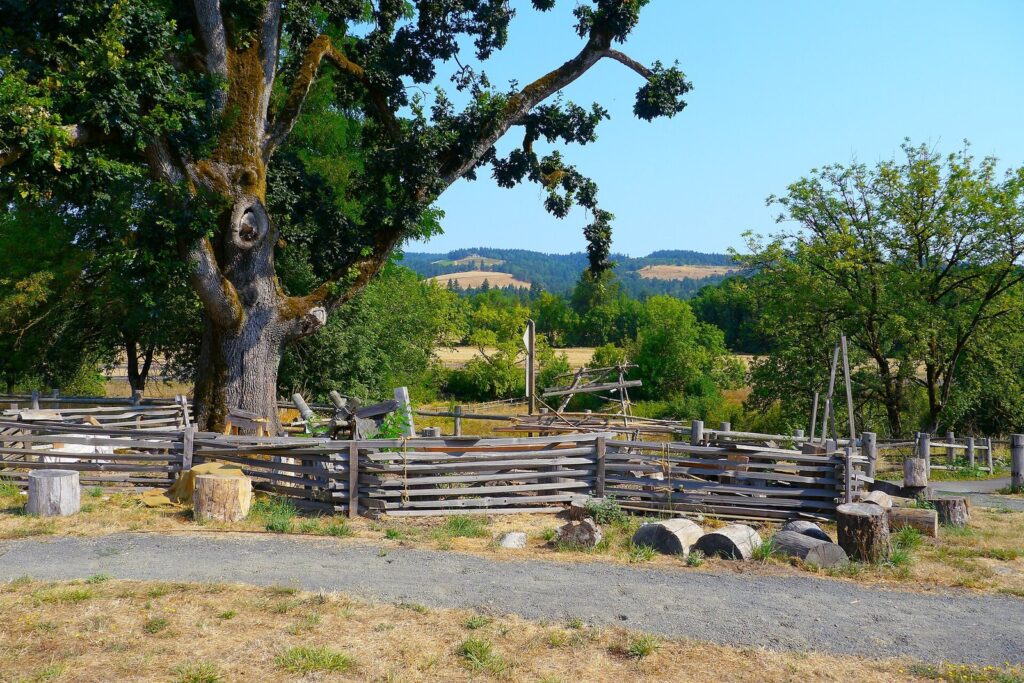
Champoeg State Heritage Area, on the Willamette River near Newberg, is the history stop: the site of the 1843 vote that set up a provisional government in the Oregon Country. Today it’s a riverside park with trails, a bike path, oak meadows and a visitor center; check the Oregon State Parks page for current hours and parking rules. The towns themselves reward a wander, and many wineries pour non-alcoholic options or grape juice on request, so ask when you book.
If the group splits between wine and waterfalls, Silver Falls State Park, about 1.5 hours south of Portland, pairs well with a tasting in the Eola-Amity Hills. Our guide to waterfalls near Portland, Oregon covers the Trail of Ten Falls.
Can you taste Oregon wine without leaving Portland?
Yes. Portland has its own urban wineries and wine bars, where winemakers truck grapes up from valley vineyards and pour in city tasting rooms, and they’re the obvious choice for a rainy afternoon, a traveler without a driver, or anyone who wants a taste of the valley’s wines before committing to a day there. What the city can’t give you is the landscape: the hills, the rows of vines and the view from a winery terrace are the point of going. Treat the urban rooms as a preview or a backup, not a substitute.
What should you know about comfort and access?
Many tasting rooms sit on hillsides, with gravel parking lots, sloping paths and outdoor terraces, so ask about step-free access when you book if anyone in your group needs it; town tasting rooms in McMinnville, Newberg and Carlton are usually easier. Bring a layer even in summer, since hilltop terraces catch the breeze, and a rain jacket from October through May. Summer afternoons can be hot in the valley, so carry water and keep hydrated between tastings.
When is the best time to visit wine country?
| Season | What’s happening | Worth knowing |
|---|---|---|
| Winter (January to March) | Quiet tasting rooms; the visitors association calls January 1 to March 31 Cellar Season | Some tasting rooms shorten hours; bare vines, cozy fires |
| Spring (April to May) | Bud break, green hills, new white and rosé releases; Memorial Weekend in Wine Country | Memorial Day weekend is one of the busiest of the year |
| Summer (June to August) | Long, dry days and outdoor tastings | Heat can spoil wine left in a car; bring a cooler |
| Harvest (late September to October) | Grapes coming in, crush pads busy, Carlton Crush in September | The most beautiful and most booked weeks |
| Thanksgiving weekend | Winery open houses across the valley, some the weekend before | In 2026 that’s November 27 to 29; book early |
Harvest usually runs from late September through October, though the exact timing varies from vineyard to vineyard, and the leaves turn gold soon after. Memorial Weekend in Wine Country, a long-running tradition, falls on May 29 to 31 in 2027. For how the valley’s seasons fit with Portland’s, see the best time to visit Portland, Oregon.
What does a wine country day cost?
| Item | Typical cost (checked September 2026) | Notes |
|---|---|---|
| Tasting fees | Often $20 to $35 a person per winery, many higher | Frequently waived with a bottle purchase |
| Transport | Your own fuel; a tour or driver priced per person or per hour | The Yamhill County bus is fare-free; TriMet to Tigard is $2.80 |
| Lunch | Your choice, from bakeries to winery food pairings | Book lunch too on busy weekends |
| Bottles to take home | Your call | Oregon has no sales tax |
| The aerospace museum | Check current prices | Plan about three hours |
Oregon’s lack of sales tax makes bottles a little cheaper to take home than in neighboring states, which is one reason wine clubs sign up so many visitors. If you’re flying home, check your airline’s rules for carrying wine in checked bags, and pack bottles well.
How should you taste?
Pace yourself. Tasting pours are small, but four or five wines at two or three wineries add up, and the afternoon tasting is always the one people remember least. Eat a real lunch, drink water between wines, and use the spit bucket without embarrassment; the staff pour for professionals who spit everything. Sharing one tasting between two people is common, so ask if it’s allowed.
Arrive on time for reservations, since many rooms run on tight schedules, and call ahead if you’re running late. Ask about children and dogs when you book, because policies vary from winery to winery. And in summer, don’t leave bottles in a hot car: bring a cooler or plan to buy at your last stop.
Should you stay overnight in wine country?
A night in McMinnville, Newberg or Dundee turns a rushed day into a relaxed one, removes the question of who drives home, and lets you have dinner in wine country instead of on the way back. Options range from small inns and bed-and-breakfasts among the vineyards to hotels in McMinnville’s walkable downtown; rates climb on harvest weekends, Memorial Day and Thanksgiving weekends, and midweek in winter is when they’re lowest.
Taxes are part of the bill. Oregon’s state lodging tax is 1.5% on stays that end by December 31, 2026 and 2.75% on stays ending on or after January 1, 2027, and local lodging taxes apply on top. If you’d rather keep Portland as your base, our guide on where to stay in Portland, Oregon covers the areas with the easiest drive out to the valley.
Willamette Valley Wine Country FAQ
How far is Willamette Valley wine country from Portland?
Close. The Dundee Hills are about 25 to 30 miles southwest of downtown, 45 minutes to an hour by car, and the northern valley’s towns are all within about an hour. The Eola-Amity Hills near Salem are farther. Saturday traffic on 99W through Newberg is the main thing that stretches those times.
Can you visit Oregon wine country without a car?
Partly. Yamhill County Transit’s fare-free Route 44 links Tigard Transit Center with Newberg, Dundee and McMinnville, where tasting rooms cluster downtown. It won’t reach the hilltop estates, though, so for those you’ll need a tour, a hired driver or a friend who’s happy not to drink.
Do Willamette Valley wineries require reservations?
Many do, especially on weekends and during harvest, and even walk-in rooms can turn people away when they’re full. Book your main tastings a few days ahead, or earlier for fall Saturdays and holiday weekends, and keep a town tasting room as a flexible third stop.
How many wineries can you visit in a day?
Two is comfortable and three is the practical maximum. Each tasting takes about an hour, the drives between estates take 15 to 30 minutes, and lunch deserves more than a sandwich in the car. People who plan five usually remember two.
What wine is the Willamette Valley known for?
Pinot noir, above all. The valley’s cool climate and volcanic and sedimentary soils made its name with the grape in the 1960s and 1970s. Chardonnay and pinot gris are the leading whites, and sparkling wine has become a specialty at several estates.
Can you take wine home on a plane?
Yes, in checked bags, packed well; many wineries sell shipping boxes or protective sleeves. Carry-on liquid limits mean bottles can’t go in your hand luggage. Shipping from the winery is the other option, but rules on shipping alcohol vary by state, so ask the winery whether it ships to yours.
Is a tour or a designated driver cheaper?
For two people, a designated driver in your own or a rental car is almost always cheaper, since you pay only for fuel and the tastings. For a group of four or more who all want to taste, a private driver or small tour often works out close in price per person and removes the question of who drives home.
Is the Willamette Valley good for families?
With planning. McMinnville’s aerospace museum and the waterpark next door work for kids, and Champoeg’s riverside trails give them room to run. Tasting rooms vary on children, so ask when you book. For more family ideas in and around the city, see our guide to Portland, Oregon with kids.
Related Portland Guides
- Day Trips from Portland, Oregon: wine country against the Gorge, Mount Hood and the coast
- Waterfalls Near Portland, Oregon: Silver Falls and the Gorge for the non-drinkers
- Portland, Oregon Restaurants: where to eat back in the city
- Getting Around Portland, Oregon: TriMet to Tigard for the wine country bus
- Best Time to Visit Portland, Oregon: harvest, holidays and the rainy months
Sources and verification
Details on this page were checked on September 24, 2026 against the agencies and organizations listed below. The page is compiled from their published information and claims no first-hand visits.
- Willamette Valley Wineries Association: about the valley
- Willamette Valley Wineries Association: harvest season
- Willamette Valley Wineries Association: Wine Country Thanksgiving
- Willamette Valley Wineries Association: May in wine country
- Willamette Valley Visitors Association: AVAs and wine resources
- Willamette Valley Visitors Association: beginner’s guide to wine tasting
- Oregon Wine Board: Willamette Valley
- Yamhill County Transit: Route 44
- TriMet: fares
- North American Aerospace Museum (Evergreen): FAQs
- Oregon State Parks: Champoeg State Heritage Area
- Oregon Department of Revenue: state lodging tax
Portland Tourism Guide is an independent publication, not affiliated with Travel Portland, the City of Portland or any business named here.
Photo credits
- Willamette Valley vineyard: photo by Doug Kerr, Wikimedia Commons (CC BY-SA 2.0)
- Dundee Hills vineyard soil: photo by Agne27, Wikimedia Commons (CC BY-SA 3.0)
- Main Street, Carlton: photo by M.O. Stevens, Wikimedia Commons (CC BY 3.0)
- Willamette Valley vineyard in fall: photo by David Burn, Wikimedia Commons (CC BY-SA 2.0)
- Spruce Goose, McMinnville: photo by Daderot, Wikimedia Commons (CC0)
- Champoeg State Heritage Area: photo by Rick Obst, Wikimedia Commons (CC BY 2.0)