This Portland, Oregon travel guide is organized around the decisions that shape a trip more than any single attraction does: when to come, how many days to give the city, whether a car is worth the parking, where to sleep, what the bill looks like once hotel taxes land, and which few tickets need booking ahead. The short answers: come in July or August for the most reliable weather, or in late September and October if you’d trade a little rain risk for thinner crowds. Give Portland three days, plus a fourth for the Columbia River Gorge. Skip the rental car unless you are leaving town. And add about 16% to any hotel quote, because Oregon’s lack of sales tax stops at the front desk.
It is written for first-time visitors, and for returning ones who want numbers rather than adjectives. One caveat matters more than the rest: Portland’s prices, opening days and seasonal permits change every year, so every figure below carries its date, and the operator’s own website has the final word. Details were checked September 23 and 24, 2026 against the operators’ and agencies’ own websites.
On this page: Portland at a glance · When to go · How many days · Getting there · Car or no car · Where to base yourself · What it costs · What to book ahead · What to pack · Local rules · Day trips · FAQ
Portland Trip Planning at a Glance
If you read only one part of this page, make it this table. Prices are adult rates as of September 2026.
| Decision | Short answer | The number that matters |
|---|---|---|
| How long to stay | Three days for the city, four or five with a day trip | Washington Park alone fills a full day |
| Driest months | July and August | About half an inch of rain in each (NOAA normals) |
| Wettest months | November, December and January | 5.45, 5.77 and 5.03 inches; 157 wet days a year overall |
| Airport to downtown | MAX Red Line | About 39 minutes for $2.80 |
| Getting around town | MAX, buses and Portland Streetcar on one fare | $2.80 for 2.5 hours, capped at $5.60 a day |
| Rent a car? | Only for Mount Hood, the coast or wine country | Washington Park parking: $2.40 an hour, $9.60 a day |
| Taxes | No sales tax; hotel bills are another story | About 16% on a 2026 hotel stay, plus $4 a night on short-term rentals |
| Book ahead | Oregon Zoo, Portland Japanese Garden, Multnomah Falls in summer | Zoo tickets up to 30 days out, garden tickets up to 10 |
| Closed days | Monday, Tuesday and Sunday each knock something out | Art Museum and OMSI on Mondays, Japanese Garden on Tuesdays, Aerial Tram on Sundays |
When Should You Go to Portland?
Pick the season by the weather you can live with, because Portland’s rain is concentrated, not constant. At the airport, NOAA’s 1991 to 2020 normals put November, December and January above 5 inches of precipitation each, and July and August at about half an inch apiece. The reputation comes from frequency rather than volume. An average year brings 157 days with some precipitation but only 36.92 inches in total, which works out to less than a quarter of an inch per wet day. A lot of Portland rain is the kind you can walk through in a hooded jacket.
| Season | Normal high | Normal precipitation | What it means for a trip |
|---|---|---|---|
| Winter | 46.9°F (Dec), 47.5°F (Jan) | 5.77 in (Dec), 5.03 in (Jan) | Short, gray days; build the trip on museums, books and food |
| Spring | 62.0°F (Apr) | Showery and changeable | Gardens wake up; the Rose Festival fills late May and June |
| Summer | 81.9°F (Jul), 82.3°F (Aug) | 0.51 in (Jul), 0.54 in (Aug) | Dry and long-lit, with the highest demand for rooms |
| Fall | 64.4°F (Oct) | 5.45 in (Nov) | Color in the gardens; the rain is back by November |
Summer (July and August): dry, warm and in demand
July and August are the safest bet for weather, with normal highs of 81.9°F and 82.3°F and almost no rain. River evenings, patio dinners and long Gorge hikes all work, and the International Rose Test Garden is in bloom. The big events cluster on the waterfront: the Waterfront Blues Festival took over Tom McCall Waterfront Park on July 2 to 4 in 2026, with tickets required and children 12 and under admitted free with an adult.
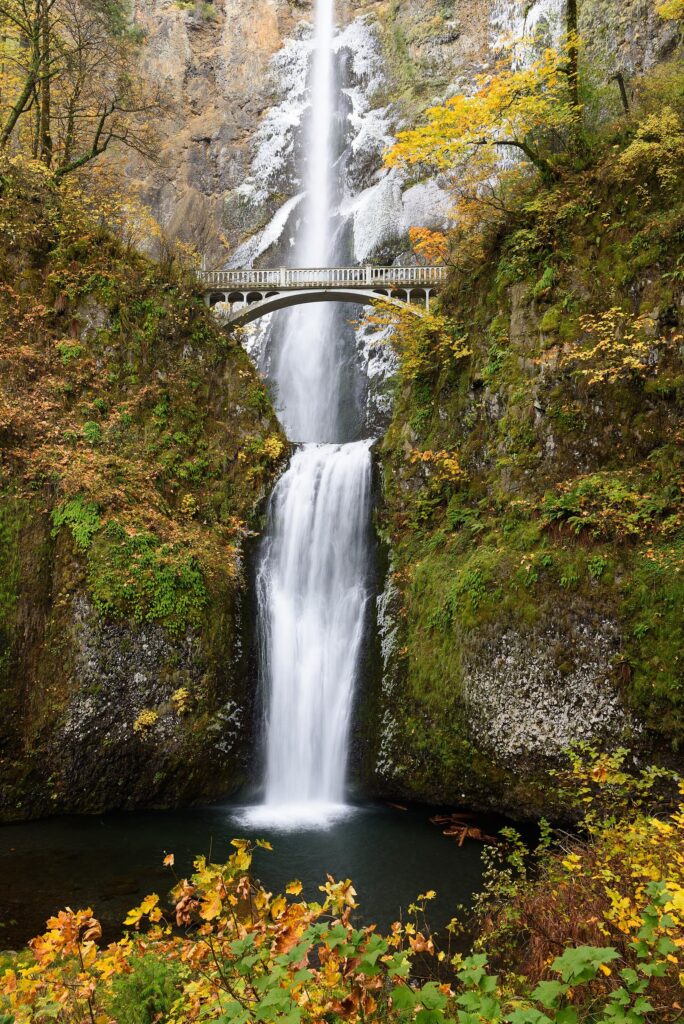
Summer has two catches. Hotel demand peaks, so rooms cost more and sell out sooner, especially on weekends. And heat waves can push well past those averages, while in some late summers wildfire smoke drifts in from fires elsewhere in the region; AirNow.gov shows current air quality. Multnomah Falls also runs on timed entry in summer (May 22 to September 7 in 2026).
Verdict: the season for a first trip that mixes the city with the Gorge and the river, as long as you book your room early. Think twice if you want quiet trails or the lowest room rates.
September and October: the shoulder worth aiming for
Late September and October keep much of summer’s appeal with fewer people around. October’s normal high is 64.4°F, the Rose Test Garden is still blooming, the maples at the Portland Japanese Garden turn, and the Multnomah Falls permit season is over (it ended September 7 in 2026), so a timed-entry permit isn’t part of the plan until the 2027 season. The trade-off is the calendar. The wet season returns in earnest in November, when normal precipitation jumps to 5.45 inches.
Verdict: the best all-round window for most travelers. Think twice if the trip is built around river swimming or the longest possible hiking days.
Winter (November to March): wet, mild and quieter
December is the wettest month, at 5.77 inches, with a normal high of 46.9°F. It is gray more than it is cold. Snow averages 4.2 inches a year, which makes a snow day in Portland an event rather than a season. Winter is when the city’s indoor side carries a trip: the Portland Art Museum, whose Mark Rothko Pavilion opened November 20, 2025; OMSI on the east bank; Lan Su Chinese Garden’s Yun Shui Teahouse; and Powell’s City of Books.
Check winter schedules before you build a day around them: in 2026 the Oregon Zoo closes at 3:30 p.m. from November and opens only Friday through Monday from December 1 to 17, and Pittock Mansion takes maintenance days in January.
Verdict: good for a city-only trip built on museums, bookstores and long dinners, at a time of year when hotel demand is generally at its lowest. Think twice if you want Gorge trails or Mount Hood without winter driving.
Spring (April to June): gardens, showers and the Rose Festival
April’s normal high is 62.0°F, and spring weather swings between bright afternoons and showers, sometimes within the same hour. The gardens come back first. Then the Portland Rose Festival takes over late May and June: in 2026 it ran May 22 to June 28, merged the Grand Floral and Starlight parades into a single parade on Saturday, June 6 at 6:30 p.m., and held CityFair on weekends at Tom McCall Waterfront Park. The roses themselves start blooming in late May.
Verdict: right for garden lovers and anyone who wants the Rose Festival. Think twice if you need dependable weather for one specific outdoor day.
In the end, the best time to visit Portland depends on which trade-off you mind least: crowds and prices in summer, or rain and short days in winter.
How Many Days Do You Need in Portland?
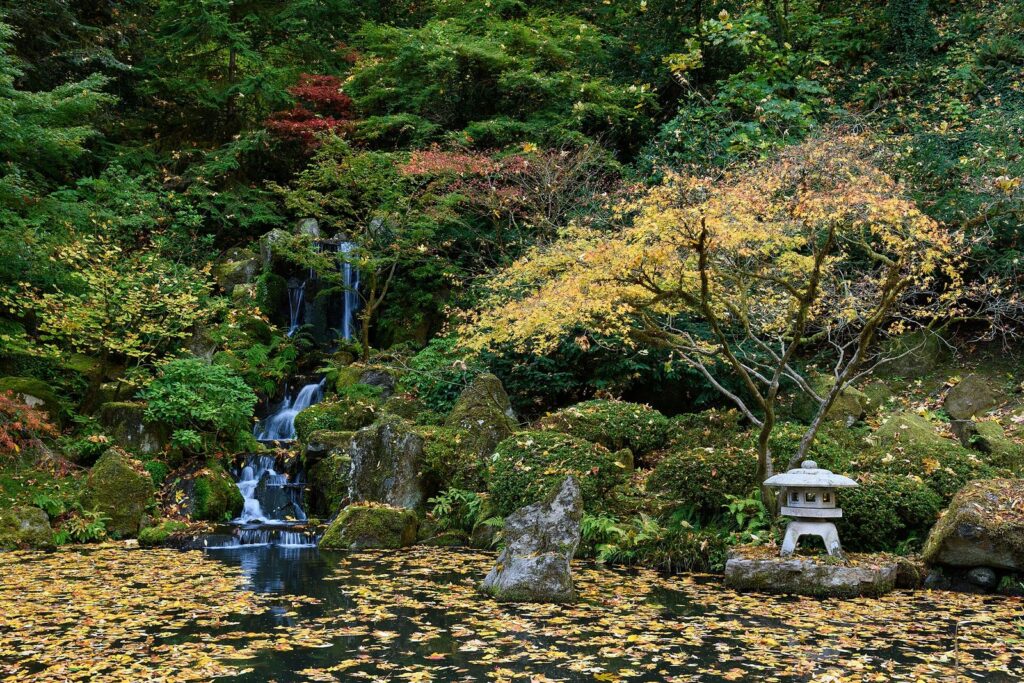
Three days is the honest minimum for a first visit. Portland’s sights are spread across both banks of the Willamette and up into the West Hills, and the best of them reward time rather than a quick look. Washington Park alone covers 410 acres and holds the Portland Japanese Garden, the International Rose Test Garden, Hoyt Arboretum and the Oregon Zoo, with Pittock Mansion on a ridge nearby. That is a full day before you have seen downtown, Old Town or anything on the east side.
| Trip length | What fits | What you give up |
|---|---|---|
| 1 day | Downtown on foot, plus the Rose Garden and Japanese Garden by MAX | The east side and everything outside the city |
| 2 days | Washington Park one day; downtown, Old Town and the Pearl District the next | East-side neighborhoods and their food cart pods |
| 3 days | Add the inner east side: OMSI, the Eastbank Esplanade, Hawthorne and Division | Day trips |
| 4 to 5 days | Add the Columbia River Gorge, then Mount Hood, the coast or wine country | Very little; this is the sweet spot |
| A week | The city at a slower pace, plus two or three day trips | Only your hotel budget |
The pattern in that table is geographic, and it is the backbone of any day-by-day Portland itinerary: keep each day on one side of the river and you spend your time in places rather than in transit. For what to fill those days with, the best things to do in Portland, with prices and hours for each is the companion to this page.
How Do You Get to Portland?
There are three practical ways in: fly into Portland International Airport (PDX), take Amtrak to Union Station, or drive in on I-5 or I-84.
Flying into PDX
PDX sits in Northeast Portland beside the Columbia River, and it has changed since many travelers last saw it. The new main terminal began opening on August 14, 2024, under a nine-acre mass-timber roof, and the Port of Portland has since called the project complete. One policy makes the airport easier on a budget: under what the Port calls street pricing, shops and restaurants inside PDX charge the same prices as their locations outside it, so a meal before your flight costs what it would in town.
The cheapest way to the center is the MAX Red Line, which runs from the terminal to downtown in about 39 minutes, with trains every 15 minutes for most of the day. It costs the standard $2.80 adult fare, and because that fare is good for 2.5 hours, a transfer to a bus or the streetcar at the other end is included. Tap a contactless bank card or phone on the platform reader before you board.
Arriving by train at Union Station
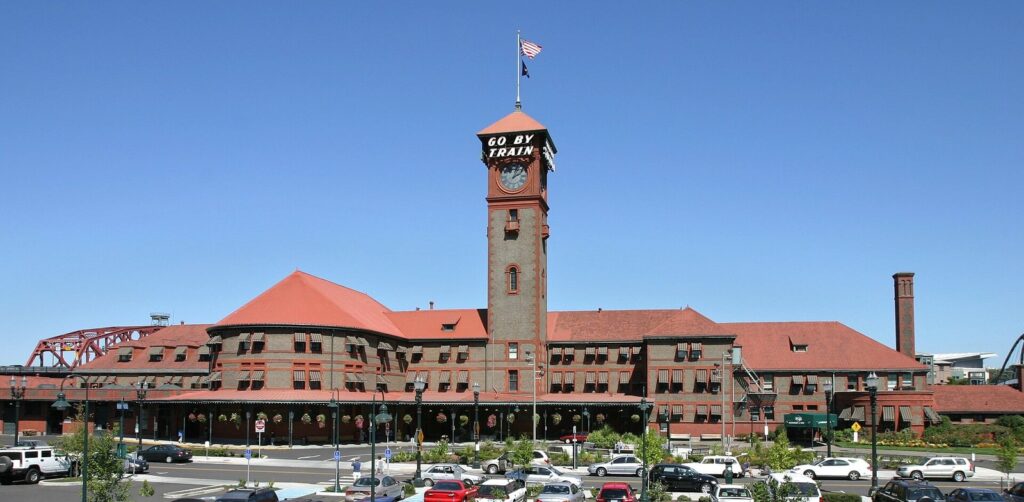
Portland Union Station, at 800 NW 6th Ave, is the city’s Amtrak stop, on the edge of Old Town and the Pearl District and a short walk from the downtown transit mall. Three routes serve it. Amtrak Cascades runs daily between Eugene, Oregon and Vancouver, B.C., by way of Portland and Seattle, which makes it the obvious alternative to driving I-5 from Seattle. The Coast Starlight runs daily between Los Angeles and Seattle through Santa Barbara, the San Francisco Bay Area, Sacramento and Portland. The Empire Builder links the Pacific Northwest with Chicago, with stops including Minneapolis.
Driving in
I-5 runs north to south through the city, and I-84 arrives from the east through the Columbia River Gorge. Driving in makes sense if the trip continues to Mount Hood or the coast, and less if the car will sit in a paid garage for three days while you ride transit.
| Option | Where you arrive | Onward to the center | Worth knowing |
|---|---|---|---|
| Fly to PDX | Northeast Portland, on the Columbia River | MAX Red Line, about 39 minutes, $2.80 | Street pricing inside the terminal |
| Amtrak | Union Station, 800 NW 6th Ave | Walk, streetcar or MAX | Cascades, Coast Starlight and Empire Builder |
| Drive I-5 | Through the center, north to south | Straight to your hotel | Budget for nightly parking |
| Drive I-84 | From the east, through the Gorge | Straight to your hotel | Summer timed entry at Multnomah Falls (Exit 31) |
Do You Need a Car in Portland?
Not for the city itself. The airport, downtown, Washington Park, the east-side neighborhoods and South Waterfront all sit on one fare system, and for a solo traveler a day of transit costs less than a day of parking at Washington Park.
What one TriMet fare covers
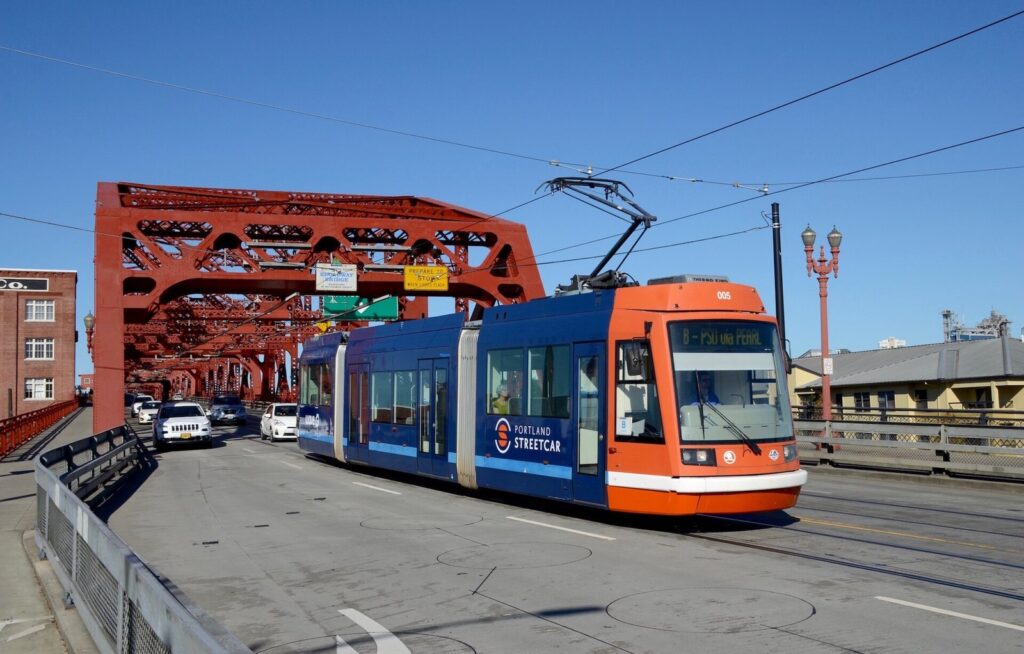
An adult fare costs $2.80 and is valid for 2.5 hours on MAX light rail, TriMet buses and the Portland Streetcar’s NS Line and A and B Loops. Tap the same contactless card or phone each time and TriMet stops charging at $5.60 for the day and $100 for the month, so you never have to decide between single rides and a pass. Honored Citizen and Youth fares are $1.40 a ride, capped at $2.80 a day and $28 a month.
Two things sit outside that fare. The Portland Aerial Tram, which climbs 500 feet from South Waterfront to the Oregon Health & Science University campus, charges $9 for a round trip valid on the day you buy it; children 6 and under ride free with a paying adult. The Columbia Gorge Express, run by Columbia Area Transit, has its own fares too.
Washington Park is the clearest case for the train. The MAX Red and Blue lines stop at Washington Park station every 15 minutes. The platform is 260 feet underground, the deepest transit station in North America, and elevators lift you to a plaza where a free shuttle leaves for the park’s major attractions on summer (April to September) and winter (October to March) schedules.
When a car earns its keep
Rent a car for Mount Hood, the Oregon coast and Willamette Valley wine country, where you want control of your own timing on mountain and coast roads. The Columbia River Gorge is the exception. The Columbia Gorge Express runs seven days a week from Gateway Transit Center in Northeast Portland to Troutdale, Multnomah Falls, Cascade Locks and Hood River. It can skip the Multnomah Falls stop when congestion is extreme, which is one more reason to go early in the day.
Verdict: rent by the day, not by the trip. Pick the car up the morning you head out of town and return it when you come back.
Pumping gas in Oregon
Oregon’s full-service gas tradition has loosened, but not everywhere. Under a 2023 law, House Bill 2426, stations in Multnomah County and 15 other counties may offer self-serve at up to half their pumps, with attendants at the rest. Signs mark which pumps are which, self-serve is allowed only while an attendant is on duty, and the price has to be the same either way. In 20 rural counties, including Hood River, Wasco, Clatsop and Tillamook, you can pump your own gas at any station at any hour. That takes in Hood River, The Dalles and the north coast towns on the usual day-trip routes.
Parking prices you’ll actually meet
In Washington Park, parking costs $2.40 an hour up to $9.60 a day, enforced 9:30 a.m. to 8 p.m. every day and paid through the ParkingKitty app or at kiosks. OMSI charges $5 for two hours or $8 for the day, dropping to $2 after 5 p.m. One wrinkle in the math: for two people, a day of Washington Park parking ($9.60) costs less than two transit day caps ($11.20). It’s one of the few in-town cases where the car wins, and only if you already have one.
| Your trip | Car? | Why |
|---|---|---|
| Two or three days in the central city | No | One fare covers PDX, downtown, Washington Park and the east side |
| City plus the Columbia River Gorge | Optional | The Columbia Gorge Express runs daily to Multnomah Falls and Hood River |
| City plus Mount Hood or the coast | For those days only | You control the timing on mountain and coast roads |
| A wine country tasting day | Only with a designated driver | Or book a tour so nobody has to count glasses |
| An early flight home | No | Take the MAX Red Line, or sleep at an airport hotel the night before |
That is most of what matters for getting around Portland: tap once, let the cap do the math, and save the car for the mountain and the ocean.
Where Should You Stay in Portland?
Choose a base by transit line rather than by lobby photos. Nearly everything on this page is reachable from anywhere near a MAX station or the streetcar, while a base far from both costs you time every day.
| Base | Best for | Getting around | Trade-off |
|---|---|---|---|
| Downtown (SW) | First trips, museums, Saturday Market | MAX Red Line to both PDX and Washington Park; streetcar | Parking adds up; some blocks go quiet after office hours |
| Pearl District and Old Town (NW) | Train arrivals, Powell’s, Lan Su, galleries | Streetcar NS Line; walk to Union Station | Across the river from the east side’s food and bars |
| Lloyd and Rose Quarter (NE) | Convention Center events, Moda Center games | MAX Red Line straight to PDX | Rates swing with convention and game schedules |
| Inner east side (SE and NE) | Food carts, bars, neighborhood streets | Buses and the streetcar’s A and B Loops | Fewer hotel rooms; more of the lodging is short-term rentals |
| South Waterfront (S) | The Aerial Tram, riverside walks | Streetcar into downtown | Quiet in the evenings; no tram on Sundays |
| Near PDX | Early flights and late arrivals | MAX Red Line | Far from everything you came to see |
The Pearl District and Old Town put Union Station, Powell’s and Lan Su Chinese Garden (with its free lot next door) within walking distance. Lloyd is the base to cross-check against the Oregon Convention Center’s event schedule, because big conventions move its rates first. On the inner east side, read a rental’s parking rules and remember the city’s $4 nightly fee.
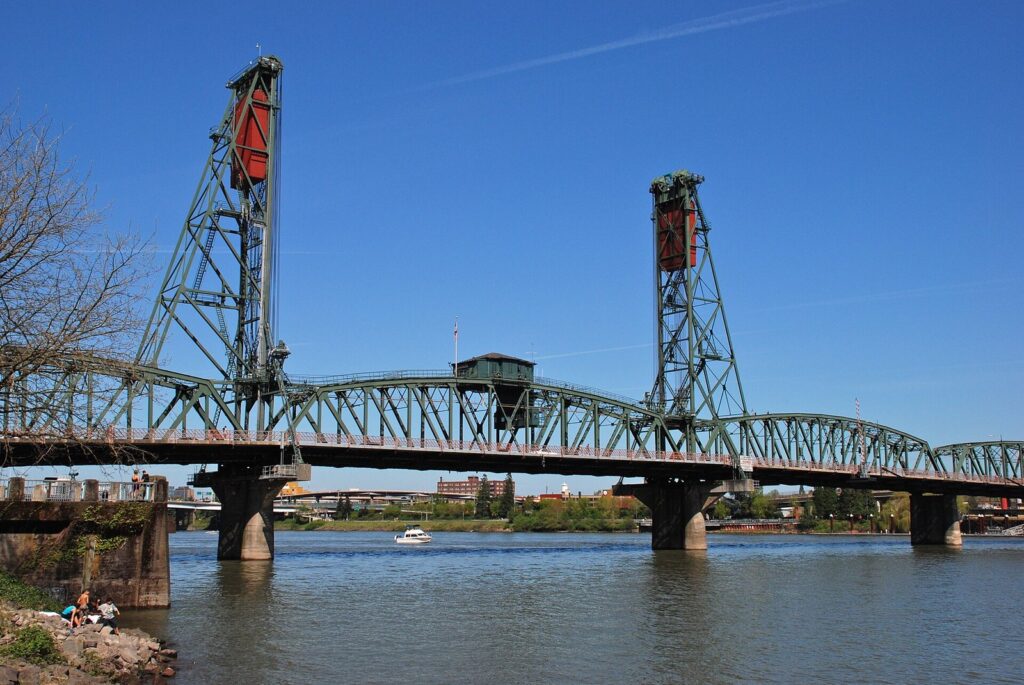
Whatever the listing says, the test for where to stay in Portland is the same: how far is the nearest MAX or streetcar stop, and which line is it on?
How Much Does a Trip to Portland Cost?
Portland’s costs come with two quirks that pull in opposite directions: no sales tax on anything you buy, and a stack of taxes on the room you sleep in.
Taxes: zero at the register, about 16% at the hotel
Oregon has no general sales tax, so the price on the tag, the menu or the ticket page is the price you pay. The hotel is where that ends. The City of Portland’s revenue office lists a 6% city lodging tax, a 5.5% Multnomah County lodging tax and a 3% Tourism Improvement District fee, 14.5% combined, and the state adds its own 1.5% for stays through the end of 2026. That comes to about 16%, or roughly $16 on every $100 of room rate. Short-term rental hosts and booking platforms also owe the city $4 for every night booked, so check whether a rental’s quoted total already includes it.
What the major attractions cost (September 2026)
| Attraction | Adult | Discounts and free entry | Worth knowing |
|---|---|---|---|
| Portland Aerial Tram | $9 round trip | 6 and under free with a paying adult | No Sunday or holiday service |
| Pittock Mansion | $17 | 65+ and students $15; ages 6 to 18 $14; under 6 free | The grounds are a free public park until 9 p.m. |
| Lan Su Chinese Garden | $18 | 62+ and students $17; ages 6 to 18 $15; 5 and under free | Daily 10 a.m. to 5:30 p.m., last entry at 5 |
| Portland Japanese Garden | $22.50 | 65+ $19.50; students $18.50; ages 6 to 17 $16.50; 5 and under free | Closed Tuesdays |
| OMSI | $22.50 (ages 14+) | 63+ $20.50; ages 3 to 13 $15.50; under 3 free | Planetarium, submarine and theater cost extra |
| Oregon Zoo | $26 (ages 12+) | Ages 2 to 11 $21; under 2 free | Advance online tickets required |
| Portland Art Museum | $27.50 | 65+ $24.50; college students $22.50; 17 and under free | Free for everyone 10 a.m. to 7 p.m. on the first Thursday of the month |
Pay for all seven at adult rates and you would spend $142.50. Few trips need all seven, and several of Portland’s best stops cost nothing: the International Rose Test Garden, Hoyt Arboretum, Forest Park’s 80-plus miles of trails, the Eastbank Esplanade, Pittock Mansion’s grounds and a browse at Powell’s.
Three sample days, priced
| Day | The plan | Admissions per adult | Transit per adult |
|---|---|---|---|
| The free day | Rose Garden, Hoyt Arboretum and a stretch of the Wildwood Trail, then the Eastbank Esplanade and Powell’s | $0 | $5.60 at most (the day cap) |
| The Washington Park day | Japanese Garden, Rose Garden, then Pittock Mansion | $39.50 | $5.60 at most |
| The rainy museum day | Portland Art Museum, then Lan Su Chinese Garden | $45.50, or $18 on a first Thursday | Walkable, or $5.60 at most |
Family numbers climb quickly. Two adults and two children aged 2 to 11 pay $94 at the Oregon Zoo, and the same family pays $76 at OMSI (children 3 to 13) before the planetarium or the submarine. The Portland Art Museum is the family bargain, since everyone 17 and under gets in free.
Eating: where a Portland budget stretches or snaps
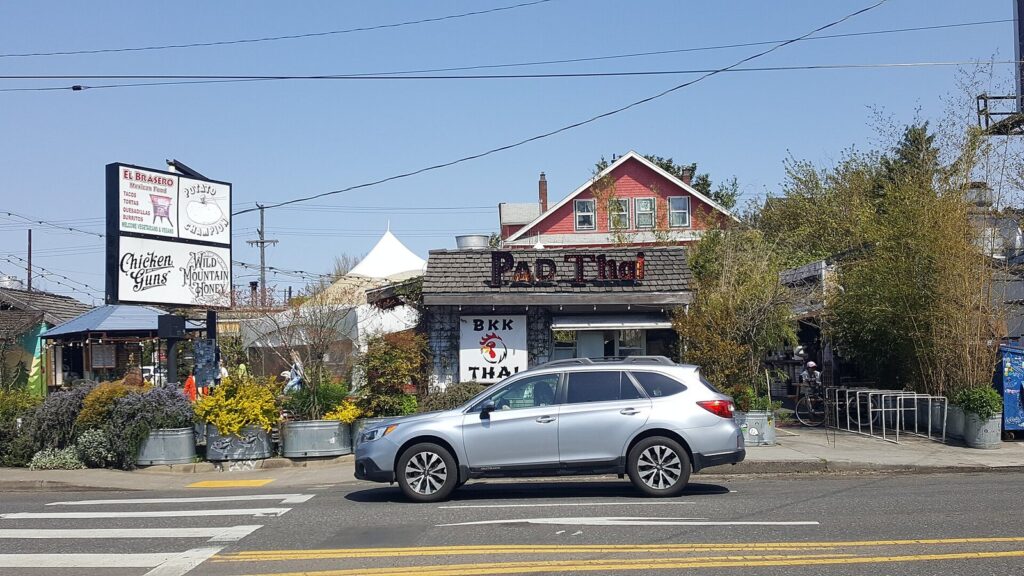
Food is the flexible line in the budget, and food carts are the best value in the city: a pod gives a group several cuisines at one set of picnic tables, and Cartopia, at 1207 SE Hawthorne Blvd, had seven carts in September 2026. No tax is added to a restaurant bill, but tipping follows the usual U.S. practice. Coffee, pastries and a cart lunch keep the daytime cheap; dinner is where the money goes, and where Portland’s restaurants make their case.
Hotels: what moves the price
Nightly rates move too much to quote usefully, but what moves them is predictable: summer weekends cost the most, the Rose Festival lifts late May and June, big events at the Oregon Convention Center and Moda Center fill the central city on particular dates, and winter weeknights are generally the softest. Chain hotels near the airport and along MAX sit at the low end, big full-service hotels downtown and in Lloyd in the middle, and boutique hotels in restored buildings at the top. Ask about parking before you book, because many downtown hotels charge for it by the night.
What Should You Book Before You Go?
Most of Portland needs no ticket at all. A few things do, and they are the ones that can sink a day if you find out at the gate.
| What | The rule (2026) | How far ahead |
|---|---|---|
| Oregon Zoo | Advance online tickets required | Up to 30 days |
| Portland Japanese Garden | Tickets sold ahead online | Up to 10 days; closed Tuesdays |
| Multnomah Falls, I-84 Exit 31 | Timed-entry permit, May 22 to September 7 | Check Recreation.gov for the 2027 season |
| Waterfront Blues Festival | Ticketed | Held July 2 to 4 in 2026 |
| Portland Rose Festival | Parade and CityFair dates | Ran May 22 to June 28 in 2026 |
| Hotels | Summer weekends, the Rose Festival, big conventions | As soon as your dates are fixed |
The Oregon Zoo is the strict one, with no walk-up sales, and in 2026 it is also closed on October 1, Thanksgiving (November 26) and Christmas Day. Its fall hours run 9:30 a.m. to 5:30 p.m., last entry 4:30, through October 31.
Which days are things closed?
| Day | Closed or limited (September 2026) |
|---|---|
| Monday | Portland Art Museum closed; OMSI closed Mondays from September 8, 2026 to June 13, 2027, with some exceptions |
| Tuesday | Portland Japanese Garden closed; Pittock Mansion opens at noon (September hours) |
| Saturday | Portland Saturday Market open 10 a.m. to 5 p.m. through December 19, 2026; Aerial Tram runs only 9 a.m. to 5 p.m. |
| Sunday | No Aerial Tram service |
| Holidays | No Aerial Tram; Pittock Mansion closed on Thanksgiving, Christmas, New Year’s Day, Martin Luther King Jr. Day and Juneteenth |
The rule of thumb that falls out of it: Washington Park on any day but Tuesday, museums on any day but Monday, and the Aerial Tram on a weekday.
What Should You Pack for Portland?
Pack for the season rather than for the reputation.
| Season | Pack | Leave at home |
|---|---|---|
| November to March | A hooded waterproof shell, water-resistant shoes, a warm midlayer | Heavy snow gear for a city-only trip (snow averages 4.2 inches a year) |
| April to June | Layers, a light rain shell, sunglasses | A single heavy coat |
| July to September | A sun hat, sunscreen, a light layer for evenings, trail shoes for the Gorge | The rain shell, in most Julys and Augusts |
| Any season | A contactless card or phone set up to tap for transit | A separate transit pass |
Given how light most wet days are, a hooded shell beats an umbrella, and it leaves a hand free for coffee. Trail shoes earn their space if Forest Park or the Gorge is on the plan.
Local Rules and Surprises for First-Time Visitors
Addresses tell you which part of town you’re in
Every Portland address carries a prefix: N, NE, SE, S, SW or NW. Burnside Street divides north from south and the Willamette River divides east from west, so SE Hawthorne Blvd is east of the river and south of Burnside, and NW Everett St is west of the river and north of it. South Waterfront uses S, as in the Aerial Tram’s lower terminal at 3303 S Bond Ave. Type the prefix into your map app every time, because the same street name can exist in more than one quadrant.
You can swim in the Willamette, with caveats
Poet’s Beach, on the downtown side of the river, has a roped swim area with floats in summer, but no lifeguards. The city’s Bureau of Environmental Services samples the river for bacteria weekly in summer at five locations, so check the latest results before you get in.
Where Do Day Trips Fit in a Portland Trip?
Day trips from Portland are where the car question comes back. The Columbia River Gorge, Mount Hood, the north Oregon coast and Willamette Valley wine country are all within a day’s reach, and each asks something different of your planning.
| Day trip | Car? | Book ahead? | Season notes |
|---|---|---|---|
| Columbia River Gorge and Multnomah Falls | Optional; the Columbia Gorge Express runs daily | Timed entry at Exit 31 in summer (May 22 to September 7 in 2026) | Busiest in summer; the bus can skip the falls in heavy congestion |
| Mount Hood | Yes | Winter parking rules vary by lot | Check ODOT TripCheck before any winter drive |
| North Oregon coast | Yes | Rarely | Self-serve gas at any station in Clatsop and Tillamook counties |
| Willamette Valley wine country | Only with a designated driver | Check each winery’s tasting policy | Pair it with a tour if nobody wants to drive |
The Gorge is the easiest of the four and the only one with a practical transit option: take the Columbia Gorge Express from Gateway Transit Center early, before the falls stop gets congested, and ride on to Hood River for lunch. Drivers need a Recreation.gov permit for the Exit 31 lot in season, and the Historic Columbia River Highway approach has had separate rules, so read both before you set off.
Mount Hood is a car trip in every season. In winter, check ODOT’s TripCheck for road conditions and traction requirements, and find out whether your parking area needs a Sno-Park permit or a resort pass. On the coast, read the posted beach safety signs and check the National Weather Service forecast for beach hazards; the Pacific here is cold and unpredictable even on sunny days.
Portland, Oregon Travel FAQ
What should you do in Portland on a rainy day?
Stack the covered options: the Portland Art Museum (free on the first Thursday of the month, 10 a.m. to 7 p.m.), OMSI and its planetarium, Lan Su’s Yun Shui Teahouse, and a long browse at Powell’s. All four sit on or near MAX or streetcar lines, and OMSI has its own OMSI/SE Water station, so you never walk far in the wet.
Can you visit Portland without a car?
Yes, for the central city and for the Columbia River Gorge, thanks to the Columbia Gorge Express. The car matters only for Mount Hood, the coast and wine country. If you go car-free, choose a hotel near the MAX Red Line: it is the one line that connects the airport, downtown and Washington Park without a transfer.
Is Portland safe for tourists?
Use the same habits you would in any large American city. Stay aware on quiet blocks at night, keep to busy, well-lit routes between dinner and your hotel, and keep your phone out of sight when you aren’t using it. One precaution matters everywhere, from downtown garages to Gorge trailheads: leave nothing visible in a parked car, and stow bags before you arrive rather than in the lot.
What’s the cheapest way from PDX to downtown?
The MAX Red Line: $2.80 for an adult, about 39 minutes, with trains every 15 minutes for most of the day. The same tap covers a bus or streetcar connection within 2.5 hours. If you land late at night, check the last train in TriMet’s trip planner before you count on it, and keep a taxi or ride-hail as the fallback.
Is the Portland Children’s Museum open?
No. It has closed permanently, though it still turns up on older lists. For Portland with kids, OMSI (ages 3 to 13 pay $15.50, and under-3s are free), the Oregon Zoo ($21 for ages 2 to 11) and the Portland Art Museum, free for everyone 17 and under, cover the same ground. The Aerial Tram is free for children 6 and under with a paying adult.
Related Portland Guides
- Things to Do in Portland, Oregon: the attractions, parks and neighborhoods worth your time, with prices, hours and honest verdicts.
Sources and verification
The prices, hours, rules and schedules on this page were checked on September 23 and 24, 2026 against the agencies and operators listed below. The guide is compiled from their published information and claims no first-hand visits.
- TriMet: fares and fare capping
- TriMet: taking MAX to and from PDX
- Portland Aerial Tram: fares and hours
- Explore Washington Park: parking and shuttle
- Explore Washington Park: Washington Park MAX station
- Columbia Area Transit: Columbia Gorge Express
- Recreation.gov: Multnomah Falls timed entry
- Port of Portland: the new PDX terminal
- Port of Portland: PDX shops, dining and street pricing
- Amtrak: Portland Union Station
- Amtrak Cascades: Portland station
- Amtrak: Coast Starlight
- Amtrak: Empire Builder
- City of Portland Revenue Division: transient lodgings tax
- Oregon Department of Revenue: state transient lodging tax
- Oregon State Fire Marshal: self-serve fueling
- NOAA National Centers for Environmental Information: U.S. climate normals
- Portland Japanese Garden: hours and admission
- Lan Su Chinese Garden: visit
- Pittock Mansion: visit
- Oregon Zoo: hours and tickets
- OMSI: visit
- Portland Art Museum: admission
- Portland Parks & Recreation: International Rose Test Garden
- Portland Parks & Recreation: Forest Park
- Portland Parks & Recreation: Eastbank Esplanade
- Portland Parks & Recreation: Poet’s Beach
- Hoyt Arboretum: visit
- Portland Saturday Market: hours and directions
- Cartopia food carts
- Waterfront Blues Festival: festival information
- KGW: Portland Rose Festival 2026 schedule
Portland Tourism Guide is an independent publication, not affiliated with Travel Portland, the City of Portland or any business named here.
Photo credits
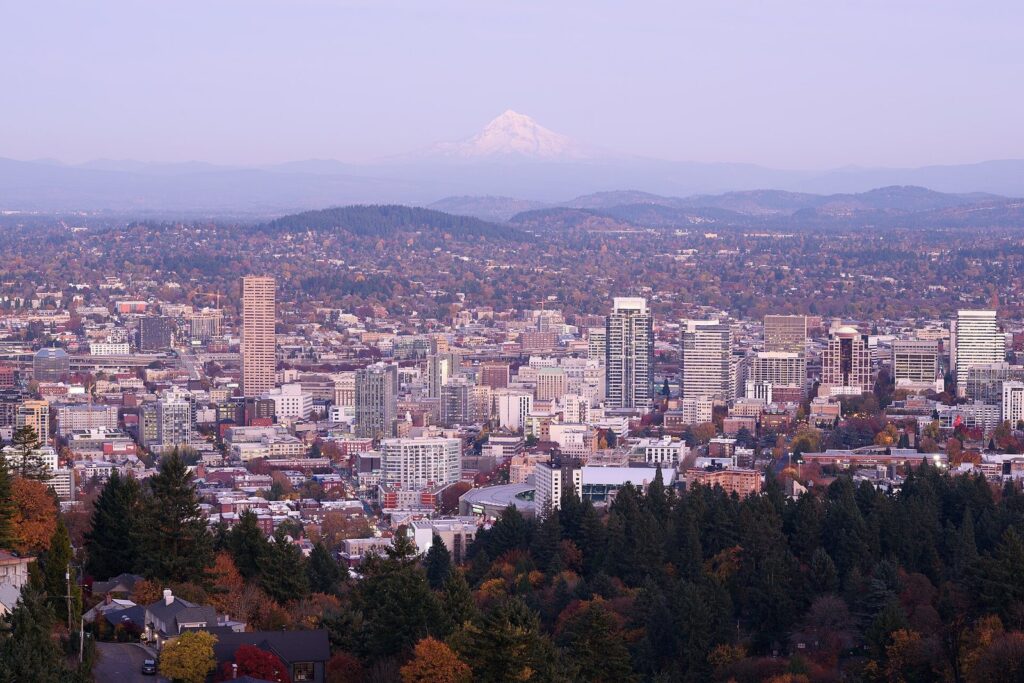
- Portland and Mount Hood from Pittock Mansion: photo by King of Hearts, Wikimedia Commons (CC BY-SA 4.0)
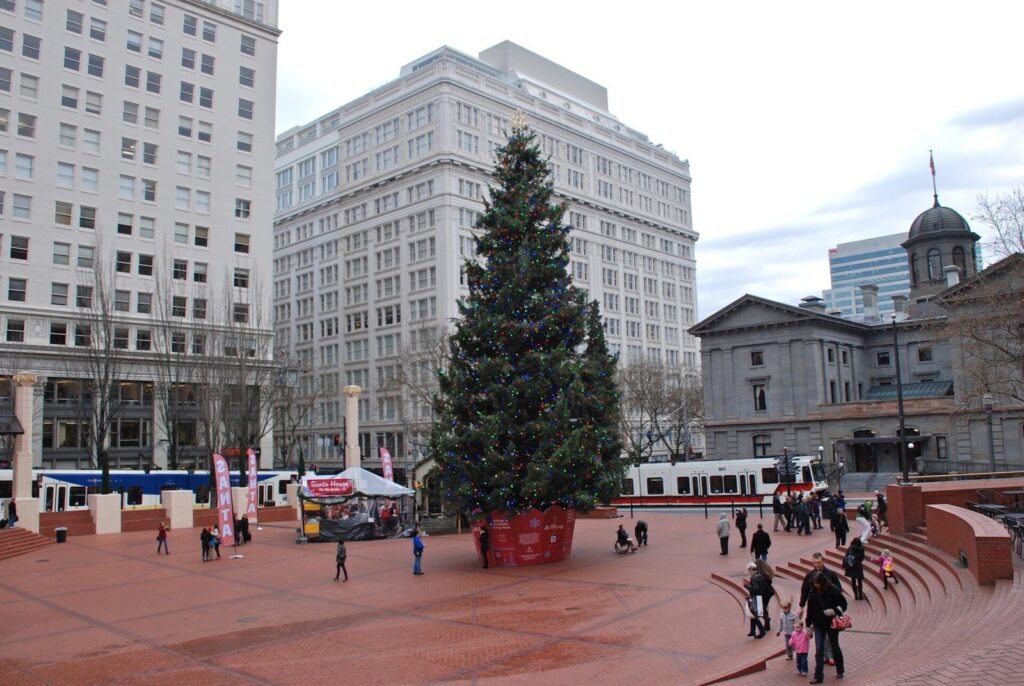
- Pioneer Courthouse Square in December: photo by Steve Morgan, Wikimedia Commons (CC BY-SA 3.0)
- Portland Union Station: photo by Cacophony, Wikimedia Commons (CC BY-SA 2.5)
- Portland Streetcar on the Broadway Bridge: photo by Steve Morgan, Wikimedia Commons (CC BY-SA 4.0)
- Hawthorne Bridge: photo by Steve Morgan, Wikimedia Commons (CC BY-SA 3.0)
- Cartopia food carts: photo by Another Believer, Wikimedia Commons (CC BY-SA 4.0)
- Portland Japanese Garden: photo by King of Hearts, Wikimedia Commons (CC BY-SA 4.0)
- Multnomah Falls: photo by King of Hearts, Wikimedia Commons (CC BY-SA 4.0)