The best Mount Hood day trips from Portland follow US 26 about 60 miles east to Government Camp and Timberline Lodge, a drive of roughly 90 minutes. In summer you can pair the lodge with Trillium Lake or a waterfall hike; in winter the same road leads to ski areas, snowshoe routes and Sno-Parks that need a permit. Loop home through Hood River and the Columbia River Gorge and you’ll have seen the mountain from three sides in a single day.
This page is for visitors staying in Portland, Oregon who want mountain scenery without an overnight trip, by car or by bus. The caveat: Mount Hood makes its own weather and changes the rules by season, so the permit, tires and trail that were right in August can be wrong in November. Details were checked on September 24, 2026 against the operators’ and agencies’ own websites.
On this page: At a glance · Choosing a trip · Getting there · Sandy and Government Camp · Timberline Lodge · Trillium and Mirror lakes · Waterfall hikes · Views without hiking · The Mount Hood Loop · Sample days · Winter · Winter driving · Safety · Passes and permits · Costs · Without a car · Seasons · Plan B and overnights · FAQ
Mount Hood day trips at a glance
| Question | Short answer (checked September 2026) |
|---|---|
| Drive | About 60 miles and 90 minutes on US 26 to Government Camp and Timberline Lodge |
| Best single stop | Timberline Lodge, the 1937 Depression-era lodge high on the mountain’s south side |
| Time needed | A full day for the lodge plus a lake or a hike; a long day for the Mount Hood Loop |
| Summer costs | Trillium Lake day use $10 per vehicle; many trailheads need a Northwest Forest Pass ($30 a year) |
| Winter costs | Sno-Park permit from November 1 to April 30: $4 a day, $9 for three days, $25 a season |
| Winter driving | Carry chains or traction tires; check TripCheck before you leave and before you head down |
| Without a car | The Mt. Hood Express runs from Sandy to Government Camp and Timberline daily; $5 day pass |
| Best months | July to September for trails and lakes; December to March for snow |
Weighing the mountain against the ocean or the Gorge? Our comparison of day trips from Portland lines them up, and our guide to Oregon Coast day trips covers the other direction.
Which Mount Hood day trip fits you?
Mount Hood, Oregon’s highest peak, is a volcano ringed by national forest, and “going to Mount Hood” can mean five very different days. The mountain sits within the ceded lands of the Confederated Tribes of Warm Springs, whose reservation borders the national forest to the southeast, and tribal members still hunt, fish and gather here under their treaty rights. Decide what kind of day you want before you pick a road.
| If you want | Do this | Best season | Think twice if |
|---|---|---|---|
| The classic | Timberline Lodge and Trillium Lake | Year-round; the lake is a snowshoe trip in winter | Clouds hide the summit; check a webcam first |
| A scenic loop | US 26, OR 35 and the Gorge via Hood River | Summer and fall | OR 35 has snow warnings or closures |
| A waterfall hike | Ramona Falls or Tamanawas Falls | Summer to early fall | You’re short on time or the river is high |
| An easy lake walk | Mirror Lake or the Trillium Lake loop | Summer to early fall | Snow lingers into early summer up here |
| Views without hiking | Timberline, Trillium’s shore and roadside viewpoints | Any clear day | It’s cloudy: the mountain simply vanishes |
| Snow | Skiing, snowshoeing or sledding at designated areas | December to March | You don’t have chains or traction tires |
Verdict: for a first trip, drive to Timberline, walk through the lodge, and stop at Trillium Lake on the way down. Add the loop through Hood River if you have daylight and dry roads.
How do you get to Mount Hood from Portland?
US 26 is the main road. It leaves the metro area through Gresham, passes through Sandy and a string of small mountain communities, and climbs to Government Camp, the ski village near the top of the pass. Timberline Road turns off at the east end of Government Camp and switchbacks up to the lodge. Plan on about 60 miles and 90 minutes from downtown to Timberline without traffic.
The second approach is OR 35, which leaves US 26 east of Government Camp and runs north along the mountain’s east side, past Mt. Hood Meadows and the White River, to Hood River on the Columbia. Together with I-84 through the Gorge, the two highways make the Mount Hood Loop, about 165 miles from Portland and back.
Traffic follows the snow. On winter weekends a line of skiers heads east on US 26 in the morning, and on Sunday afternoon they all come back at once, sometimes in the dark and the snow. Summer slowdowns are shorter, but the parking at Trillium Lake, Mirror Lake and the popular trailheads fills early, so leaving Portland by 8 a.m. pays off in every season.
Sandy, the villages and Government Camp
Sandy is the gateway: the last large town on US 26, with full-size grocery stores, gas stations and fast food, and the place to fill the tank and buy lunch before the climb. A few minutes off the highway, Jonsrud Viewpoint frames the mountain above the Sandy River valley and is worth a two-minute stop on a clear morning.
Past Sandy the highway climbs through Brightwood, Welches, Zigzag and Rhododendron, a string of small mountain communities with cabins, rentals, a few cafés and the Forest Service’s Zigzag Ranger Station, all linked to Sandy by the Villages Shuttle. The forest closes in, the river runs alongside, and the mountain disappears from view until you’re almost on top of it.
Government Camp, near the top of the pass, is the ski village: a short main street of lodges, rentals, restaurants and a general store just off the highway, with Skibowl on one side and Timberline Road climbing away on the other. It takes its odd name from wagons a U.S. Army regiment abandoned near here in 1849, and the country around it is thick with Oregon Trail history. The Barlow Road, the trail’s final overland stretch, crossed Barlow Pass east of town and dropped down Laurel Hill to the west, where emigrants lowered their wagons down a slope so steep they snubbed them to trees with ropes.
For food, keep expectations simple. Sandy and Hood River have the most choice, Government Camp has a handful of year-round places, and Timberline has its own dining rooms, so the long stretch between Sandy and the pass is where you’ll wish you’d packed a lunch. On winter afternoons, Government Camp’s restaurants fill fast once the lifts close.
Timberline Lodge: what’s worth your time?
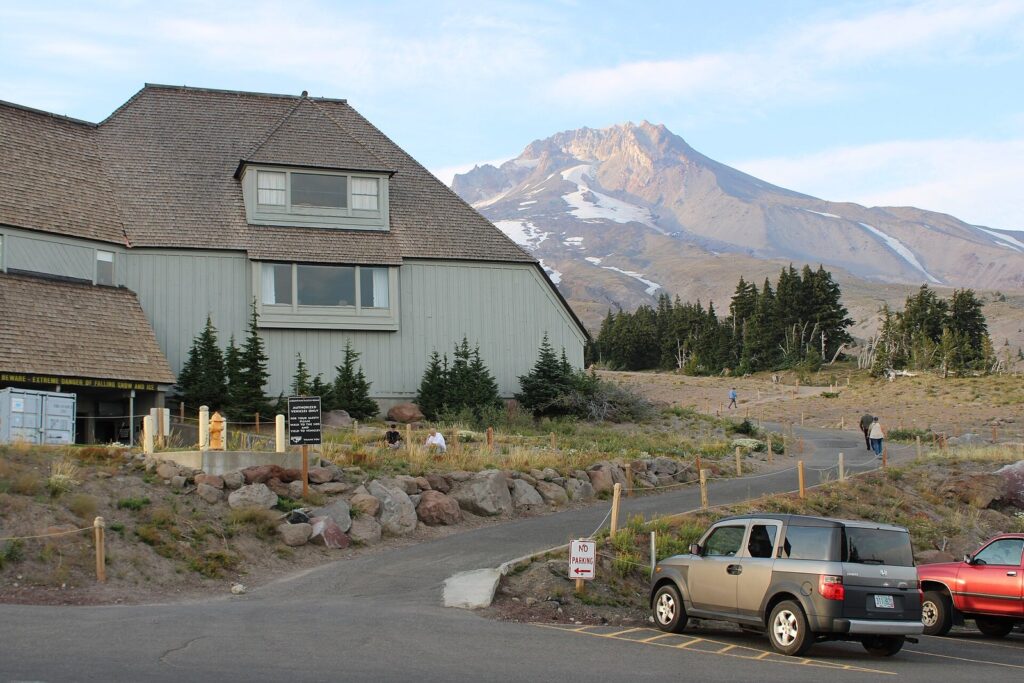
Timberline is the stop almost nobody regrets. More than 500 Works Progress Administration workers built it in about 18 months during the Depression, and President Franklin D. Roosevelt dedicated it on September 28, 1937. It’s now a National Historic Landmark with nearly two million visitors a year, and you don’t need to be a hotel guest to walk in and look around.
Inside, the craftsmanship is the attraction: hand-forged ironwork, carved newel posts, hooked rugs and paintings by WPA artists, gathered around the huge stone chimney in the main lobby, and the lodge publishes a self-guided art tour. Outside, the terrace looks straight up the mountain’s south face, and film fans will recognize the exterior from The Shining (1980). Walking in costs nothing, which on a mountain full of fees counts for something; from November 1 to April 30, though, Timberline’s state-maintained lots need a Sno-Park permit, sold at any open ticket window or at the Guest Services desk in the Wy’East Day Lodge.
In summer the Magic Mile Sky Ride carries non-skiers up to 7,000 feet for a view south along the Cascades; it’s listed as running daily from 9:30 a.m. to 4 p.m. in season, with tickets at the base of the lift, the Day Lodge or the hotel desk. Timberline is also known for skiing into summer on the Palmer Snowfield, so don’t be surprised by ski racks in July.
Think twice if the summit is in cloud. The lodge is still worth seeing, but the view is the other half of the visit, and a webcam will tell you in ten seconds whether you’ll get it.
Trillium Lake and Mirror Lake
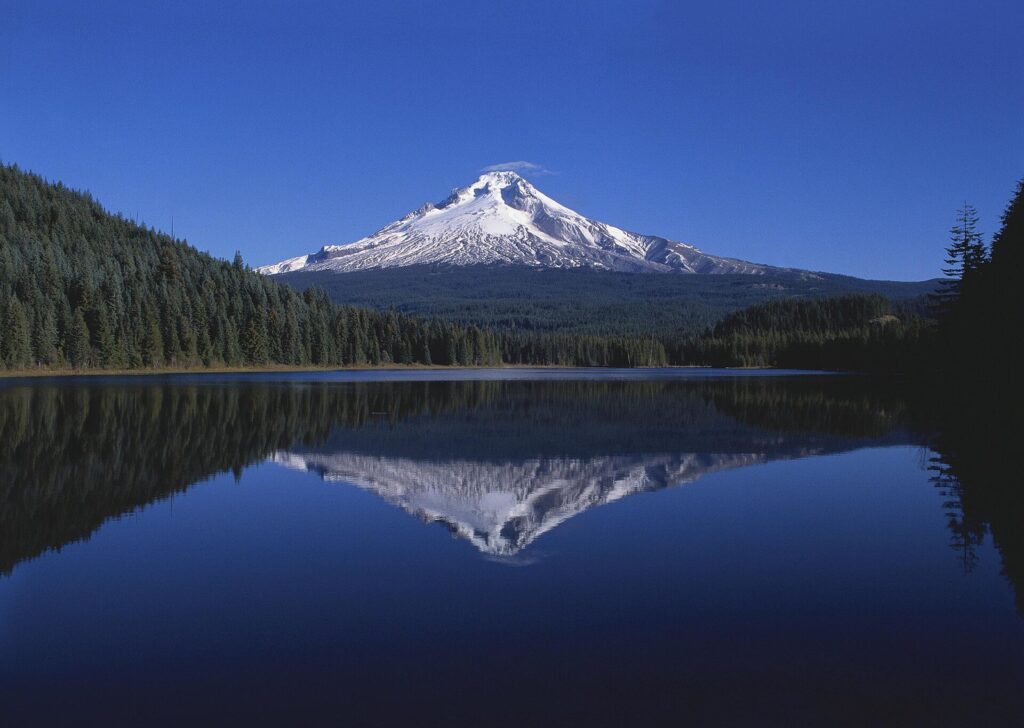
Trillium Lake is the Mount Hood photograph: a shallow lake just below Government Camp with the summit reflected in it on calm mornings. A flat trail loops around the shore through meadow and forest, the picnic areas fill on warm weekends, and canoes and kayaks share the water with anglers. Get there early, both for parking and because the wind that ruins the reflection usually picks up later in the day.
The Forest Service charges $10 per vehicle per day for the Trillium Lake Day Use Area, and the only pass it accepts instead is the $30 annual Northwest Forest Pass. In winter the road to the lake isn’t plowed and the lake becomes a snowshoe and cross-country ski outing from the Trillium Sno-Park on US 26, where the Sno-Park permit applies instead.
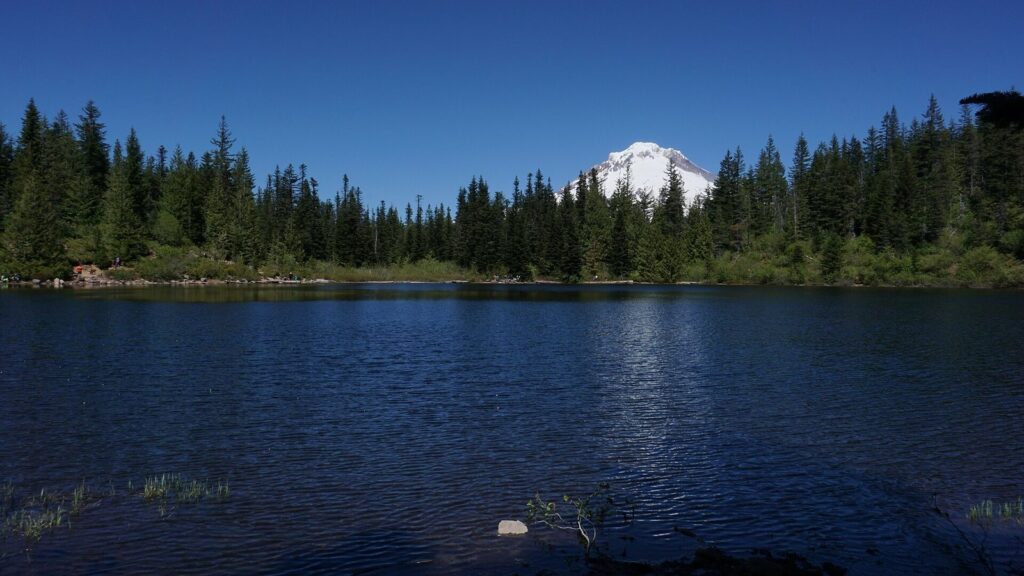
Mirror Lake is the hiking version of the same idea: a steady climb through forest from a trailhead off US 26 near Government Camp to a small lake that reflects the mountain. It’s one of the busiest trails on Mount Hood in summer, so go early or on a weekday, and check the Forest Service trail page for the current trailhead, parking and pass rules before you set out.
Verdict: Trillium Lake for the easy reflection and a picnic; Mirror Lake if you’d rather earn the same view with a short hike.
Waterfall hikes: Ramona Falls and Tamanawas Falls
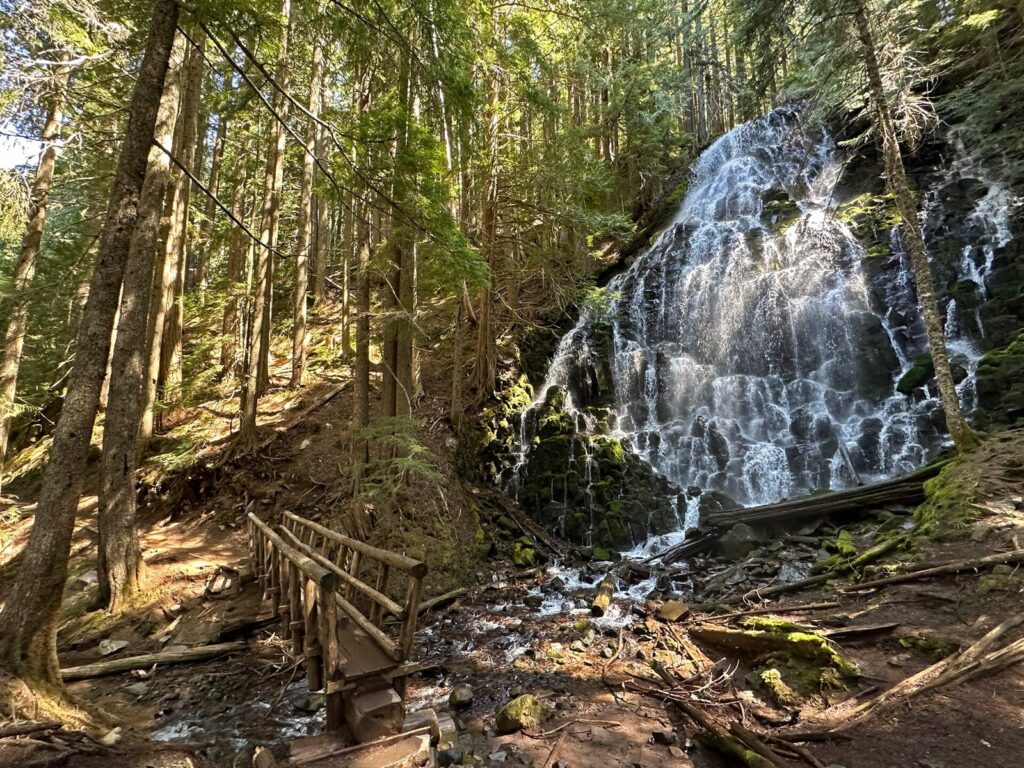
Ramona Falls, on the mountain’s west side, is the big one: a tall, lacy cascade fanning over columnar basalt at the end of a long forest loop in the Mount Hood Wilderness. The trailhead is reached from Lolo Pass Road near Zigzag. From May 15 to October 15 you fill out a free wilderness permit at the trailhead’s permit box, and it’s worth reading the trail page for parking and pass rules too.
The catch is the Sandy River. The trail crosses this glacial river, which can run high, fast and silty, and crossing conditions change from year to year, so check the Forest Service’s trail page before you go and turn back if the water looks pushy. Treat Ramona as a half-day hike, not a quick stop on the way to Timberline.
Tamanawas Falls, on the east side off OR 35, is the gentler choice: a trail along Cold Spring Creek to a wide curtain of water pouring off a basalt ledge into a rocky bowl. It fits neatly into a Mount Hood Loop day and runs fullest in late spring, though snow can linger on the trail into the early season.
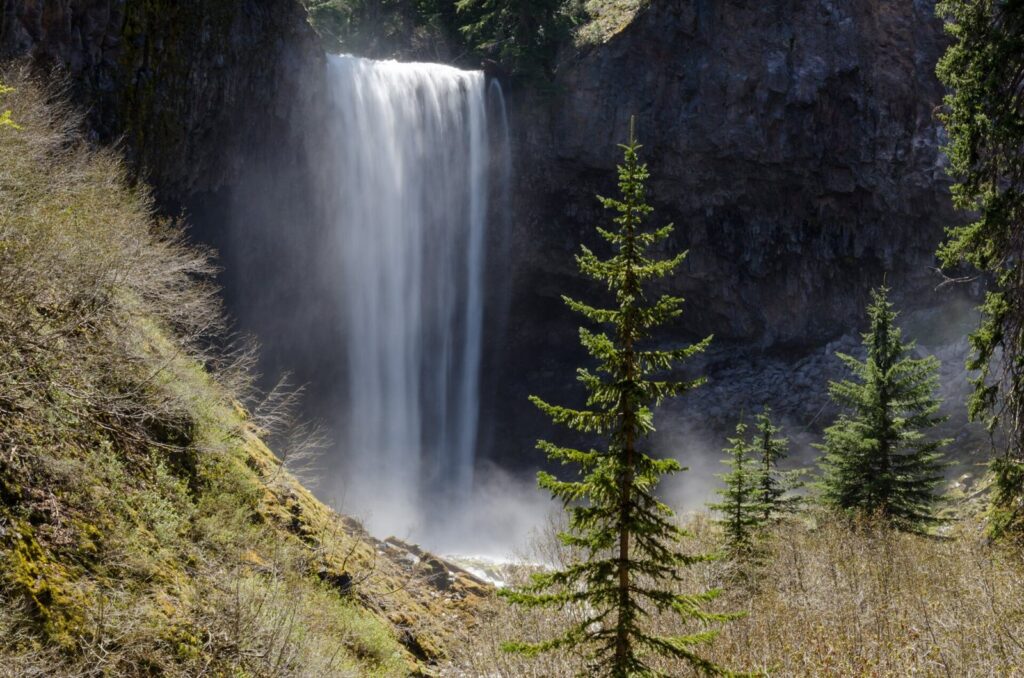
Whichever you pick, remember that these are mountain trails. Carry layers, water and a downloaded map, since phone coverage can be patchy away from the highway, and check the Forest Service alerts page in late summer, when wildfire restrictions and closures are most likely.
Where can you see Mount Hood without hiking?
You don’t need boots for good views. On a clear day, these work from the car or a short walk:
| Viewpoint | Where | Why stop |
|---|---|---|
| Timberline Lodge terrace | Top of Timberline Road | The closest paved-road view of the summit |
| Trillium Lake shore | Off US 26 below Government Camp | The reflection shot ($10 day-use fee) |
| Jonsrud Viewpoint | Sandy, on the way up | The mountain over the Sandy River valley, no detour needed |
| White River crossing | OR 35 on the east side | A boulder-strewn glacial valley below the summit |
| Panorama Point | Hood River | Orchards and the mountain together, best at blossom time and harvest |
The mountain is only visible when the clouds allow, and it vanishes more often than first-time visitors expect. Check a webcam before you drive: if the summit is hidden at Timberline, it will be hidden from every stop on this list.
Is the Mount Hood Loop worth it?
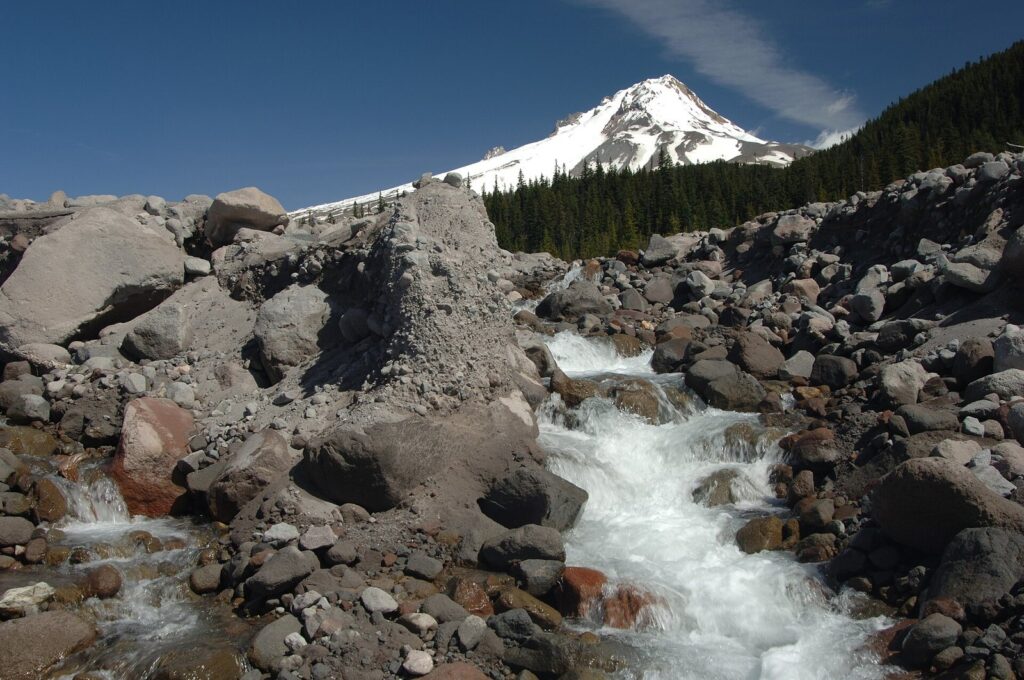
The Mount Hood Loop is the day trip that shows you the most: US 26 to Government Camp and Timberline, OR 35 down the east side into the Hood River Valley’s orchards, then I-84 home through the Columbia River Gorge, about 165 miles in all. Much of it follows the Mount Hood Scenic Byway, and at Barlow Pass it crosses the old wagon route of the Barlow Road.
Which way round? Mountain first usually works best. You reach Timberline and Trillium Lake before the parking fills and before afternoon clouds tend to build over the summit, arrive in Hood River for a late lunch, and drive the Gorge in evening light. Hood River’s Fruit Loop, a signed drive of about 35 miles through orchards and farm stands, is the obvious detour and is at its best from late summer through the fall harvest. Hood River County is also one of Oregon’s rural counties where you can pump your own gas at any station, any hour.
Hood River itself deserves more than a gas stop. The town steps down a hillside to the Columbia, where windsurfers and kiteboarders work the afternoon wind in summer, and its downtown has more places to eat than the rest of the loop combined. Panorama Point, just south of town, is where the orchards and the mountain line up in one frame.
Think twice if it’s winter. OR 35 can require chains or close in storms, and a loop that’s lovely in October can strand you in January. For the Gorge half in detail, see our guide to the Columbia River Gorge from Portland.
Three ways to spend the day
Each of these starts around 8 a.m. in Portland and ends back in the city by evening, but the mountain’s weather gets the final vote. Check a webcam before you leave and swap plans if the summit is hidden.
1. Summer classic: Timberline and Trillium Lake
Drive straight to Timberline while the summit is clear, walk through the lodge and out onto the terrace, and ride the Magic Mile if it’s running. Head down to Trillium Lake for a picnic and the loop walk, then stop at Jonsrud Viewpoint in Sandy on the way home. It’s about 120 miles of driving, and nothing feels rushed.
2. The loop, mountain first
Take US 26 to Timberline for the morning, then OR 35 down the east side with a stop at the White River crossing or a hike to Tamanawas Falls. Have a late lunch in Hood River, drive part of the Fruit Loop in harvest season, and come home on I-84 through the Gorge in evening light. Budget ten hours or more.
3. Winter snowshoe day
Buy a Sno-Park permit before you leave, check TripCheck and the avalanche forecast, and drive to the Trillium Sno-Park for a snowshoe along the unplowed road to the lake. Warm up over lunch in Government Camp, then drive up to Timberline to see the lodge buried in snow, and start down while it’s still light.
If you’re fitting the mountain into a longer stay, our Portland itineraries show which day to give it, usually the clearest one in the forecast.
What can you do at Mount Hood in winter?
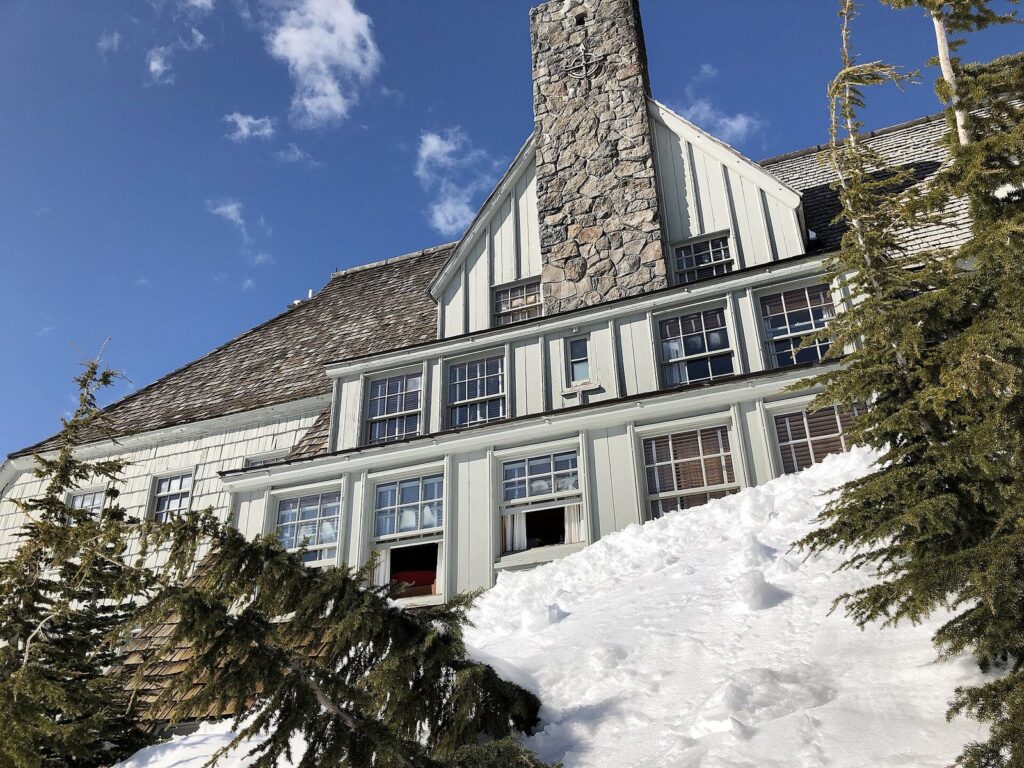
Winter is Mount Hood’s busiest season. Timberline, Mt. Hood Meadows on the east side and Mt. Hood Skibowl near Government Camp are the three big ski areas, with Skibowl known for night skiing close to the highway. Lift ticket prices change by date, so check before you commit to a day.
You don’t need to ski. Snowshoeing is the easy way in: Trillium Lake’s snowed-over road and loop make a gentle first outing from the Trillium Sno-Park, and ski areas rent snowshoes. Families come for sledding and snow play, but only at designated areas, since roadside snowbanks next to traffic are a genuinely bad place for it. Anyone heading beyond groomed or marked routes should read the Northwest Avalanche Center’s Mount Hood forecast first.
Every winter trip needs a Sno-Park permit to park anywhere in the program between November 1 and April 30: $4 for a day, $9 for three consecutive days or $25 for the season, sold by DMV offices, online and by retail agents, who may add a service fee. That covers Timberline’s state-maintained lots as well as the Skibowl and Mt. Hood Meadows lots, and each resort sells permits on site if you forget.
What do you need for winter driving on US 26?
Oregon’s chain law is the part visitors most often get wrong. When signs require them, cars and light trucks rated 10,000 pounds or less that aren’t towing must use chains or traction tires, meaning studded tires or tires rated for severe snow, and cars chain one tire on each side of the drive axle. Four-wheel and all-wheel-drive vehicles are exempt in most conditions if they aren’t towing, weigh 6,500 pounds or less unloaded, carry chains and have mud-and-snow, all-weather or traction tires on all four wheels, but in very bad conditions ODOT can require chains on everything. Ignoring a sign that says to carry chains is a Class C traffic violation; not using them where they’re required carries an $800 fine.
Rental cars complicate this, because many rental agreements restrict chain use. Ask when you book, and if the answer is no, take the bus or choose a winter day trip that stays at lower elevation.
The rest is habit. Check TripCheck’s cameras and alerts before you leave Portland and again before you head down, fill the tank in Sandy, carry water, food, warm layers and a charged phone, and leave the mountain before dark if snow is forecast. The Sunday-afternoon crawl down US 26 after a storm can take far longer than the drive up.
How do you stay safe on the mountain?
Mount Hood is an easy mountain to visit and a serious one to underestimate. Weather changes fast at this elevation, and a sunny morning at Timberline can turn to wind, cloud and whiteout by afternoon, even in summer. Carry more clothing than the Portland forecast suggests, plus water, food and a way to navigate that doesn’t depend on a phone signal.
Snow is the other constant. It lingers on higher trails well into summer, hiding the path and covering steep slopes where a slip is hard to stop, so turn around when the trail disappears under snow unless you have the gear and the skills for it. Around Timberline the sun bounces off the snow, which makes sunglasses and sunscreen as important in March as in August.
The summit itself is not a day-trip goal. Climbing Mount Hood means a technical route with crevasses, rockfall and fast-changing weather, it requires a Mt. Hood Climbing Permit ($20 for a trip, $50 for a year), and people have died attempting it. If the summit calls to you, go with a professional guide service or proper mountaineering training, not a pair of trail runners.
In late summer and early fall, check the Forest Service’s alerts for wildfire closures and fire restrictions, which can shut trails and campgrounds with little notice, and watch the air-quality forecast when smoke drifts in from fires elsewhere in the Cascades.
Which passes and permits do you need?
| Pass | When and where | Cost (2026) | Notes |
|---|---|---|---|
| Oregon Sno-Park permit | Sno-Parks and resort lots, November 1 to April 30 | $4 a day, $9 for three days, $25 a season | Sold at DMV, online, by agents and at the resorts |
| Northwest Forest Pass | Many Forest Service trailheads and day-use sites | $30 a year; day passes also sold | Read the sign at each trailhead |
| Trillium Lake day use | Trillium Lake Day Use Area | $10 per vehicle per day | Only the annual Northwest Forest Pass is accepted instead |
| Wilderness permit | Wilderness trailheads with a permit box, May 15 to October 15 | Free, self-issued | Ramona Falls and other wilderness hikes |
| Mt. Hood Climbing Permit | Climbing the mountain | $20 per trip, $50 a year | Mountaineering, not a day-trip activity |
The Sno-Park permit and the Northwest Forest Pass are different passes for different seasons, and neither covers the other. In the shoulder seasons, when trailheads are still snowy but the Sno-Park rules have ended, or the reverse, read the posted signs rather than guessing.
What does a Mount Hood day trip cost?
Less than a ski weekend, more than a walk in Forest Park. A typical day by car breaks down like this:
| Item | Cost (checked September 2026) | Notes |
|---|---|---|
| Fuel | About 120 miles round trip to Timberline; about 165 for the loop | Fill up in Portland or Sandy |
| Parking, summer | $10 at Trillium Lake; a Northwest Forest Pass at many trailheads | The $30 annual pass covers Trillium too |
| Parking, winter | Sno-Park permit: $4 a day or $9 for three days | Needed at Timberline, Skibowl and Meadows lots |
| Magic Mile or lift ticket | Varies by season and date | Check the resort’s site before you go |
| Bus instead of a car | $5 Mt. Hood Express day pass, plus TriMet and Sandy connections | Exact fare on board |
| Food | Your call | Groceries from Sandy beat anything on the mountain for price |
Oregon has no sales tax, so the price on the menu or the gear-shop tag is what you pay. The easy savings are packing lunch and, if you’ll use Forest Service sites more than a few times in a year, buying the annual Northwest Forest Pass rather than paying day by day.
Can you get to Mount Hood without a car?
Yes, with some patience. The Mt. Hood Express, run by Clackamas County, is a limited-stop bus along US 26 from Sandy to Government Camp and Timberline, seven days a week. A day pass costs $5 and you can pay the exact fare on board; in season the buses carry bike trailers and ski boxes. A separate Villages Shuttle serves the communities between Sandy and Rhododendron.
The trick is reaching Sandy. From Portland, ride MAX to Gresham and connect to a Sandy Area Metro bus; TriMet’s online trip planner lists the Mt. Hood Express, so it can plan the whole journey in one search. Check the current Express timetable before you commit, because the last bus down sets the length of your day. Guided tours from Portland are the other car-free option, and many combine the mountain with the Gorge. For MAX routes and fares in the city, see our guide to getting around Portland, Oregon.
When is the best time to go?
| Season | Conditions | Good for | Watch for |
|---|---|---|---|
| Summer (July to September) | Trails mostly snow-free, lakes open, long days | Trillium, Mirror Lake, Ramona and Tamanawas falls, the Magic Mile | Busy trailheads, wildfire smoke and fire closures |
| Fall (October to mid-November) | Cool, clear spells, then the first snow | The loop, the Hood River harvest, quieter trails | Early storms and short days |
| Winter (mid-November to March) | Deep snow at Government Camp and above | Skiing, snowshoeing, snow play | Chains, Sno-Park permits, storm closures |
| Spring (April to June) | Snow lingers high while the valleys turn green | Spring skiing, Hood River blossoms, Tamanawas at full flow | Snowbound upper trails, mud lower down |
The mountain’s higher trails often hold snow into July, so summer arrives late up there. For Portland’s side of the calendar, from festivals to the rainiest months, see the best time to visit Portland, Oregon.
What if the weather turns, and should you stay the night?
If the forecast buries the summit in cloud, don’t force it. The Gorge’s waterfalls look their best in wet weather and sit much closer to the city, and Hood River’s cafés and orchards make a fine day even when the mountain behind them is invisible. If snow closes US 26, or a storm is due on a Sunday afternoon, spend the day in Portland instead; the mountain will still be there next weekend.
An overnight turns the long drive into a relaxed trip. Timberline Lodge is itself a historic hotel, Government Camp has lodges and rentals near the ski areas, and Hood River suits loop drivers. Prices climb on winter weekends and holidays, and Oregon’s state lodging tax is 1.5% for stays ending by December 31, 2026 and 2.75% for stays ending on or after January 1, 2027, plus local lodging taxes. If you’d rather sleep in the city, our guide on where to stay in Portland, Oregon covers bases with quick access to the highways.
Mount Hood Day Trip FAQ
How far is Mount Hood from Portland?
The summit is about 50 miles east of downtown in a straight line, and Timberline Lodge is about 60 miles and 90 minutes away by road on US 26. The mountain’s east side, including Mt. Hood Meadows and Tamanawas Falls, is often easier to reach through the Gorge and Hood River, about an hour from Portland on I-84.
Can I drive a rental car to Mount Hood in winter?
Usually, but check two things first: whether your rental agreement allows chains, and what tires the car has. An all-wheel-drive car with mud-and-snow tires meets the exemption in most conditions if you carry chains. If the rules or the forecast don’t work, the Mt. Hood Express from Sandy is the simpler answer.
Is Timberline Lodge open to the public?
Yes. You can walk through the lobby, look at the WPA art and have a meal or a drink without staying overnight. Parking is free outside the snow season, but from November 1 to April 30 the lodge’s state-maintained lots need a Sno-Park permit, which you can buy on site.
Can you see Mount Hood from Portland?
On clear days, yes, from downtown bridges, the West Hills and plenty of east-side streets. It’s hidden much of the winter and on hazy summer days, so when it’s out, locals notice. A clear morning in Portland is also a good sign for the view from Timberline, though the mountain can still cloud over by afternoon.
Is there snow on Mount Hood all year?
On the upper mountain, yes. Glaciers and permanent snowfields cover the summit year-round, and Timberline is known for skiing into summer on the Palmer Snowfield. Lower trails like Trillium Lake and Mirror Lake usually melt out by early summer, while higher routes can hold snow into July.
Can you hike to the top of Mount Hood?
Not as a hike. The summit route is a technical climb over glaciers and steep snow, usually made in spring or early summer by roped parties who start well before dawn, and it requires a Mt. Hood Climbing Permit. Day-trippers get big views without the risk from the Magic Mile Sky Ride, the Timberline terrace or a trail like Mirror Lake.
Is Mount Hood a good day trip with kids?
Yes, if you keep it short. The flat Trillium Lake loop, the lodge’s giant fireplace and a designated snow-play area in winter work for most ages; long hikes and river crossings don’t. Pack snacks and extra layers, since there’s little food between Government Camp and Sandy. More ideas are in our guide to Portland, Oregon with kids.
Related Portland Guides
- Day Trips from Portland, Oregon: the mountain against the coast, the Gorge and wine country
- Columbia River Gorge from Portland: the other half of the Mount Hood Loop
- Oregon Coast Day Trips from Portland: the westbound alternative when the mountain is clouded
- Best Time to Visit Portland, Oregon: month-by-month weather and events
- Getting Around Portland, Oregon: MAX to Gresham and the rest of the transit network
Sources and verification
Details on this page were checked on September 24, 2026 against the agencies and operators listed below. The page is compiled from their published information and claims no first-hand visits.
- Timberline Lodge: history
- Timberline Lodge: Magic Mile Sky Ride
- Timberline Lodge: parking and Sno-Park permits
- Clackamas County: Mt. Hood Express
- Mt. Hood National Forest: passes
- Mt. Hood National Forest: wilderness and climbing permits
- Mt. Hood National Forest: Trillium Lake Day Use Area
- Recreation.gov: Mt. Hood Climbing Permit
- Oregon DMV: Sno-Park permits
- ODOT TripCheck: Oregon chain law
- ODOT: tire chains
- Mt. Hood Skibowl: parking
- Mt. Hood Meadows: transportation and parking
- Northwest Avalanche Center
- Oregon State Fire Marshal: self-serve fueling
- Oregon Department of Revenue: state lodging tax
Portland Tourism Guide is an independent publication, not affiliated with Travel Portland, the City of Portland or any business named here.
Photo credits
- Mount Hood from Trillium Lake: photo by Mt. Hood Territory, Wikimedia Commons (CC BY 2.0)
- Timberline Lodge in summer: photo by Chris Light, Wikimedia Commons (CC BY-SA 4.0)
- Mirror Lake: photo by Luke Nadeau from U.S., Wikimedia Commons (CC BY 2.0)
- Ramona Falls: photo by Jeffhollett, Wikimedia Commons (CC BY-SA 4.0)
- Tamanawas Falls: photo by Gary Halvorson, Oregon State Archives, Wikimedia Commons (CC BY 4.0)
- White River canyon: photo by U.S. Forest Service- Pacific Northwest Region, Wikimedia Commons (public domain)
- Timberline Lodge in snow: photo by Tim-desser, Wikimedia Commons (CC0)