The best shopping in Portland, Oregon is on neighborhood streets rather than in malls: Powell’s City of Books on West Burnside, the boutiques of the Pearl District and NW 23rd Avenue, the vintage shops and record stores of Hawthorne and East Burnside, and the crafts stalls of Portland Saturday Market by the river. Oregon has no sales tax, so the price on the tag is the price you pay, which makes even ordinary shopping feel like a small win.
This page is for visitors deciding where to spend a few hours or a few hundred dollars, and what’s worth carrying home. The caveat: retail in Portland has changed fast, the Lloyd Center mall closed for good in August 2026, and old shopping lists are full of stores that have moved or shut, so every business named below was checked against 2026 sources. Hours, market days and store status were checked on September 24, 2026.
On this page: At a glance · Sales tax · Where to shop · District by district · Powell’s · Markets · Record stores · Bookstores · Vintage and antiques · Souvenirs · Costs · Malls and outlets · With kids · Rainy days · Walking routes · Bags and reuse · Oregon brands · Where to eat · Hours, parking and transit · Seasons · FAQ
Shopping in Portland at a glance
| Question | Short answer (checked September 2026) |
|---|---|
| Sales tax | None in Oregon; lodging and a few specific purchases are taxed |
| One place to go | Powell’s City of Books, 1005 W Burnside St, open daily 10 a.m. to 9 p.m. |
| Best shopping streets | The Pearl District, NW 23rd Avenue, SE Hawthorne Boulevard, North Mississippi Avenue |
| Markets | Portland Saturday Market, Saturdays 10 a.m. to 5 p.m. through December 19, 2026; the PSU farmers market, Saturdays year-round |
| Malls | Pioneer Place downtown; Washington Square and Bridgeport Village in Tigard; outlets in Woodburn |
| Closed | Lloyd Center, which shut on August 8, 2026 ahead of demolition |
| At the airport | PDX shops charge the same prices as their city locations |
For everything else the city offers between shops, see our list of things to do in Portland, Oregon.
Is shopping in Portland really tax-free?
Yes, for almost everything you’ll buy as a visitor. Oregon is one of five states with no general sales tax, alongside Alaska, Delaware, Montana and New Hampshire, so clothing, books, electronics, records, wine and souvenirs all ring up at the shelf price. There’s no form to fill in and no refund to claim, and international visitors don’t need to keep receipts for a tax refund, because there’s nothing to refund.
The exceptions are on the travel side of the bill. Hotel rooms carry a stack of lodging taxes: in Portland, a 6% city tax, a 5.5% Multnomah County tax and a 3% tourism improvement district fee, 14.5% in all, plus Oregon’s state lodging tax of 1.5% on stays ending by December 31, 2026, rising to 2.75% for stays ending on or after January 1, 2027. Short-term rentals add a $4-a-night fee. Rental cars and a few other specific purchases carry their own taxes too. The no-sales-tax rule is also why many Washington residents cross the Columbia to shop; on a Saturday afternoon you’ll notice the Washington plates.
One more pleasant surprise: the airport follows street pricing. Shops and restaurants at Portland International Airport have to charge the same prices as their off-airport locations, so a last-minute bag of hazelnuts or a Powell’s tote costs no more at the gate than in town.
Where should you shop?
Portland’s shopping is spread across a handful of walkable districts, each with its own character. Choose by what you’re after:
| District | What it’s like | Best for | Getting there |
|---|---|---|---|
| Downtown | The civic and retail core, with Pioneer Place and chain stores around Pioneer Courthouse Square | National brands, rainy-day browsing | MAX, streetcar, buses |
| Pearl District | Converted warehouses with boutiques, design shops and galleries | Home goods, design, galleries | Portland Streetcar |
| NW 23rd Avenue (Nob Hill) | A leafy street of boutiques in old Victorian houses, with cafés and brunch spots | Clothing, gifts, a slow afternoon | Streetcar NS Line |
| SE Hawthorne Boulevard | The east side’s classic shopping street, with vintage, records and gifts | Vintage clothing, local makers | Frequent-service buses |
| North Mississippi Avenue | A compact strip of small shops, bars and a cart pod | Records, gifts, an evening stroll | Buses; MAX Yellow Line nearby |
| Alberta Arts District | Galleries, studios and independent shops | Art, Last Thursday | Buses |
| Sellwood | A small-town main street known for antiques | Antiques and collectibles | Buses; the Springwater Corridor by bike |
Verdict: with one afternoon, walk from Pioneer Place to Powell’s and on into the Pearl. With a second, take a bus out SE Hawthorne for vintage and records. Save the malls for a rainy day or a specific errand. Our guide to Portland, Oregon neighborhoods covers what else each district offers.
What’s each shopping district like up close?
Downtown and Old Town
Downtown’s shopping clusters around Pioneer Courthouse Square, with Pioneer Place’s connected buildings on one side and national chains along the transit mall. It’s the easiest place for errands and big brands, and the MAX and streetcar lines meet here. A few blocks north, Old Town Chinatown has the Saturday Market by the river, Ground Kontrol’s arcade and the small museums, and a handful of long-running specialty shops. Old Town is busiest on Saturdays, when the market draws crowds to the waterfront.
The Pearl District
The Pearl was a district of rail yards and warehouses until the 1990s; now its brick buildings and loading docks hold furniture and design shops, clothing boutiques, galleries and home-goods stores, with Powell’s anchoring its southern edge on West Burnside. It’s flat, walkable and at its liveliest on the first Thursday evening of each month, when the galleries open late. Prices lean toward the higher end, especially for design and home goods.
NW 23rd Avenue and Nob Hill
NW 23rd Avenue, locally called “Trendy-third,” runs north from West Burnside through Nob Hill, with boutiques and gift shops in old Victorian houses and storefronts, plus cafés and brunch spots on every block. NW 21st Avenue, one block east, has more restaurants. It’s a pleasant street for an unhurried afternoon, and the Portland Streetcar’s NS Line stops nearby.
SE Hawthorne and Division
Hawthorne is the east side’s classic shopping street, and its best stretch, from about SE 30th to SE 40th avenues, mixes vintage malls, clothing shops, record and gift stores, bookshops and the historic Bagdad Theater. A few blocks south, SE Division Street is more about restaurants and bars, with a scattering of small shops between them. Frequent-service buses run along both.
North Mississippi and Alberta
North Mississippi Avenue is a compact strip of small independent shops, bars and a cart pod, with Mississippi Records a couple of blocks east on N Albina Avenue. NE Alberta Street, in the Alberta Arts District, has galleries, artists’ studios and independent shops, and on the last Thursday of the month its art walk fills the street with vendors and performers from 6 to 9 p.m.
Sellwood
Sellwood feels like a small town inside the city, with a main street of antique and collectibles shops, cafés and bakeries. It’s a good half day combined with Oaks Bottom Wildlife Refuge’s riverside trail or the nearby Oaks Amusement Park.
Is Powell’s City of Books worth the hype?
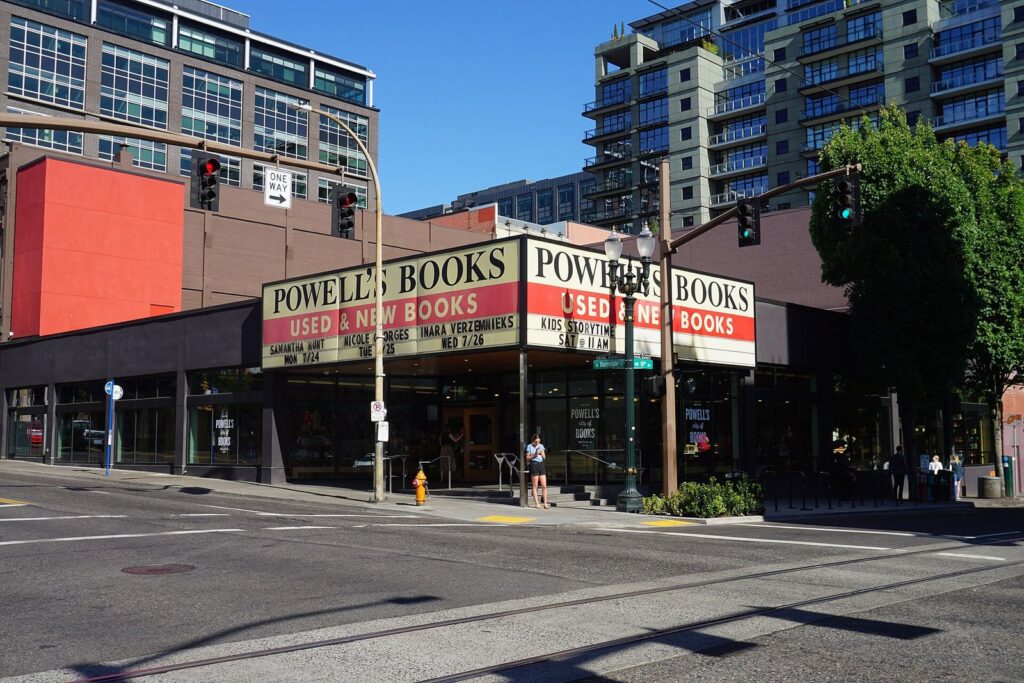
Yes, even for people who don’t think of themselves as book buyers. Powell’s calls itself the world’s largest independent bookstore, and its flagship at 1005 W Burnside St fills an entire city block, with new and used books shelved side by side in color-coded rooms across several floors. Grab a map at the entrance, because you will get lost, and plan on an hour at least. It’s open daily from 10 a.m. to 9 p.m.
The Rare Book Room upstairs, open 10 a.m. to 5 p.m., holds autographed first editions and collectible volumes behind glass, and it’s free to browse. Used books are often cheaper than you’d expect, and Powell’s also buys books, so readers on long trips sometimes trade in the novel they finished on the plane. A café inside keeps the browsing going.
Think twice if you’re going on a rainy Saturday afternoon. That’s when everyone else goes too; weekday mornings are calmer, and the evening hours until 9 p.m. are the store’s best-kept secret.
Which markets are worth a visit?
Portland Saturday Market
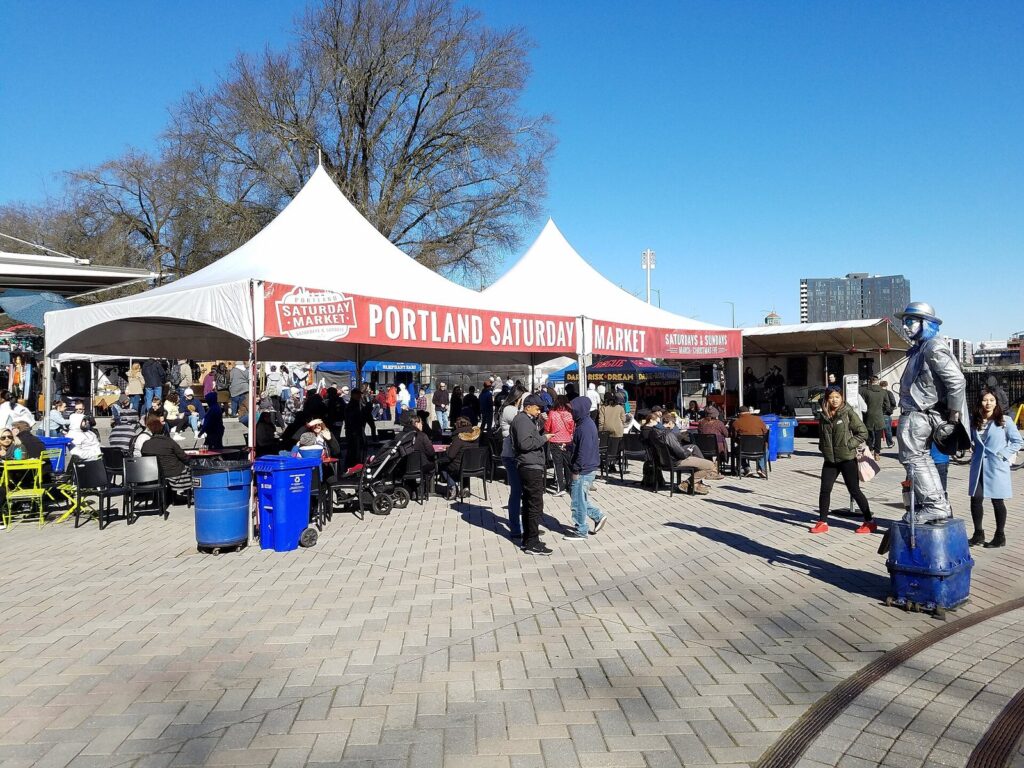
Portland Saturday Market is one of the country’s long-running open-air crafts markets, with local artists and makers selling jewelry, pottery, prints, clothing and woodwork, plus food booths and street performers. It sets up at 2 SW Naito Parkway, by the Burnside Bridge at the north end of Tom McCall Waterfront Park, and in 2026 it runs on Saturdays only, from 10 a.m. to 5 p.m., through December 19. Everything is handmade by the people selling it, which makes it the best single place in the city for gifts that actually come from Portland.
Portland Farmers Market at PSU
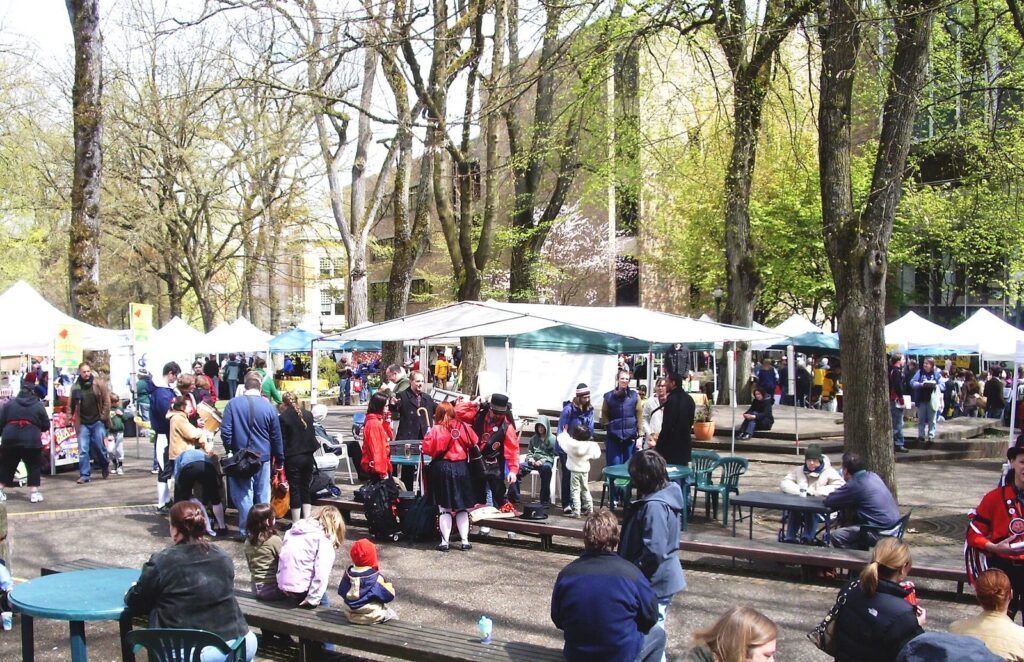
On Saturdays year-round, the Portland Farmers Market fills the South Park Blocks at Portland State University, at SW Park Avenue and SW Montgomery Street, with up to 100 vendor stalls. It runs from 8:30 a.m. to 2 p.m. through October 2026 and from 9 a.m. to 2 p.m. from November 7, 2026 into March 2027, and it’s closed on December 26. Beyond produce, look for hazelnuts, honey, jams, chocolate and smoked salmon, all of which travel well, and breakfast from the food stalls.
Portland Mercado
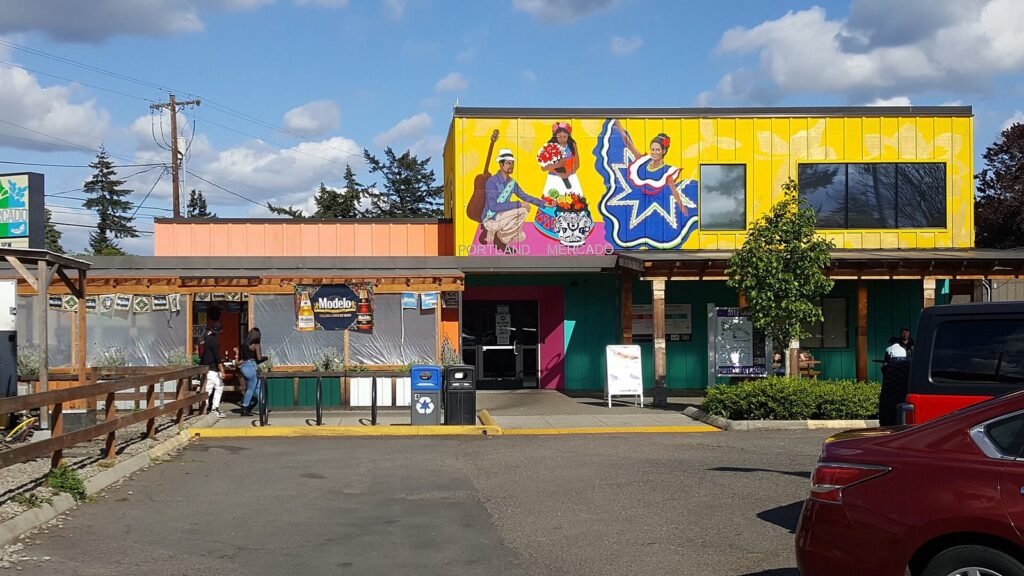
The Portland Mercado on SE Foster Road is a public market with more than a dozen Latin American businesses, including food carts, a grocery and small shops. It’s as much a place to eat as to shop, and the food carts make it a good lunch stop; our guide to Portland food carts covers it with the city’s other pods.
Where are the best record stores?
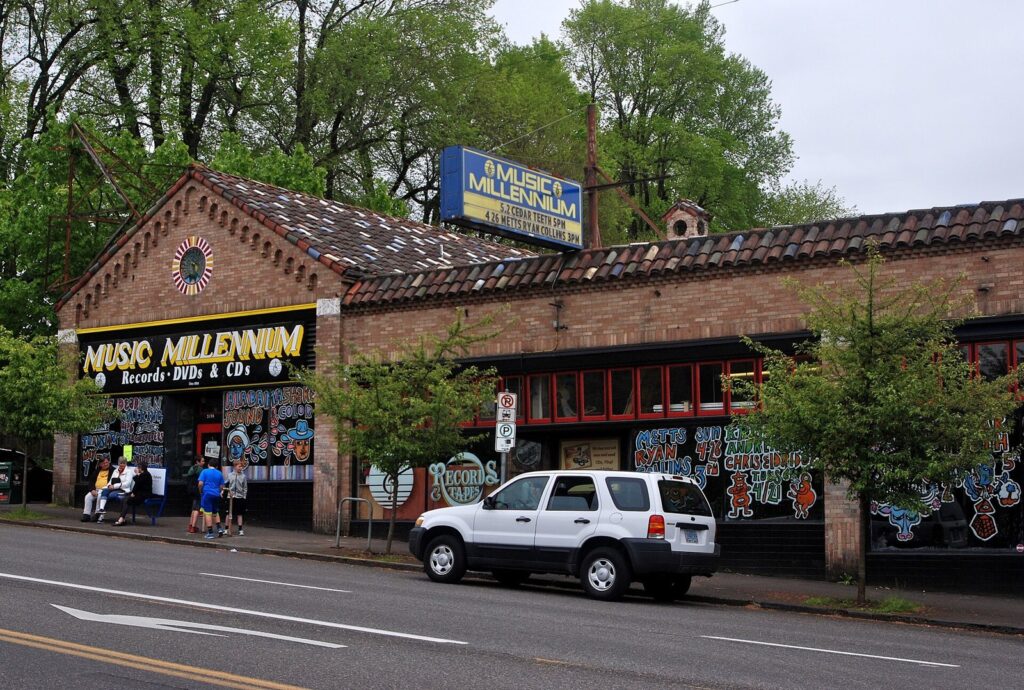
Portland is a record-buying city, and three shops cover most tastes. Music Millennium, at 3158 E Burnside St, opened in 1969 and is the Pacific Northwest’s oldest existing record store: new and used vinyl, CDs, a deep local section and in-store performances. Mississippi Records, at 5202 N Albina Ave in North Portland, specializes in vintage records and reissues, with turntables for sale, and it’s the one serious collectors seek out. Tender Loving Empire, at 3541 SE Hawthorne Blvd, is part record label and part gift shop, selling albums by Portland musicians alongside locally made prints, cards and jewelry.
Pair Music Millennium with a walk through the Laurelhurst neighborhood, Mississippi Records with Mississippi Avenue’s shops a few blocks west, and Tender Loving Empire with the rest of Hawthorne’s vintage stores.
Which bookstores should you visit besides Powell’s?
Portland has more independent bookstores than a city its size has any right to. Broadway Books, at 1714 NE Broadway, has been a neighborhood bookstore since 1992, with a carefully chosen stock and a calendar of author events. Floating World Comics, one of the city’s best comics shops, moved to Pioneer Place downtown in 2026 after the Lloyd Center closed, which makes it an easy stop between downtown errands. And Powell’s own Rare Book Room is a destination in itself for collectors.
Bookstores are also some of the best rainy-day shelters in town, and many host readings and signings in the evening; check their calendars when you arrive.
Where do you find vintage and antiques?
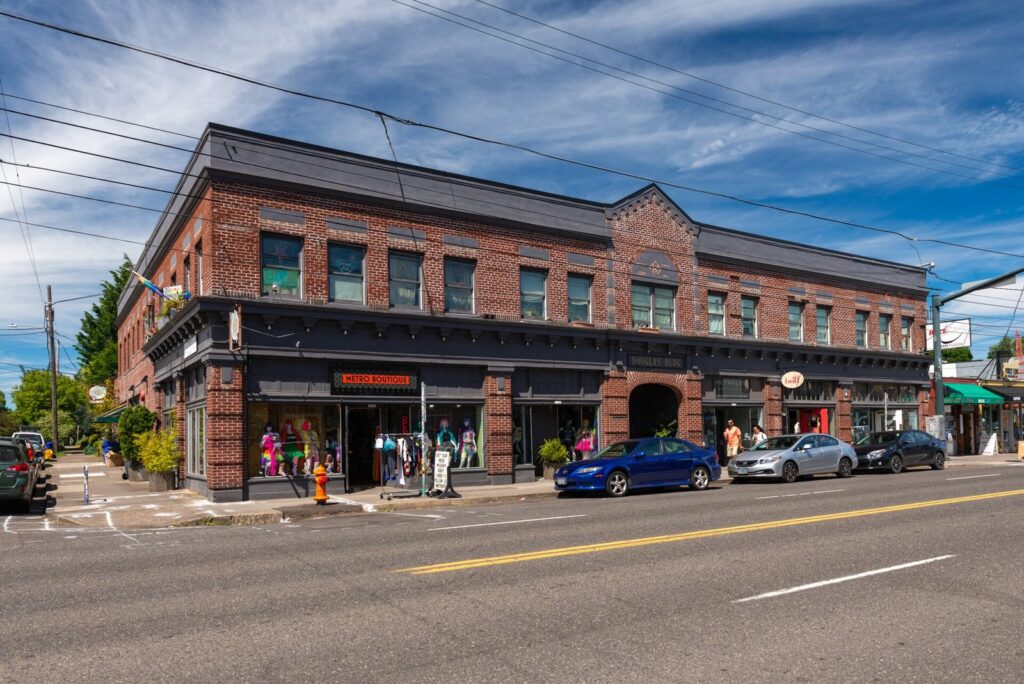
Vintage is one of Portland’s specialties, thanks to a population that has always preferred secondhand to new. SE Hawthorne Boulevard, roughly between SE 30th and SE 40th avenues, has the densest cluster, with multi-dealer vintage malls, clothing boutiques and furniture shops within a few blocks; SE Division Street and NE Alberta Street have more. Prices for good vintage clothing aren’t thrift-store cheap anymore, but the selection is excellent, and dealers are usually happy to talk about where a piece came from.
For antiques, head to Sellwood, the small-town neighborhood on the east bank south of downtown, whose main streets have a long tradition of antique and collectibles shops. It pairs well with a walk at Oaks Bottom Wildlife Refuge or a ride on the Springwater Corridor. Shop on weekdays if you can, since weekend afternoons get crowded, and ask about shipping for anything too big for a suitcase.
What should you buy in Portland?
The best souvenirs are the things Oregon actually makes. A few ideas that travel well:
- Hazelnuts. Oregon grows nearly all of the country’s hazelnuts, and farmers market vendors sell them roasted, flavored and in chocolate.
- Coffee beans. Portland’s roasters are a point of civic pride; a bag of local beans is light and easy to pack.
- Wine. Willamette Valley pinot noir, bought tax-free in town or at the winery; our guide to Willamette Valley wine country covers tasting days.
- Chocolate and sweets. Local chocolatiers and candy makers sell at the markets and in the Pearl.
- Wool. Pendleton, the Oregon woolen mill company, is known for its blankets and shirts in Native-inspired and plaid patterns.
- Art and crafts. Prints, pottery and jewelry from Saturday Market, where you buy directly from the maker.
- Books and records. A Powell’s bag or a record by a Portland band from Tender Loving Empire or Music Millennium.
| If you want | Go to |
|---|---|
| Handmade gifts from the maker | Portland Saturday Market, Saturdays through December 19, 2026 |
| Food gifts: hazelnuts, honey, chocolate | Portland Farmers Market at PSU on Saturdays, or the airport at street prices |
| Books, maps and Portland-branded goods | Powell’s City of Books, daily 10 a.m. to 9 p.m. |
| Records by Portland bands | Tender Loving Empire, Music Millennium, Mississippi Records |
| Vintage clothing and furniture | SE Hawthorne between about SE 30th and 40th avenues |
| Antiques | Sellwood |
| Discounted national brands | Woodburn Premium Outlets, south on I-5 |
Skip the generic slogan T-shirts and buy from the people who made the thing. If you’re flying, remember that the airport’s street pricing means you can leave the edible gifts until the end of the trip without paying a premium.
How much does shopping in Portland cost?
Less than you might expect for a West Coast city, largely because there’s no sales tax to add at the register. Price levels vary by district: Saturday Market and the farmers market sell handmade goods and food at reasonable prices, with a wide range from small prints to fine jewelry; vintage clothing on Hawthorne costs more than thrift-store prices but less than new designer clothes; Pearl District design shops and boutiques sit at the higher end; and the outlets in Woodburn are the place for discounted national brands. Used books at Powell’s are some of the best-value purchases in the city.
The one real extra cost is your hotel. With lodging taxes of 14.5% in the city plus the state’s share, a hotel room is the most heavily taxed thing you’ll buy, which is worth remembering when you compare a downtown hotel with one outside the city. Our guide on where to stay in Portland, Oregon covers how neighborhood choice affects the bill.
What about malls and outlets?
Pioneer Place, beside Pioneer Courthouse Square downtown, is the city’s central mall, with national and luxury brands and an Apple store across its connected buildings. It gained some local character in 2026 when four shops from the closing Lloyd Center moved to its concourse level: Kathmandu to You, All American Magic Shop, Brickdiculous and Floating World Comics.
Lloyd Center, the big mall in Northeast Portland that opened in 1960, closed permanently on August 8, 2026. Its owners plan to demolish it by the end of the year to build a mixed-use neighborhood with housing and open space; a few tenants, including the Regal cinema, were set to stay open for now. Older guides still send shoppers there, so don’t be caught out.
In the suburbs, Washington Square in Tigard is Oregon’s biggest traditional mall, anchored by the state’s largest Nordstrom, whose hours run from 10 a.m. to 9 p.m. Monday through Saturday and 11 a.m. to 7 p.m. on Sunday. Nearby, Bridgeport Village, an open-air center at 7455 SW Bridgeport Rd, is open Monday through Saturday from 10 a.m. to 8 p.m. and Sunday from 11 a.m. to 6 p.m., and is adding new stores during a multiyear renovation. For outlet shopping, Woodburn Premium Outlets, at 1001 Arney Rd off I-5 south of the city, is open from 10 a.m. to 7 p.m. Monday through Thursday and Sunday, and until 8 p.m. on Fridays and Saturdays. All of them are tax-free, like everything else in Oregon.
Where do you shop with kids?
Pioneer Place has become a surprisingly good stop with children since 2026, when two Lloyd Center favorites moved in: Brickdiculous, a building-brick shop, and All American Magic Shop, which sells tricks and gags. Powell’s has a big children’s section, and Saturday Market’s street performers and food stalls keep younger kids entertained while adults browse. For a family outing that isn’t about shopping at all, our guide to Portland, Oregon with kids has ideas for every age.
What’s the best rainy-day shopping plan?
Start at Pioneer Place, whose buildings connect across downtown blocks, including by an enclosed skybridge, so you can browse several blocks without stepping outside. Walk or ride to Powell’s, which can easily absorb two hours, then take the bus to Music Millennium on East Burnside or out to Hawthorne, where many shops are close enough together to dash between. The Portland Mercado’s covered walkways and food carts make a dry lunch stop on the east side. Save the markets and the shopping streets for the dry spells between showers; in a Portland winter, there are usually a few each day.
How do you plan a shopping walk?
1. Downtown to the Pearl
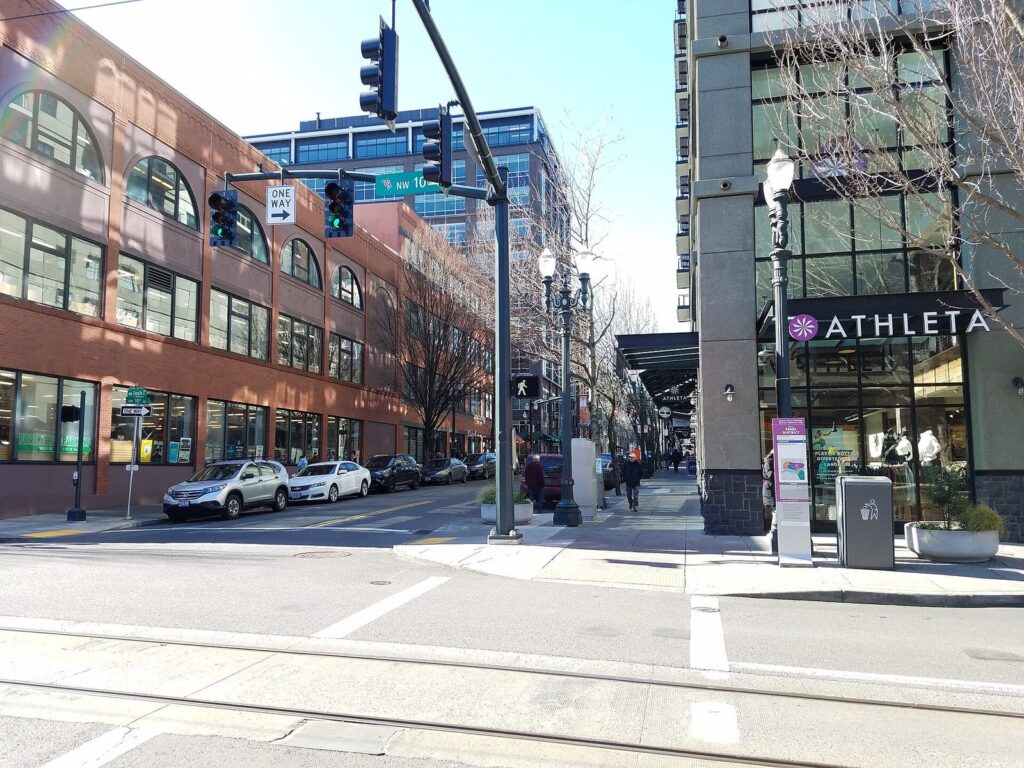
Start at Pioneer Place and Pioneer Courthouse Square, walk northwest to Powell’s on West Burnside, and continue north into the Pearl District’s boutiques and galleries. If it’s the first Thursday of the month, stay into the evening, when the Pearl’s galleries open late with free receptions. From the Pearl, the streetcar runs west to NW 23rd Avenue for a final stretch of boutiques.
2. Hawthorne
Take a bus out SE Hawthorne Boulevard and walk the blocks between roughly SE 30th and SE 40th avenues: vintage malls and clothing shops, Tender Loving Empire at SE 35th, bookshops and cafés. End at the Bagdad Theater for a movie and a beer, or walk a few blocks south to SE Division Street for dinner.
3. North Mississippi and East Burnside
Browse North Mississippi Avenue’s small shops, then walk a couple of blocks east to Mississippi Records on N Albina Avenue. Another day, combine Music Millennium on East Burnside with a stroll through the leafy Laurelhurst neighborhood and a stop at Laurelhurst Park.
What should you know about bags, reuse and secondhand?
Bring a tote. Oregon banned single-use plastic checkout bags in 2020, and stores that offer paper bags must charge at least 5 cents for each, so a folding bag in your daypack saves both the fee and the fuss. Portland’s reuse culture runs deep: thrift and consignment shops, used bookstores, vintage malls, repair cafés and tool libraries are all part of daily life here, and buying secondhand is often both the more local and the more interesting choice.
If you’re buying anything large, ask about shipping before you pay. Many antique dealers, galleries and furniture shops ship across the country, which beats trying to fit a mid-century lamp into an overhead bin.
Which Oregon brands are worth knowing?
Several brands with national reach started in and around Portland, and seeing them at home adds something to the purchase. Nike is headquartered in Beaverton, just west of the city, and Columbia Sportswear is a Portland-area company too. Pendleton’s woolen blankets and shirts come from an Oregon mill company, and Danner has made its boots in Portland for decades. Tillamook, the farmer-owned creamery on the coast, is a fixture of Oregon refrigerators, and its cheese travels well. Look for local labels in the markets and boutiques as well; Portland’s small makers of clothing, ceramics, jewelry and soap are the heart of its shopping scene.
Where do you eat while shopping?
Every shopping district has a lunch stop close by. Downtown, Midtown Beer Garden at 431 SW Harvey Milk St is the city’s oldest food cart pod, with more than 20 carts and covered seating for about 300. On North Mississippi, Prost Marketplace’s covered, heated pod sits beside the Prost bar, and on the inner east side Hawthorne Asylum at 1080 SE Madison St has more than 20 carts around a covered seating area with fire pits. On Saturdays, the farmers market’s food stalls make breakfast part of the shopping. For sit-down meals near every district, see our guide to Portland, Oregon restaurants.
What should you know about hours, parking and getting around?
Independent shops often open around 10 or 11 a.m. and close by 6 or 7 p.m., and some close one day a week, so check before you cross town for a particular store. Powell’s, the malls and the markets keep the longest and most predictable hours. On weekends, the busiest shopping streets fill up by early afternoon.
Driving is possible, but parking downtown and in the Pearl costs money: on-street meter rates in the Downtown, Central Eastside and Northwest districts rose by 20 cents an hour on July 1, 2026, and the city’s SmartPark garages raised their rates the same day. Transit is easier. A TriMet fare costs $2.80 for 2.5 hours and caps at $5.60 a day, and it covers MAX, buses and the Portland Streetcar, which links downtown, the Pearl and NW 23rd. For the details, see our guide to getting around Portland, Oregon.
Bought more than fits in your bag? Many shops can ship purchases home, especially larger items like antiques and art; ask before you pay, and keep the receipt.
When is the best time to shop?
| Season | What’s on | Worth knowing |
|---|---|---|
| Spring (March to May) | Saturday Market’s season in full swing; farmers market at its greenest | Rain showers; carry a jacket between shops |
| Summer (June to August) | Long evenings for street shopping, busy markets, First and Last Thursdays | Crowded weekends in the Pearl and on Hawthorne |
| Fall (September to November) | Harvest at the farmers market, new wine releases | The farmers market moves to 9 a.m. starts from November 7, 2026 |
| Holidays (late November and December) | Holiday shopping at Saturday Market until December 19, 2026, and in the malls | The farmers market is closed December 26 |
| Winter (January and February) | Quiet shops, sales, and cozy hours in bookstores and record stores | Saturday Market is out of season |
Rain is the city’s shopping calendar, too. On wet days, Powell’s, Pioneer Place and the record stores fill up; on dry ones, the markets and the street shopping districts come alive. For how the weather runs through the year, see the best time to visit Portland, Oregon.
Shopping in Portland FAQ
Is there sales tax in Portland, Oregon?
No. Oregon has no general sales tax, so the price on the tag is what you pay at the register, for visitors and residents alike. Taxes do apply to hotel stays, short-term rentals, rental cars and a few other specific purchases, but not to everyday shopping.
What days is Portland Saturday Market open?
In 2026 it’s open on Saturdays only, from 10 a.m. to 5 p.m., through December 19, at 2 SW Naito Parkway by the Burnside Bridge. It then closes for the winter. Check its website for the next season’s dates before planning a visit early in the year.
Is the Lloyd Center mall open?
No. Lloyd Center closed permanently on August 8, 2026, and its owners plan to demolish it by the end of the year for a new neighborhood with housing and open space. Some of its local shops moved to Pioneer Place downtown, which is now the main mall in the central city.
Where can you find Oregon-made gifts?
Portland Saturday Market is the best single place, since vendors sell only what they make themselves. Tender Loving Empire on Hawthorne stocks local art, cards and music, the farmers market has food gifts like hazelnuts and jam, and Powell’s sells books by Oregon writers and plenty of Portland-branded goods.
Do stores in Portland charge for bags?
Usually, yes. Oregon banned single-use plastic checkout bags in 2020, and stores that offer paper bags must charge at least 5 cents per bag. Carry a reusable tote, especially for markets and bookstores, where you’ll probably buy more than you planned.
How long should you spend at Powell’s?
At least an hour, and two if you like books. The flagship fills a whole city block with color-coded rooms on several floors, and the Rare Book Room is worth a look even if you’re not buying. It’s open daily from 10 a.m. to 9 p.m., and weekday mornings and evenings are the quietest times.
What are the best souvenirs from Portland?
Things made in Oregon: hazelnuts, local coffee beans, Willamette Valley wine, chocolate, Pendleton wool, and art and crafts bought directly from makers at Saturday Market. A Powell’s tote or a record by a local band makes a good small gift too, and the airport charges street prices if you shop at the last minute.
Does the Portland airport charge more for shopping?
No. Portland International Airport requires its shops and restaurants to charge the same prices as their off-airport locations. Combined with Oregon’s lack of sales tax, that makes the airport a reasonable place to pick up edible gifts on the way home.
Related Portland Guides
- Portland, Oregon Neighborhoods: the districts behind each shopping street
- Portland, Oregon Museums and Art: First Thursday and the Pearl’s galleries
- Portland Food Carts: lunch between shops
- Getting Around Portland, Oregon: the streetcar, MAX and parking
- Where to Stay in Portland, Oregon: hotels near the shopping districts, and what lodging taxes add
Sources and verification
Details on this page were checked on September 24, 2026 against the businesses, agencies and news reports listed below. The page is compiled from their published information and claims no first-hand visits.
- Powell’s City of Books
- Portland Saturday Market: hours and directions
- Portland Farmers Market at PSU
- Music Millennium
- Broadway Books
- Pioneer Place
- OPB: Lloyd Center to close ahead of demolition
- Washington Square
- Bridgeport Village
- Woodburn Premium Outlets: hours
- Portland International Airport: shops and dining
- City of Portland: transient lodgings tax
- Oregon Department of Revenue: state lodging tax
- City of Portland: July 2026 parking rate changes
- TriMet: fares
Portland Tourism Guide is an independent publication, not affiliated with Travel Portland, the City of Portland or any business named here.
Photo credits
- Portland Saturday Market: photo by Buzzlovestravel, Wikimedia Commons (CC BY-SA 4.0)
- Powell's City of Books: photo by Michael Barera, Wikimedia Commons (CC BY-SA 4.0)
- Portland Farmers Market at PSU: photo by EncMstr, Wikimedia Commons (CC BY-SA 4.0)
- Portland Mercado: photo by Another Believer, Wikimedia Commons (CC BY-SA 4.0)
- Music Millennium: photo by Steve Morgan, Wikimedia Commons (CC BY-SA 3.0)
- SE Hawthorne Boulevard: photo by Gary Halvorson, Oregon State Archives, Wikimedia Commons (CC BY 4.0)
- Pearl District: photo by Buzzlovestravel, Wikimedia Commons (CC BY-SA 4.0)