The core of Portland, Oregon museums and art is compact: the Portland Art Museum and the Oregon Historical Society face each other across the South Park Blocks downtown, OMSI sits on the east bank of the Willamette, and a cluster of small cultural museums fills Old Town Chinatown. Add the free art on the streets, from Portlandia’s copper figure to the Pearl District’s First Thursday gallery walk, and you have more than enough for a rainy day or three.
This page is for visitors choosing which museums to see, when they’re open and what they cost. The caveat: most Portland museums close one or two days a week, usually Monday or Tuesday, and several keep short afternoon hours, so check the day before you go. Hours, prices and free days were checked on September 24, 2026 against the museums’ own websites.
On this page: At a glance · Compare the museums · Portland Art Museum · OMSI · Oregon Historical Society · Old Town’s cultural museums · Native art and history · More museums · Galleries and art walks · Music, film and theater · Public art · Architecture · Free and cheap · What’s open when · Museum days · Pairings and time · Accessibility · Tips · FAQ
Portland museums and art at a glance
| Question | Short answer (checked September 2026) |
|---|---|
| Best art museum | Portland Art Museum: Tuesday to Sunday, 10 a.m. to 5 p.m.; $27.50 adults; 17 and under free |
| Best for kids | OMSI, the science museum: $22.50 adults, $15.50 ages 3 to 13; closed Mondays through mid-June 2027 |
| Best for history | Oregon Historical Society: $10, and free for Multnomah County residents |
| Small museums worth it | Portland Chinatown Museum, Japanese American Museum of Oregon and the Oregon Jewish Museum, all in or near Old Town |
| Free art | The art museum’s free first Thursdays, the Pearl’s First Thursday galleries, Portlandia and the city’s public art |
| Watch for | Monday and Tuesday closures, and short afternoon-only hours at the smaller museums |
| Closed for good | The Portland Children’s Museum; older lists still include it |
For the city’s other highlights, from markets to viewpoints, see our list of things to do in Portland, Oregon. This page sticks to museums, galleries and public art.
Which Portland museums are worth your time?
Here’s how the main museums compare on opening days, price and the time a visit takes. Prices are for adults unless noted.
| Museum | Open (fall 2026) | Adult price | Time needed | Best for |
|---|---|---|---|---|
| Portland Art Museum | Tuesday to Sunday, 10-5 | $27.50 | 2-3 hours | Art lovers, Native and Northwest art |
| OMSI | Tuesday to Sunday; Saturdays until 7 | $22.50 | 3-4 hours | Families and science |
| Oregon Historical Society | Daily; Sundays from noon | $10 | 1.5-2 hours | Oregon’s story |
| Portland Chinatown Museum | Thursday to Sunday, 11-3 | Check the museum’s site | 1 hour | Chinese American history |
| Japanese American Museum of Oregon | Wednesday to Sunday | $8 | 1 hour | Japanese American history |
| Oregon Jewish Museum | Wednesday to Sunday, 11-4 | Check the museum’s site | 1-1.5 hours | Jewish history and Holocaust education |
| Pittock Mansion | Daily in September, 9-4 (noon Tuesdays) | $17 | 1-1.5 hours | A 1914 house and a big view |
| Oregon Rail Heritage Center | Thursday to Sunday, 1-5 | $6 | 1 hour | Steam locomotives |
| World Forestry Center | Tuesday to Sunday after Labor Day, 10-4 | $8 | 1 hour | A rainy hour in Washington Park |
Verdict: for a first visit, give the Portland Art Museum a morning, cross the street to the Oregon Historical Society after lunch, and spend another half day at OMSI if you have kids or a science itch. The Old Town museums reward anyone interested in the city’s immigrant history, and each takes about an hour.
Portland Art Museum
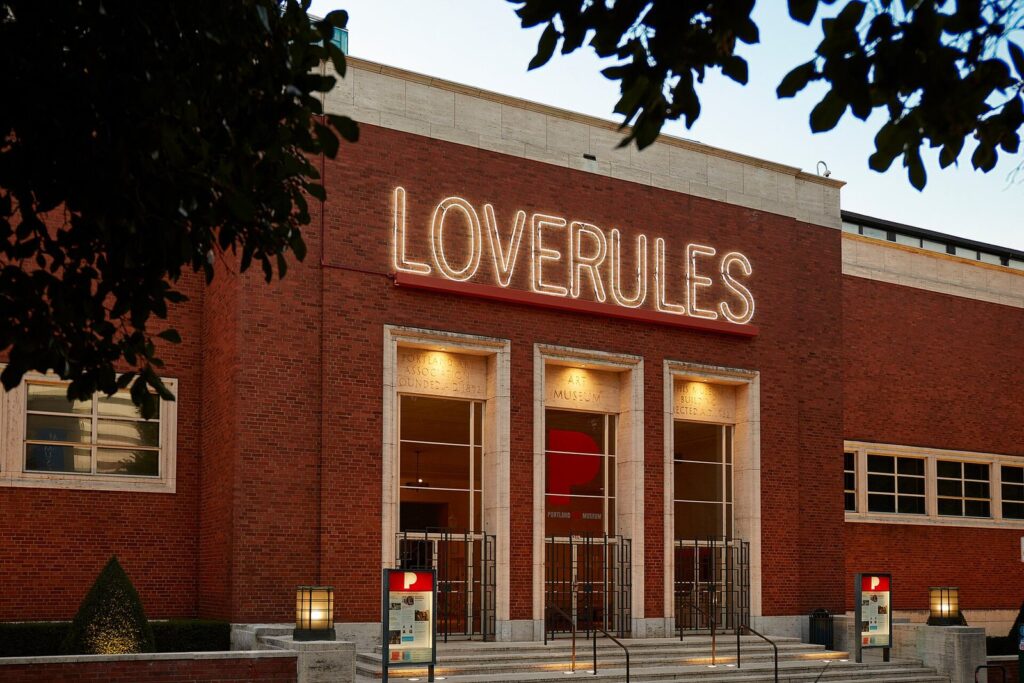
The Portland Art Museum is Oregon’s largest art museum, spread across two historic buildings on the South Park Blocks, with a permanent collection of more than 42,000 works. Its strengths are distinctly regional: a center for Native American art, a center for Northwest art and a strong photography collection, alongside European painting, Asian art and a modern and contemporary wing. An outdoor sculpture garden sits between the buildings.
Among the European paintings, look for one of Claude Monet’s water lily canvases and an early Vincent van Gogh, a dark farm scene from his years in the Netherlands, painted before he discovered color in Paris. The Northwest galleries are the ones you won’t see anywhere else, though: painters and photographers who made the region’s landscapes and cities their subject, and contemporary artists working in Portland now.
The museum’s biggest change in decades opened on November 20, 2025: the Mark Rothko Pavilion, which joins the two buildings. Rothko grew up in Portland after his family emigrated from the Russian Empire in 1913, and the pavilion carries his name. It’s open Tuesday through Sunday from 10 a.m. to 5 p.m. and closed Mondays. Adults pay $27.50, seniors 65 and over $24.50 and college students $22.50, and visitors 17 and under get in free. On the first Thursday of each month, admission is free and the museum stays open until 7 p.m.
Allow two to three hours, more if a major exhibition is on. Check what’s showing before you go, since the special exhibitions change through the year and can decide whether a visit is a quick hour or a whole afternoon.
Think twice if it’s Monday. The museum is closed, and so are OMSI and several of the smaller museums; the Oregon Historical Society across the street is the best Monday alternative.
OMSI: the Oregon Museum of Science and Industry
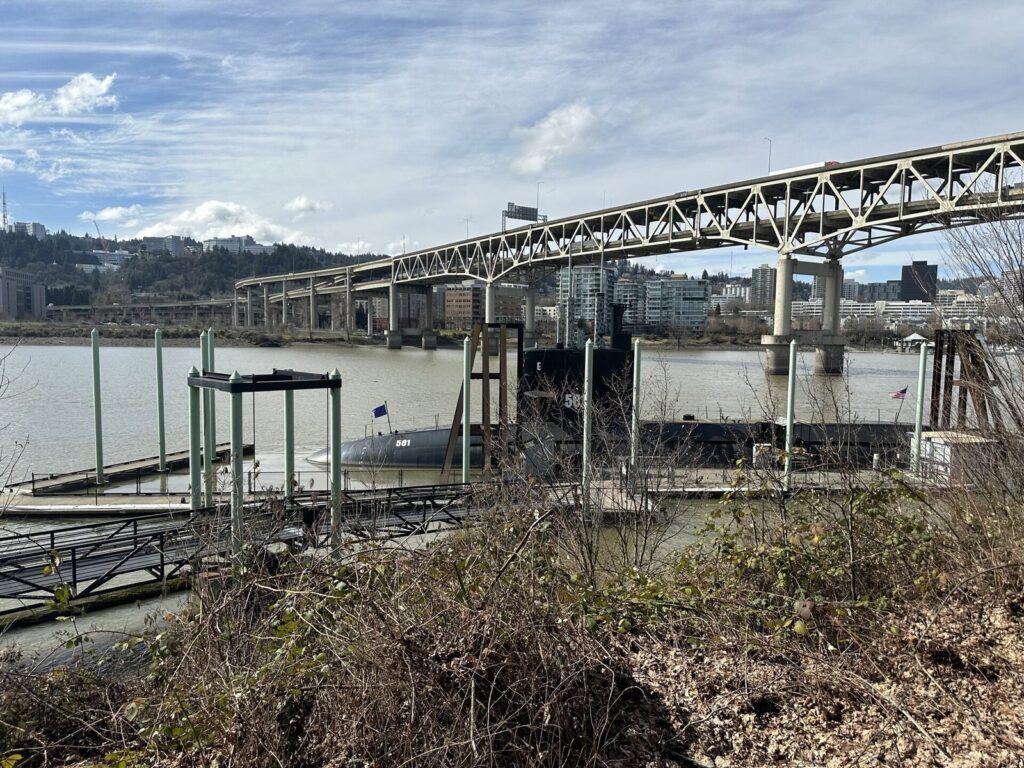
OMSI is Portland’s science museum and its best rainy-day bet for families, set on the east bank of the Willamette with the USS Blueback submarine moored outside. From September 8, 2026 to June 13, 2027 it’s closed on Mondays, with some exceptions, and open Tuesday through Friday and Sunday from 9:30 a.m. to 5:30 p.m., and Saturday from 9:30 a.m. to 7 p.m. General admission is $22.50 for ages 14 and up, $20.50 for seniors 63 and over and $15.50 for ages 3 to 13, and children under 3 are free. The planetarium, the submarine tour and the theater cost extra.
Getting there is easy without a car: the OMSI/SE Water station is served by MAX and the Portland Streetcar. Driving, parking costs $5 for two hours, $8 for the day or $2 after 5 p.m. The museum also offers quiet rooms, sensory kits with fidget toys and child-sized earmuffs, and select low-sensory hours with softer lighting, less sound and fewer people, which makes it one of the more considerate big museums in the city for neurodivergent visitors.
Allow three to four hours with children, and plan the extras around your budget: the submarine tour is the one most kids remember.
Oregon Historical Society
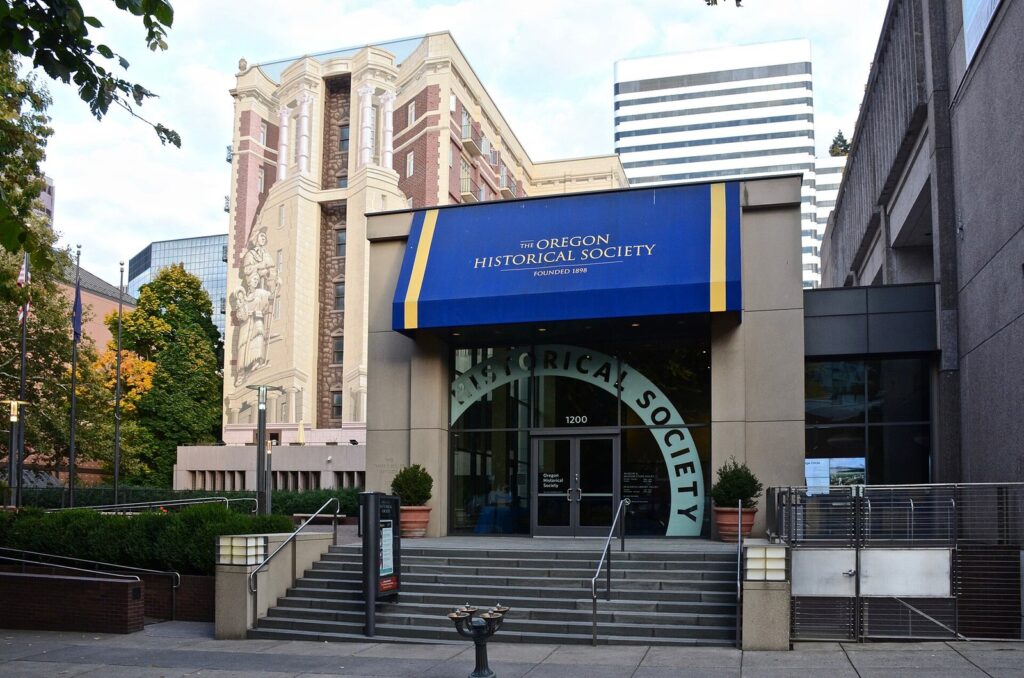
Directly across the Park Blocks from the art museum, the Oregon Historical Society’s museum tells the state’s story, from the region’s Native nations through the Oregon Trail, the timber and shipbuilding years and modern Portland. Look up before you go in: the building’s walls carry large trompe-l’oeil murals of Lewis and Clark’s expedition and Oregon’s settlers, painted to look like carved stone.
The museum, at 1200 SW Park Ave, is open Monday through Saturday from 10 a.m. to 5 p.m. and Sunday from noon to 5, which makes it the rare downtown museum open on Mondays. Admission is $10, with discounts for students, seniors, teachers and youth, and it’s free for Multnomah County residents who bring proof of residency, such as a state ID, driver’s license or utility bill; library cards and TriMet passes don’t count. Allow 90 minutes to two hours.
The core exhibition, Experience Oregon, walks through the state’s history in roughly chronological order, with room for the difficult parts: the treaties and removals of tribal nations, Oregon’s exclusion laws against Black settlers, and the wartime incarceration of Japanese Americans. Changing exhibitions on the upper floors cover everything from quilts to politics, and the museum store is one of the better places in town for Oregon history books.
Old Town’s cultural museums
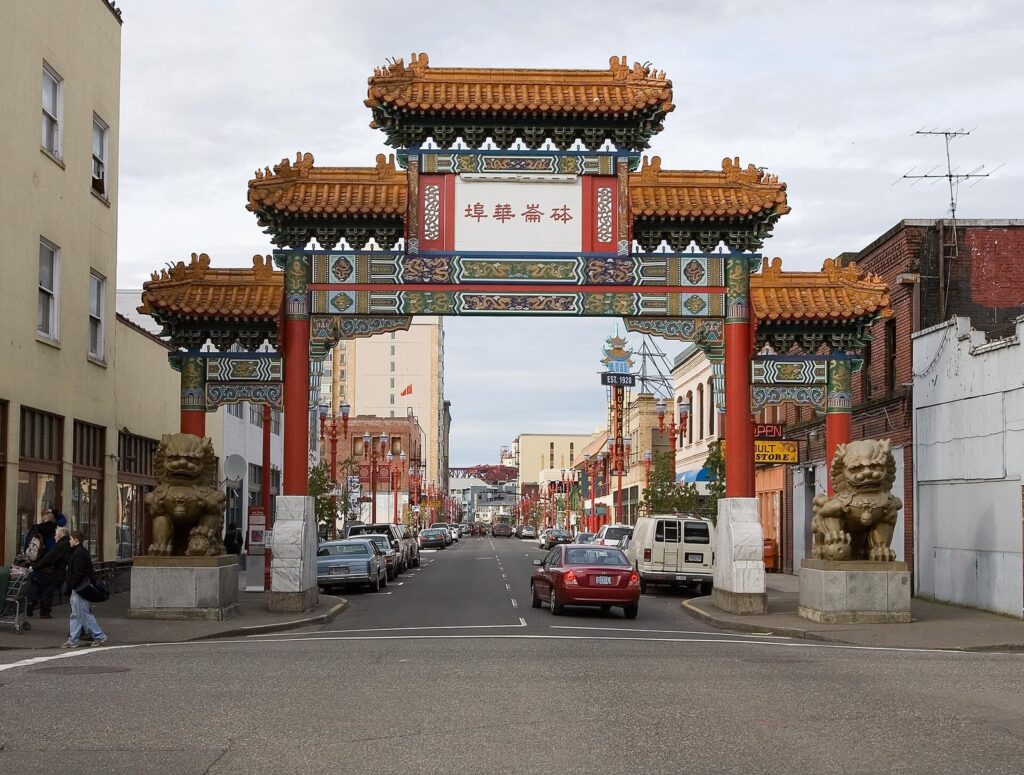
Three small museums within a few blocks of each other in and around Old Town Chinatown tell stories the big museums only touch on. Each takes about an hour, and together they make one of the most rewarding half days in the city.
Portland Chinatown Museum
The Portland Chinatown Museum occupies a historic building at NW Third Avenue and Davis Street. Its core exhibition, Beyond the Gate, fills 2,400 square feet with artifacts, oral histories, film and reconstructed scenes that trace Portland’s Chinatowns from 1850 to 1965: early Chinese settlement in Oregon, the railroad workers, the Chinese Exclusion Act and the businesses and civic life the community built anyway. It’s open Thursday through Sunday from 11 a.m. to 3 p.m., so plan around those short hours.
Japanese American Museum of Oregon
The Japanese American Museum of Oregon, at 411 NW Flanders St with its entrance on NW 4th Avenue, covers the history of Japanese Americans in Oregon, including the forced removal and incarceration of the community during World War II. It’s open Wednesday through Saturday from 10 a.m. to 4 p.m. and Sunday from 11 a.m. to 4 p.m. Adults pay $8, seniors $6 and students $5, and children 11 and under are free; the museum also runs free-admission programs. Pair it with the Japanese American Historical Plaza on the waterfront, a memorial garden a short walk away.
Oregon Jewish Museum and Center for Holocaust Education
On the North Park Blocks at 724 NW Davis St, the Oregon Jewish Museum and Center for Holocaust Education combines the history of Jewish life in Oregon with a permanent exhibition on the Holocaust and its lessons. It’s open Wednesday through Sunday from 11 a.m. to 4 p.m., and it offers free admission to groups including SNAP recipients and Blue Star military families.
Lan Su Chinese Garden, a walled classical garden a block from the Chinatown Gate, completes an Old Town afternoon; our guide to Portland, Oregon parks and gardens covers its hours and prices.
Where can you learn about Native art and history?
Portland sits on the homelands of the Multnomah, Clackamas and other Chinookan peoples, and many tribes traded and fished along this stretch of the Columbia and Willamette rivers. Their descendants are part of tribal nations in the region today, including the Confederated Tribes of Grand Ronde and the Confederated Tribes of Siletz Indians, and the Columbia River treaty tribes still fish the river under treaty rights.
For art, start at the Portland Art Museum’s center for Native American art, which shows historic and contemporary work by Native artists from across North America. The Oregon Historical Society’s Experience Oregon exhibition covers the region’s Native nations as part of the state’s story, from before contact through treaties and removal to the present. Outside the museums, public art by Native artists appears across the city, and the gift shops at the art museum and the historical society carry work by Native artists and books from tribal presses.
Which other museums are worth a stop?
Pittock Mansion
Pittock Mansion, a 1914 French Renaissance-style house high in the West Hills, is part museum and part viewpoint. Touring the house costs $17 for adults, $15 for seniors and students and $14 for ages 6 to 18, with children under 6 free; in September it’s open daily from 9 a.m. to 4 p.m., except Tuesdays, when it opens at noon. The grounds are a free public park open until 9 p.m., with views over the city to as many as five Cascade peaks. It closes on Thanksgiving, Christmas, New Year’s Day, Martin Luther King Jr. Day and Juneteenth, and for maintenance days in January.
Oregon Rail Heritage Center
A few blocks south of OMSI at 2250 SE Water Ave, the volunteer-run Oregon Rail Heritage Center houses the City of Portland’s steam locomotives, SP 4449 and SP&S 700, both still operable, along with OR&N 197. It’s open Thursday through Sunday from 1 to 5 p.m., though volunteer hours can vary. It began charging admission in January 2026: $6 for ages 14 and up, $5 for seniors 65 and over and military, $4 for ages 3 to 13, and free under 3.
World Forestry Center and the Oregon Maritime Museum
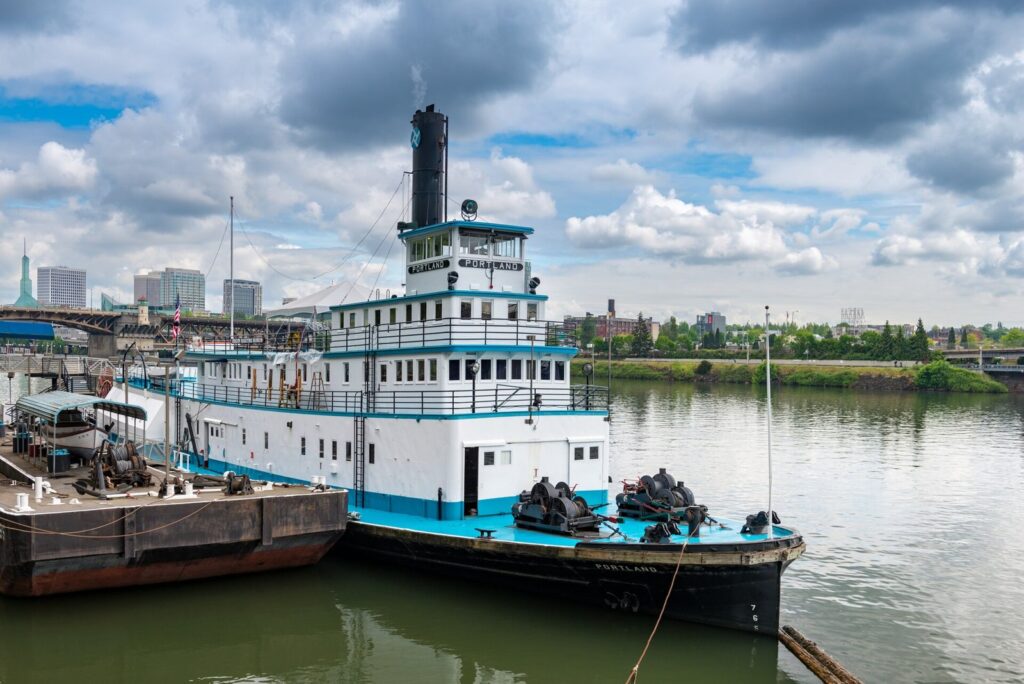
In Washington Park, the World Forestry Center’s Discovery Museum, at 4033 SW Canyon Rd across from the Oregon Zoo, explains the Northwest’s forests with hands-on exhibits. After Labor Day it’s open Tuesday through Sunday from 10 a.m. to 4 p.m., and admission is $8 for adults, $7 for seniors 62 and over and $5 for ages 3 to 18. On the downtown waterfront, the Oregon Maritime Museum occupies the Portland, a steam-powered sternwheel tugboat moored at Tom McCall Waterfront Park; check its site for current hours before you go.
A note on the Portland Children’s Museum
The Portland Children’s Museum has closed permanently. Older guides and some map apps still list it, so don’t plan a family morning around it; OMSI and the World Forestry Center are the family museums to use instead. Our guide to Portland, Oregon with kids has more options.
Where can you see galleries and art walks?
Portland’s gallery scene centers on the Pearl District, and the easiest way into it is First Thursday. On the first Thursday evening of every month, the neighborhood’s galleries open late, generally from about 6 to 9 p.m., with free receptions, new shows and artists on hand to talk about their work. From April through October, the First Thursday Street Gallery also closes NW 13th Avenue between Hoyt and Kearney from 5 to 10 p.m. for artists’ booths. The Portland Art Museum’s free first-Thursday admission, open until 7 p.m., makes a good start to the evening before you walk north into the Pearl.
On the east side, Last Thursday turns NE Alberta Street into an informal art walk from 6 to 9 p.m. on the last Thursday of the month, ten months a year; its 2026 calendar lists October 29. It’s rougher around the edges than First Thursday, with street performers and vendors as much as galleries, and that’s the appeal.
Portland Institute for Contemporary Art, known as PICA, stages the city’s most adventurous performance and visual art, including its Time-Based Art Festival, traditionally held in September. Check PICA’s calendar for current dates.
Where do you see music, film and theater?
Portland’s performing arts center, Portland’5, runs the main downtown stages: the Arlene Schnitzer Concert Hall, a restored 1920s movie palace that’s home to the Oregon Symphony; the Keller Auditorium, for touring Broadway shows, opera and ballet; and the smaller theaters of Antoinette Hatfield Hall. On the east side, the Hollywood Theatre, a 1926 movie palace run by a nonprofit, shows repertory, cult and new films, and the city’s music clubs host touring and local bands most nights of the week. Check each venue’s calendar; the big halls sell out for popular shows.
Where can you see public art for free?
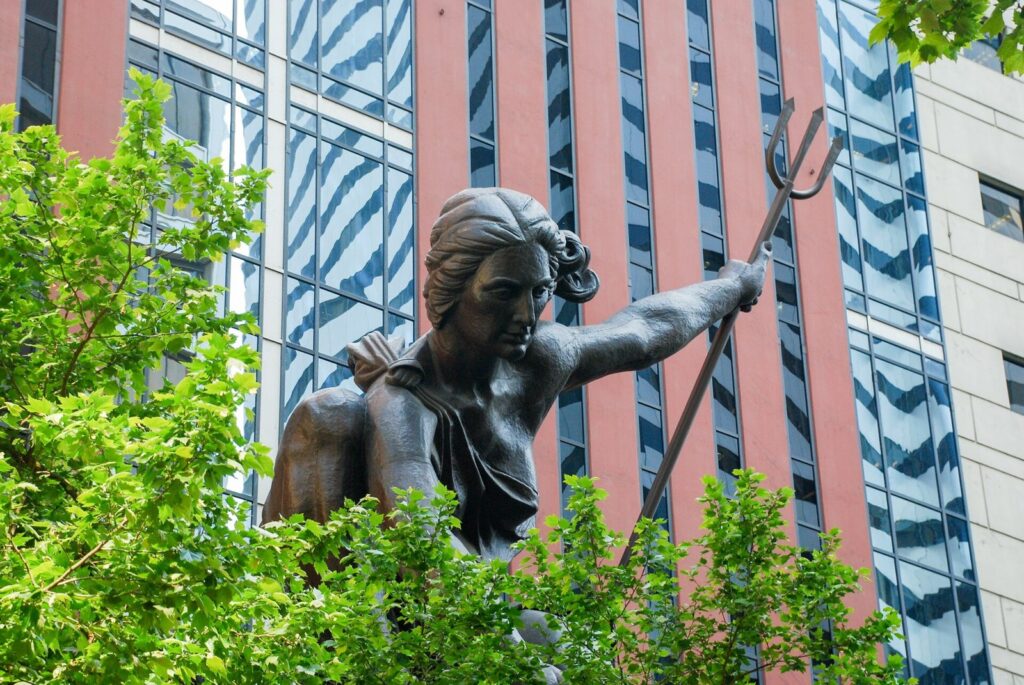
Some of the city’s best art costs nothing. Portlandia, Raymond Kaskey’s figure of a kneeling woman holding a trident, has watched over SW Fifth Avenue from the Portland Building since 1985. Made of copper sheet about the thickness of a dime hammered over a steel frame, she’s the second-largest hammered-copper statue in the country, after the Statue of Liberty. The Portland Building itself, designed by Michael Graves and finished in 1982, was rebuilt in recent years; it now has a publicly accessible balcony with a close view of Portlandia, a small 3-D printed copy at the top of the second-floor stairs, and public art on its first and second floors commissioned under the city’s 2% for Art rule.
From there, a self-guided walk strings together more of downtown’s public art. Pioneer Courthouse Square has J. Seward Johnson’s bronze “Allow Me,” a businessman holding out an umbrella. Keller Fountain, Lawrence Halprin’s terraced waterfall of concrete across from the Keller Auditorium, is a small canyon in the middle of the city, and the Skidmore Fountain in Old Town, from 1888, is the city’s oldest piece of public art. In February, the free Portland Winter Light Festival fills the city with light installations; the 2027 edition runs February 5 to 13.
Murals are everywhere on the east side, especially along the industrial streets of the Central Eastside and on neighborhood main streets like Alberta, Division and Hawthorne. They change constantly, which is half their charm; walking a few blocks off any east-side commercial street is the best way to find them.
Which buildings are worth seeing as art?
Some of Portland’s best art is the architecture. The Portland Building, Michael Graves’s pastel-colored block of 1982, was one of the first major postmodern buildings in the country and still divides opinion, which is part of the fun. Nearby, the Pioneer Courthouse, finished in 1875, is the oldest federal building in the Pacific Northwest, and Pioneer Courthouse Square in front of it is the city’s open-air living room. The Central Library, opened in 1913 and renovated in 2024, is worth a walk through for its grand staircase and reading rooms.
In Old Town, the Skidmore/Old Town district preserves one of the country’s largest collections of cast-iron building fronts, from the years when this was the city’s commercial heart. Union Station, with its clock tower and “Go by Train” sign, anchors the north end of downtown and still serves Amtrak trains. A walk from Union Station south through Old Town to the Skidmore Fountain and on to Pioneer Courthouse Square covers most of it in an hour.
How can you see Portland’s museums for free or cheap?
- Portland Art Museum: free on the first Thursday of each month, 10 a.m. to 7 p.m., and always free for visitors 17 and under.
- Oregon Historical Society: free for Multnomah County residents with proof of residency.
- Japanese American Museum of Oregon: free for children 11 and under, plus free-admission programs.
- Oregon Jewish Museum: free admission for groups including SNAP recipients and Blue Star families.
- Galleries: First Thursday in the Pearl and Last Thursday on Alberta are free.
- Public art: Portlandia, the fountains and the murals cost nothing.
- Central Library: the Multnomah County Library’s downtown landmark reopened in 2024 after a renovation, with a new terrace and better accessibility, and it’s free to wander.
Oregon has no sales tax, so museum shop prices are what you pay, and children’s discounts are generous across the board.
Which museums are open on Mondays and Tuesdays?
Opening days trip up more museum plans than anything else. Here’s the fall 2026 pattern:
| Day | Open | Closed |
|---|---|---|
| Monday | Oregon Historical Society, Pittock Mansion, Lan Su Chinese Garden | Portland Art Museum, OMSI (with some exceptions), World Forestry Center, Japanese American Museum, Oregon Jewish Museum, Chinatown Museum, Rail Heritage Center |
| Tuesday | Portland Art Museum, OMSI, Oregon Historical Society, World Forestry Center, Pittock (from noon) | Japanese American Museum, Oregon Jewish Museum, Chinatown Museum, Rail Heritage Center |
| Wednesday | All of the above except the Chinatown Museum and the Rail Heritage Center | Chinatown Museum, Rail Heritage Center |
| Thursday to Sunday | Everything on this page | None, though the Chinatown Museum closes at 3 p.m. |
If your trip is short, put museums on Thursday through Sunday and save the outdoor sights for Monday and Tuesday. For how the seasons and events shape a trip, see the best time to visit Portland, Oregon.
Three museum days that work
1. Downtown art and history
Be at the Portland Art Museum when it opens at 10 a.m. and give it the morning. After lunch downtown, cross the Park Blocks to the Oregon Historical Society for the afternoon, then walk a few blocks to see Portlandia from across Fifth Avenue and finish at Keller Fountain. If it’s the first Thursday of the month, reverse the order: history first, then the art museum’s free late hours until 7 p.m., and the Pearl’s galleries after.
2. Science and trains on the east bank
Start at OMSI when it opens at 9:30 a.m., book the submarine tour if the kids are old enough, and eat lunch at the museum or nearby. From Thursday to Sunday, walk a few blocks south to the Oregon Rail Heritage Center, which opens at 1 p.m., to see the city’s steam locomotives. Walk back along the Eastbank Esplanade or across the Tilikum Crossing bridge for the skyline view.
3. Old Town history
On a Thursday, Friday, Saturday or Sunday, start at the Portland Chinatown Museum at 11 a.m., since it closes at 3. Walk to the Japanese American Museum of Oregon and on to the Oregon Jewish Museum on the North Park Blocks, then finish in Lan Su Chinese Garden’s teahouse. It’s a short walk between each, and the three together tell the story of the communities who built this part of the city.
How much time do you need, and what pairs well?
| Plan | Time | Pairs with |
|---|---|---|
| Art museum and history museum | A full day, or two half days | A walk through the South Park Blocks and lunch downtown |
| OMSI and the Rail Heritage Center | Half a day to a full day | The Eastbank Esplanade and the Tilikum Crossing bridge |
| Old Town museums | Half a day | Lan Su Chinese Garden and the waterfront |
| Pittock Mansion | 2 hours with the view | A hike up from Forest Park’s Lower Macleay trailhead |
| First Thursday | An evening | Dinner in the Pearl District |
The downtown museums are a short walk from the MAX and streetcar lines, and OMSI has its own station, so you won’t need a car for any of this. For fares and routes, see our guide to getting around Portland, Oregon. For where to eat between museums, our guide to Portland, Oregon restaurants covers downtown, the Pearl and the east side.
How accessible are Portland’s museums?
The larger museums are the easiest. OMSI’s sensory resources, quiet rooms and low-sensory hours stand out, and the Central Library’s renovation improved its accessibility. At the Portland Building, the Portlandia balcony and the art on the first and second floors are open to the public. The smaller museums occupy older buildings, so if anyone in your group uses a wheelchair or needs step-free access, call ahead; hours are short enough that a wasted trip hurts.
Museums are also the city’s best answer to rain. For other wet-weather ideas, from bookstores to indoor markets, our list of things to do covers more, and in the dry months the art moves outside, to the gardens, the waterfront and the murals.
What else should you know before you go?
Check the exhibition calendar as well as the hours. Big touring exhibitions can carry their own tickets or timed entry, and they sometimes close galleries for installation, which can make a visit shorter than you expected. Weekday mornings are the quietest time at every museum on this page, and school groups are the main crowd on weekday late mornings during the school year.
Ask about photography rules at the door: most museums allow personal photos without flash in the permanent galleries but restrict them in special exhibitions. If you plan to visit the art museum more than once in a year, or you’ll bring a family to OMSI several times, look at memberships, which usually pay off in two or three visits and often include reciprocal entry to museums in other cities.
Portland Museums and Art FAQ
Is the Portland Art Museum free?
On the first Thursday of each month, yes: admission is free and the museum stays open until 7 p.m. Visitors 17 and under are always free. Otherwise adults pay $27.50, seniors 65 and over $24.50 and college students $22.50. The museum is closed on Mondays.
What is the best museum in Portland for kids?
OMSI, the Oregon Museum of Science and Industry, with hands-on science halls, a planetarium and the USS Blueback submarine outside. Admission for ages 3 to 13 is $15.50, and under 3 is free. It’s closed on Mondays from September 2026 to mid-June 2027, with some exceptions, and open until 7 p.m. on Saturdays.
How long do you need at the Portland Art Museum?
Two to three hours covers the highlights, including the Native American and Northwest galleries and whatever special exhibition is on. Art lovers can easily spend a full day, and the Rothko Pavilion now makes moving between the two buildings much simpler. A quick first-Thursday visit in the evening can work in an hour.
Can you go inside OMSI’s submarine?
Yes, on a guided tour of the USS Blueback, which costs extra on top of general admission. The tours are popular with families, so book a time when you arrive or online. The submarine’s narrow passages and hatches aren’t suitable for everyone, so check the tour’s age and mobility guidance first.
Is the Portland Children’s Museum open?
No. The Portland Children’s Museum has closed permanently, although some older guides and map listings still show it. For young children, OMSI and the World Forestry Center’s Discovery Museum in Washington Park are the best alternatives.
Which museums are open on Mondays in Portland?
The Oregon Historical Society, open Monday to Saturday from 10 a.m. to 5 p.m., plus Pittock Mansion and Lan Su Chinese Garden. The Portland Art Museum, OMSI and most of the smaller museums close on Mondays, so plan outdoor sights for the start of the week.
What is First Thursday in Portland?
A monthly evening art walk in the Pearl District. On the first Thursday of each month, galleries open late, roughly 6 to 9 p.m., with free receptions, and from April to October NW 13th Avenue closes for a street gallery from 5 to 10 p.m. The Portland Art Museum is free that day until 7 p.m.
Where can you see the Portlandia statue?
Above the entrance of the Portland Building on SW Fifth Avenue downtown, between Main and Madison streets. She’s best seen from across Fifth Avenue, or up close from the building’s public balcony. A small 3-D printed copy sits at the top of the second-floor stairs inside.
Related Portland Guides
- Things to Do in Portland, Oregon: museums alongside the rest of the city
- Portland, Oregon with Kids: OMSI, the zoo and family rainy-day plans
- Portland, Oregon Parks and Gardens: Lan Su, the Japanese Garden and Pittock’s grounds
- Portland, Oregon Neighborhoods: the Pearl, Old Town and the east side’s mural streets
- Portland, Oregon Itinerary: where museums fit in two to four days
Sources and verification
Details on this page were checked on September 24, 2026 against the museums and agencies listed below. The page is compiled from their published information and claims no first-hand visits.
- Portland Art Museum
- OMSI: plan your visit
- Oregon Historical Society: plan your visit
- Portland Chinatown Museum: visit
- Japanese American Museum of Oregon: visitor info
- Oregon Jewish Museum and Center for Holocaust Education: visit
- Pittock Mansion: visit
- Oregon Rail Heritage Center: visit
- World Forestry Center
- Explore the Pearl: First Thursday
- Last Thursday on Alberta
- City of Portland: the Portland Building
- Regional Arts and Culture Council: public art
- Portland Winter Light Festival
- Multnomah County Library
Portland Tourism Guide is an independent publication, not affiliated with Travel Portland, the City of Portland or any business named here.
Photo credits
- Portlandia: photo by Gary Halvorson, Oregon State Archives, Wikimedia Commons (CC BY 4.0)
- Portland Art Museum: photo by Cjongcampbell, Wikimedia Commons (CC BY-SA 4.0)
- USS Blueback at OMSI: photo by Slinkyo, Wikimedia Commons (CC0)
- Oregon Historical Society: photo by Steve Morgan, Wikimedia Commons (CC BY-SA 4.0)
- Chinatown Gate: photo by User:Cacophony, Wikimedia Commons (CC BY-SA 2.5)
- Oregon Maritime Museum: photo by Gary Halvorson, Oregon State Archives, Wikimedia Commons (CC BY 4.0)