The best Portland, Oregon fall foliage locations are close to downtown: the Japanese maples of the Portland Japanese Garden, the Maple Collection at Hoyt Arboretum next door, the old elms of the South Park Blocks and the big trees of Laurelhurst Park, with the Columbia River Gorge and the Hood River Valley’s orchards an hour away. Color usually builds through mid-October and peaks from late October into early November, when the Japanese Garden says its maples are at or near their strongest.
This page is for travelers planning an autumn trip around the leaves, from a single afternoon in Washington Park to a weekend with a Gorge drive. The caveat: timing shifts by a week or two from year to year, and one windy November storm can strip the trees overnight, so stay flexible and check the Japanese Garden’s live fall color tracker before you go. For the rest of the calendar, see our month-by-month guide to the best time to visit Portland, Oregon. Details here were checked on September 24, 2026 against the operators’ and agencies’ own websites.
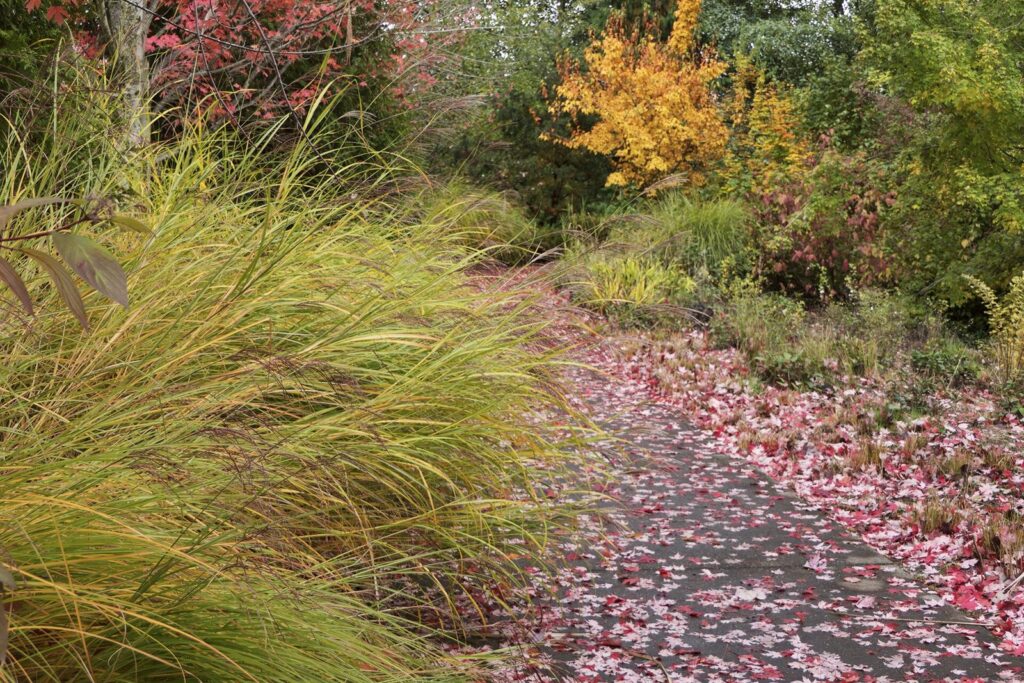
Portland fall foliage at a glance
| Question | Short answer (checked September 2026) |
|---|---|
| Peak season | Mid-October to early November; Japanese maples strongest from late October into early November |
| Best free spot | Hoyt Arboretum’s Maple Collection along its Maple Trail, free every day |
| Best paid spot | Portland Japanese Garden, $22.50 for adults; tickets bookable up to 10 days ahead |
| Without a car | MAX to Washington Park, then the free shuttle, every 30 minutes from 10 a.m. to 4 p.m. from October to March |
| Best day trip | The Columbia River Gorge’s waterfall corridor, or the Hood River Fruit Loop in apple and pear season |
| Weather | October averages a 64°F high and 13 or 14 rainy days; November, 54°F and about 18 rainy days |
| Watch for | Eagle Creek and Wahclella trails closed through October 31, 2026; shorter winter hours at several gardens |
When do the leaves turn in Portland?
Portland’s color arrives in waves rather than all at once. The native bigleaf maples in Forest Park and the Gorge turn a buttery yellow first, usually through October. The Portland Japanese Garden says its grounds are full of vivid color from about mid to late October and at or near their peak from late October into early November, and the city’s street trees and the elms of the Park Blocks tend to follow in late October and November. Higher up, on Mount Hood’s slopes, vine maples and huckleberry turn red earlier in the fall, and in the Willamette Valley the vineyard leaves go gold after the late September and October harvest.
| Location | Typical color | What turns |
|---|---|---|
| Forest Park and the Gorge | October | Bigleaf maples, cottonwoods, vine maples |
| Portland Japanese Garden | Mid-October to early November | Japanese maples in crimson, orange and yellow |
| Hoyt Arboretum | October to early November | Its accredited Maple Collection, plus oaks and birches |
| Park Blocks, Laurelhurst, city streets | Late October to mid-November | Elms, maples and other street trees |
| Willamette Valley vineyards | Late October and November | Grapevines after harvest |
| Mount Hood’s slopes | Earlier, from late September | Vine maples and huckleberry |
Weather decides how long the show lasts. October is often mild, averaging a high of 64°F with rain on about 13 or 14 days, and it still has around 150 hours of sunshine in an average year. November turns wet and dark fast, with an average high of 54°F, rain on about 18 days and barely 80 hours of sun. That’s why the second half of October is the safest bet: good color, reasonable weather and enough daylight to see it.
Some autumns are simply better than others. A dry, sunny fall with cool nights tends to bring out the brightest reds and oranges, while an early run of storms or a warm, wet October can mute the color and knock leaves down before they peak. That’s another reason to keep a day or two flexible and to watch the forecast as much as the calendar.
Where are the best fall colors in the city?
Portland Japanese Garden
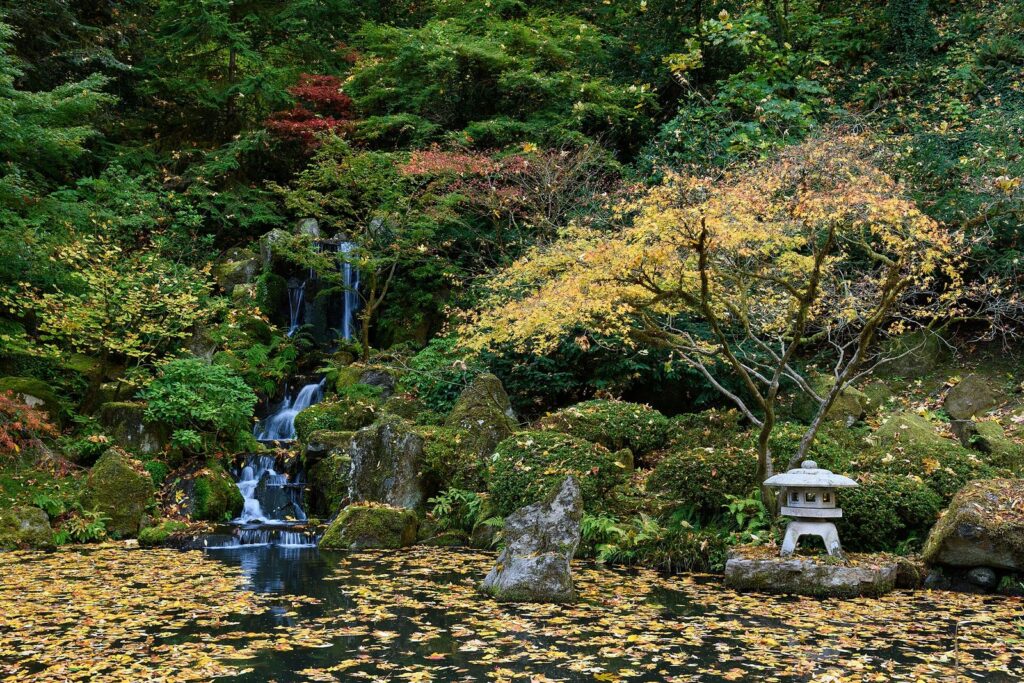
This is the city’s headline fall stop. The Garden’s Japanese maples turn crimson, orange and yellow against moss, stone and still water, and one maple in its Flat Garden is among the most photographed trees in the Northwest. The Garden publishes a Fall Colors Tracker on its website each year, updated as the season moves, which is the most reliable way to time your visit.
Tickets cost $22.50 for adults, $19.50 for seniors 65 and over, $18.50 for students and $16.50 for ages 6 to 17, with children 5 and under free, and they can be booked up to 10 days ahead. On peak-color weekends, book as soon as tickets open. The Garden is closed on Tuesdays, and it moves to shorter winter hours in early October, so check its hours page for the day you plan to go.
Hoyt Arboretum
Across Washington Park, Hoyt Arboretum is the best free fall walk in the city. Its 190 ridge-top acres hold 12 miles of trails and more than 2,300 species, and its nationally accredited Maple Collection puts on its main show along the Maple Trail. Birches, oaks and other deciduous trees add yellow and bronze through October. Admission is free every day, and the Visitor Center at 4000 SW Fairview Blvd, open daily from 10 a.m. to 4 p.m., has trail maps.
Getting around Washington Park in the fall
MAX Red and Blue Line trains stop at Washington Park station every 15 minutes, and from October through March the park’s free shuttle loop runs from 10 a.m. to 4 p.m. every 30 minutes, linking the station with the Japanese Garden, Hoyt Arboretum and the Rose Garden. It doesn’t run in bad weather. Driving, parking costs $2.40 an hour up to $9.60 a day, enforced from 9:30 a.m. to 8 p.m.
Laurelhurst Park
In Southeast Portland, Laurelhurst Park was laid out along the lines of the Olmsted plan’s ideas, with curving paths, a pond and big old trees that turn together in late October and November. It’s free, it has dog-friendly areas, and on a sunny weekend afternoon half the neighborhood seems to be there, kicking through the leaves.
The South Park Blocks and downtown
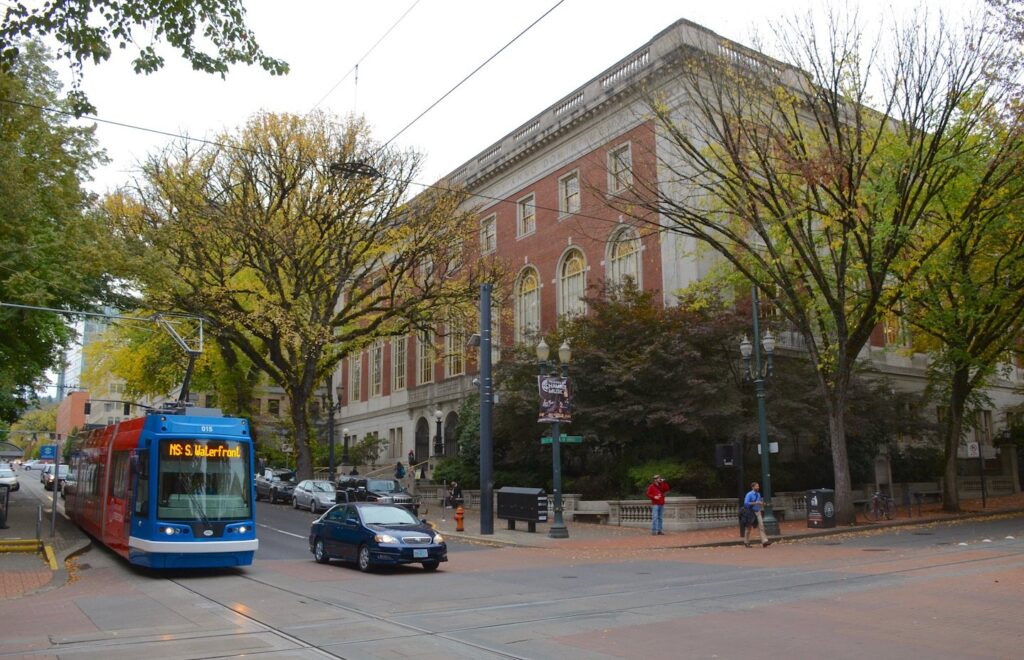
Downtown’s South Park Blocks, a long strip of lawn and old trees through the cultural district, turn gold in late October and make a good walk between the Portland Art Museum, the Oregon Historical Society and Portland State University. On Saturdays, the Portland Farmers Market fills the blocks at PSU from 8:30 a.m. to 2 p.m. through October and from 9 a.m. to 2 p.m. from November 7, 2026, with apples, pears and squash on every table. Nearby, Tom McCall Waterfront Park and the Japanese American Historical Plaza add riverside color.
Cathedral Park and Northwest Portland
Cathedral Park, beneath the Gothic arches of the St. Johns Bridge in North Portland, was a junkyard until it became a park in the 1970s. In fall, the combination of the green bridge towers and the turning trees and grasses makes it a favorite of photographers, especially on a misty morning. In Northwest Portland, the streets around NW 23rd Avenue are lined with mature trees, so a walk through Nob Hill in late October doubles as a leaf-peeping stroll between cafés.
Forest Park
Forest Park’s 5,200 acres of West Hills forest are mostly evergreen, but its bigleaf maples glow yellow through October along the creeks and trails. The Lower Macleay Trail up Balch Creek to the Witch’s Castle is 0.8 mile each way and one of the best short fall walks in the city. The park is open from 5 a.m. to 10 p.m., and dogs must be leashed. For longer routes, our guide to hikes in Portland, Oregon covers the Wildwood Trail and more.
Mount Tabor, Crystal Springs and Leach
Mount Tabor, the volcanic cinder cone in Southeast, gives a view over the east side’s turning trees, and its roads close to cars all day on Wednesdays, which makes a midweek walk up especially peaceful. Crystal Springs Rhododendron Garden, near Reed College, is at its best in spring but has fall color around its lake; its hours are shorter outside summer, so check before going. Leach Botanical Garden in outer Southeast, open Wednesday through Sunday from 10 a.m. to 4 p.m., charges $5 or nothing if you ask under its Garden for All program. Our guide to Portland, Oregon parks and gardens has hours and prices for all of them.
Which neighborhood walks are best for fall color?
Some of Portland’s prettiest autumn scenery isn’t in a park at all. Ladd’s Addition, the diagonal-street neighborhood in inner Southeast, is laid out around small public rose gardens and lined with mature street trees that turn together in late October; a loop through its diamond-shaped blocks, followed by coffee on SE Division Street, makes a quiet hour. The streets around Laurelhurst Park have the same canopy on a bigger scale, and Northwest Portland’s blocks near NW 23rd Avenue add fall color to a café crawl.
On the east bank of the Willamette, the cottonwoods and willows around Oaks Bottom Wildlife Refuge turn yellow along the river, and the paved North Woodland Trail and the Oaks Bluff Trail make an easy one-mile round trip from the north parking lot, with herons on the ponds below. Pair it with Sellwood’s main street for lunch.
Where can you see fall color on a day trip?
The Columbia River Gorge
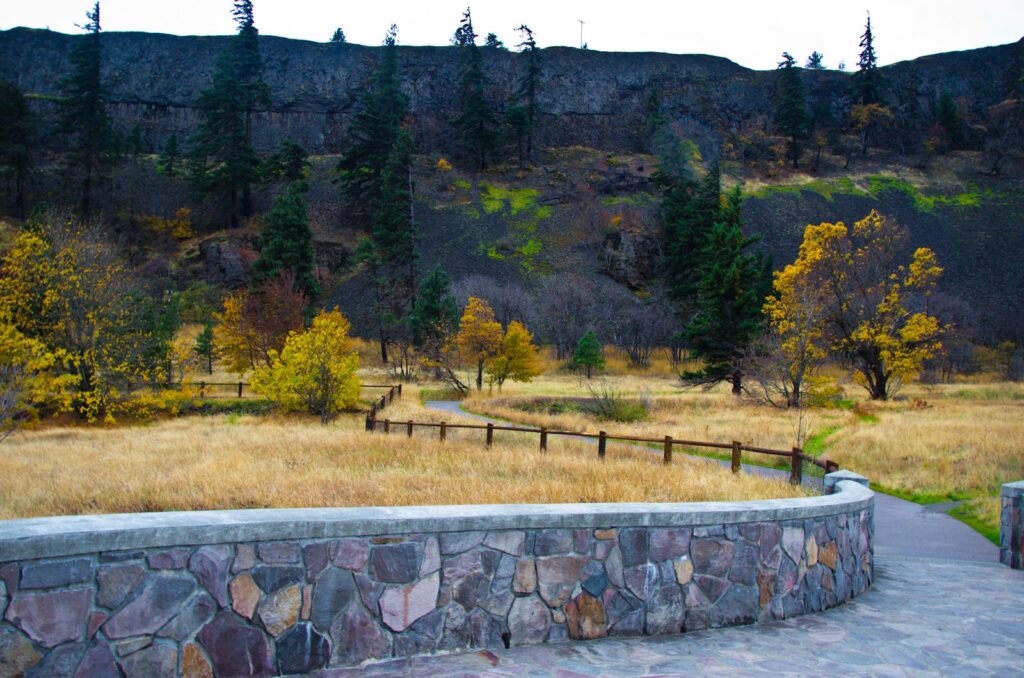
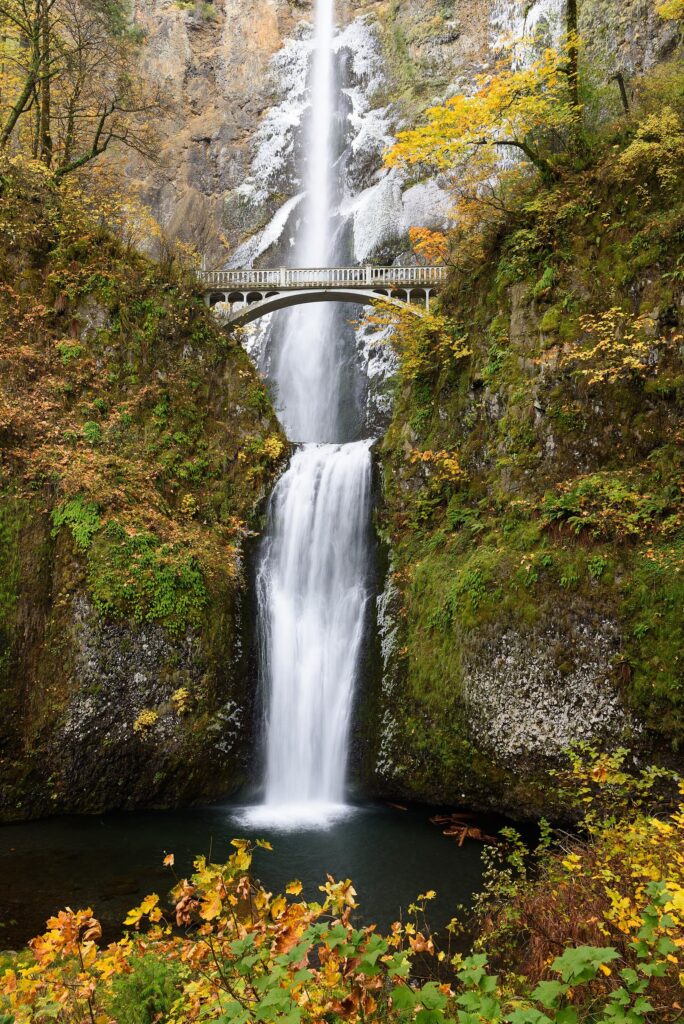
The Gorge is Portland’s big fall drive. Bigleaf maples and cottonwoods line the Historic Columbia River Highway’s waterfall corridor, and farther east, around Mosier and the Twin Tunnels trail, the Gorge’s oaks turn gold against dry grass and basalt. Multnomah Falls’ summer timed-entry season ended on September 7, 2026, so no permit is needed for its I-84 lot in the fall, though its restrooms are closed for renovation through November 2026, with portable toilets on site.
Two trails are off the list this fall: the Eagle Creek and Wahclella Falls trails are closed by Forest Service order through October 31, 2026, because of storm hazards. Without a car, the Columbia Gorge Express runs seven days a week from Gateway Transit Center to Multnomah Falls, Cascade Locks and Hood River. Our guides to the Columbia River Gorge from Portland and waterfalls near Portland, Oregon cover the routes and trails in detail.
Hood River and the Fruit Loop
From June through October some fruit is always in season on the Hood River Valley’s Fruit Loop, and fall is apple and pear season, with farm stands, orchards and cider makers along a signed drive of about 35 miles. Each farm stand chooses its own harvest events, such as apple tasting weekends, and Visit Hood River’s calendar lists the 2026 Hood River Valley Harvest Festival for October 9. With Mount Hood above the orchards, it’s the most scenic fall day trip from the city.
Mount Hood
Color comes earlier on the mountain, where vine maples and huckleberry brush turn red on the slopes from late September. It’s also where winter arrives first: Sno-Park permits are required from November 1, and US 26 can need chains or traction tires after an early storm. Our guide to Mount Hood day trips covers the roads and permits.
Willamette Valley wine country
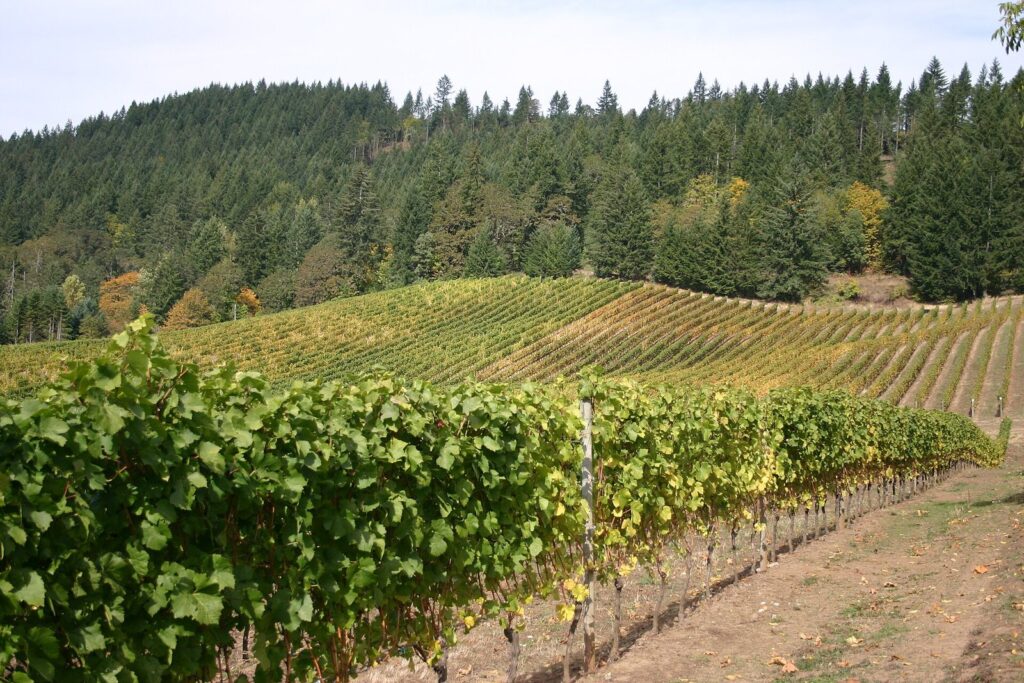
After the grape harvest, which usually runs from late September through October, the valley’s vineyards turn gold and russet across the hills, less than an hour southwest of Portland. On Thanksgiving weekend, November 27 to 29 in 2026, wineries across the valley hold open houses. Our guide to Willamette Valley wine country covers who drives and how to book tastings.
What if it rains on your leaf-peeping day?
Go anyway, with a plan. The Japanese Garden is at its most atmospheric in drizzle, when the moss glows and the maples look lacquered, and Hoyt Arboretum’s forest canopy keeps off light showers. Lan Su Chinese Garden in Old Town has covered walkways and a teahouse, so you can enjoy its courtyards dry. If the rain turns heavy or windy, switch to indoor plans for the afternoon; our guide to Portland, Oregon museums and art has the options, with opening days and prices.
How do you enjoy fall color with kids?
October is pumpkin season, and the farms on Sauvie Island, about 10 miles northwest of downtown, are the classic family outing, with pumpkin patches, corn mazes and hayrides on October weekends; the island’s wildlife-area parking lots need an Oregon Department of Fish and Wildlife permit. Closer in, Oaks Amusement Park in Sellwood keeps its rides open through October, and the Oregon Zoo’s fall hours run from 9:30 a.m. to 5:30 p.m. through October 31, with last entry at 4:30 and tickets bought online in advance. Shuffling through the leaves at Laurelhurst Park or on the Maple Trail at Hoyt Arboretum costs nothing at all. For more family ideas, see our guide to Portland, Oregon with kids.
What does a fall foliage weekend look like?
Saturday: the city
Start at the Portland Farmers Market in the South Park Blocks when it opens, then walk the blocks under the turning elms toward the art museum. Ride MAX to Washington Park and use the shuttle to reach the Japanese Garden for your booked time, then cross to Hoyt Arboretum for the Maple Trail. End the day at Pittock Mansion’s lawn for the view over a city in color, or at a café on NW 23rd Avenue.
Sunday: out of town
Drive the Historic Columbia River Highway east through the waterfall corridor in the morning light, continue on I-84 to Hood River for lunch and an orchard farm stand on the Fruit Loop, and come home through the Gorge before dark. Without a car, spend the day on the east side instead: Laurelhurst Park in the morning, Hawthorne’s cafés for lunch and Mount Tabor for the sunset.
How much time does each stop take?
| Stop | Time to allow | Tip |
|---|---|---|
| Portland Japanese Garden | 1.5 to 2 hours | Book a morning slot on peak weekends |
| Hoyt Arboretum’s Maple Trail | About 1 hour | Pick up a map at the Visitor Center |
| South Park Blocks and downtown | 30 to 60 minutes | Combine with the Saturday farmers market |
| Laurelhurst Park or Ladd’s Addition | About 1 hour | Finish with coffee on Division or Belmont |
| Forest Park’s Lower Macleay Trail | About 1 hour | Wear shoes with grip; roots and leaves get slick |
| Gorge waterfall corridor | Half a day | Start early for parking at Multnomah Falls |
| Hood River and the Fruit Loop | A full day | Go on a weekday to skip harvest-weekend crowds |
How do you photograph Portland’s fall color?
Overcast days, which Portland supplies generously, are good for leaf photos, because soft light keeps colors rich and removes harsh shadows. A light rain makes the reds and yellows look even deeper and adds shine to paths and rocks, so don’t cancel for drizzle. On sunny days, shoot early or late, when low light glows through the leaves, and look for backlit maples at the Japanese Garden and Hoyt Arboretum. Bring a cloth for the lens and something to keep the camera dry, and watch your footing: wet leaves on stone paths are slippery.
What should you pack for a fall trip?
Layers and a waterproof shell come first; October afternoons can be T-shirt warm while mornings and evenings are cool, and November is reliably wet. Wear shoes with grip, since leaf-covered paths and wooden steps turn slick. Days shorten quickly: clocks fall back on November 1, 2026, and by late November the sun sets before 5 p.m., so plan outdoor stops for the morning and early afternoon. An umbrella is optional in Portland, where many locals just use a hood, but a small one earns its place on a garden walk.
How far ahead should you book?
The Japanese Garden is the main booking to make: tickets open 10 days ahead, and peak-color weekends fill. Hotels in October and early November are usually easier to book than in summer, and midweek stays are cheapest, but big university and holiday weekends fill quickly, as does Thanksgiving weekend in wine country. For the Gorge and Hood River, harvest-festival weekends in October bring crowds to the Fruit Loop, so start early. For where to base yourself, see our guide on where to stay in Portland, Oregon.
Fall 2026 dates to know
These dates apply to fall 2026 and are updated each year:
| Date | What’s happening |
|---|---|
| October 9 | Hood River Valley Harvest Festival listed on Visit Hood River’s calendar |
| October 29 | Last Thursday art walk on NE Alberta Street, 6 to 9 p.m. |
| October 31 | Eagle Creek and Wahclella Falls trail closures end, unless extended |
| November 1 | Clocks fall back; Sno-Park permits required on Mount Hood |
| November 7 | The PSU farmers market moves to 9 a.m. to 2 p.m. |
| November 20 | ZooLights opens at the Oregon Zoo, running to January 3, 2027 |
| November 27 to 29 | Thanksgiving weekend open houses in Willamette Valley wine country |
For the full year’s events and weather, month by month, head back to our main guide on when to visit Portland.
Portland Fall Foliage FAQ
When is peak fall foliage in Portland?
Usually from mid-October to early November. The Portland Japanese Garden says its maples are vivid from mid to late October and at or near their strongest from late October into early November, and city street trees often peak a little later. Timing varies by a week or two each year, so check the Garden’s Fall Colors Tracker.
Where can you see fall colors in Portland for free?
Hoyt Arboretum’s Maple Collection along its Maple Trail, Laurelhurst Park, the South Park Blocks, Cathedral Park under the St. Johns Bridge, Forest Park’s Lower Macleay Trail and the tree-lined streets of Northwest Portland. All are free, and several are easy to reach by MAX, streetcar or bus.
Do you need tickets for the Japanese Garden in fall?
Yes. Admission is $22.50 for adults, and tickets can be booked up to 10 days ahead, which is wise for peak-color weekends. The Garden is closed on Tuesdays and keeps shorter winter hours from early October, so check its hours page for your date.
Can you see fall colors without a car?
Easily. MAX goes to Washington Park, where the free shuttle links the Japanese Garden and Hoyt Arboretum from 10 a.m. to 4 p.m. from October to March. The South Park Blocks and Laurelhurst are on the streetcar and bus network, and the Columbia Gorge Express reaches Multnomah Falls and Hood River daily.
Where can you see fall color on a short walk?
The Lower Macleay Trail in Forest Park, 0.8 mile each way along Balch Creek to the Witch’s Castle, or a loop on Hoyt Arboretum’s Maple Trail. In the flatter parts of the city, the South Park Blocks downtown and Laurelhurst Park in Southeast both give big trees and easy paths in well under an hour.
Are the Gorge trails open in fall 2026?
Most are, but the Eagle Creek and Wahclella Falls trails are closed by Forest Service order through October 31, 2026, and Oneonta Gorge’s creek route remains closed. The Multnomah Falls, Latourell, Wahkeena and Horsetail areas are open. Check the Forest Service’s Columbia River Gorge alerts page before any hike, since closures change often.
Is November too rainy for leaf-peeping?
Not if you go prepared. November averages rain on about 18 days, but many are light showers with breaks, and the wet color looks rich. The bigger risk is wind: a strong early storm can strip trees in a day, so late October is the safer bet if your dates are flexible.
What’s the best fall day trip from Portland?
The Columbia River Gorge with a stop in Hood River: waterfalls framed by yellow bigleaf maples, then orchards and farm stands on the Fruit Loop in apple and pear season, all within about an hour of the city. Wine country’s gold vineyards are the gentler alternative.
Related Portland Guides
- Best Time to Visit Portland, Oregon: every month’s weather, events and tradeoffs
- Portland, Oregon Parks and Gardens: hours and prices for the Japanese Garden, Hoyt and more
- Hikes in Portland, Oregon: Forest Park and other in-city trails
- Columbia River Gorge from Portland: the fall drive east
- Willamette Valley Wine Country from Portland: harvest and Thanksgiving weekend
Sources and verification
Details on this page were checked on September 24, 2026 against the agencies and operators listed below. The page is compiled from their published information and claims no first-hand visits.
- Portland Japanese Garden: 2026 Fall Colors Tracker
- Portland Japanese Garden: hours and admission
- Portland Japanese Garden: best fall colors in Portland (2026)
- Hoyt Arboretum: plan your visit
- Explore Washington Park: free shuttle
- Portland Parks and Recreation: Forest Park
- Portland Farmers Market at PSU
- NOAA: U.S. climate normals
- Forest Service: Eagle Creek and Wahclella closure order
- ODOT: waterfall corridor permits
- Hood River Fruit Loop: harvest seasons
- Visit Hood River: 2026 Harvest Festival
- Willamette Valley Wineries Association: harvest
- Oregon DMV: Sno-Park permits
- Oregon Zoo: ZooLights
Portland Tourism Guide is an independent publication, not affiliated with Travel Portland, the City of Portland or any business named here.
Photo credits
- Cathedral Park in autumn: photo by Bill Reynolds from Lake Oswego, Oregon, Wikimedia Commons (CC BY 2.0)
- Portland Japanese Garden: photo by King of Hearts, Wikimedia Commons (CC BY-SA 4.0)
- Streetcar and Central Library: photo by Steve Morgan, Wikimedia Commons (CC BY-SA 4.0)
- Mosier Twin Tunnels viewpoint: photo by U.S. Forest Service- Pacific Northwest Region, Wikimedia Commons (public domain)
- Multnomah Falls: photo by King of Hearts, Wikimedia Commons (CC BY-SA 4.0)
- Willamette Valley vineyard in fall: photo by David Burn, Wikimedia Commons (CC BY-SA 2.0)