This Portland, Oregon first-time visitor guide comes down to a short plan. Come between July and October if you can, give the city three days, and stay downtown or in the Pearl District so you won’t need a car until a day trip. Ride MAX from the airport for $2.80, book the Portland Japanese Garden as soon as its 10-day window opens, and learn which days things close: Mondays for the big museums, Tuesdays for the Japanese Garden and Sundays for the Aerial Tram. Everything else is detail, and the details are below in the order you’ll need them.
It’s written for anyone planning a first trip who wants the decisions in sequence, with prices and checkpoints, rather than one more list of attractions. One caveat is worth knowing early: Oregon’s state lodging tax rises on January 1, 2027, and a stay that runs past New Year’s Eve pays the higher rate on every night. Details were checked between September 23 and October 1, 2026 against the operators’ and agencies’ own websites. For the big-picture overview, see our Portland, Oregon travel guide; this page is the step-by-step version.
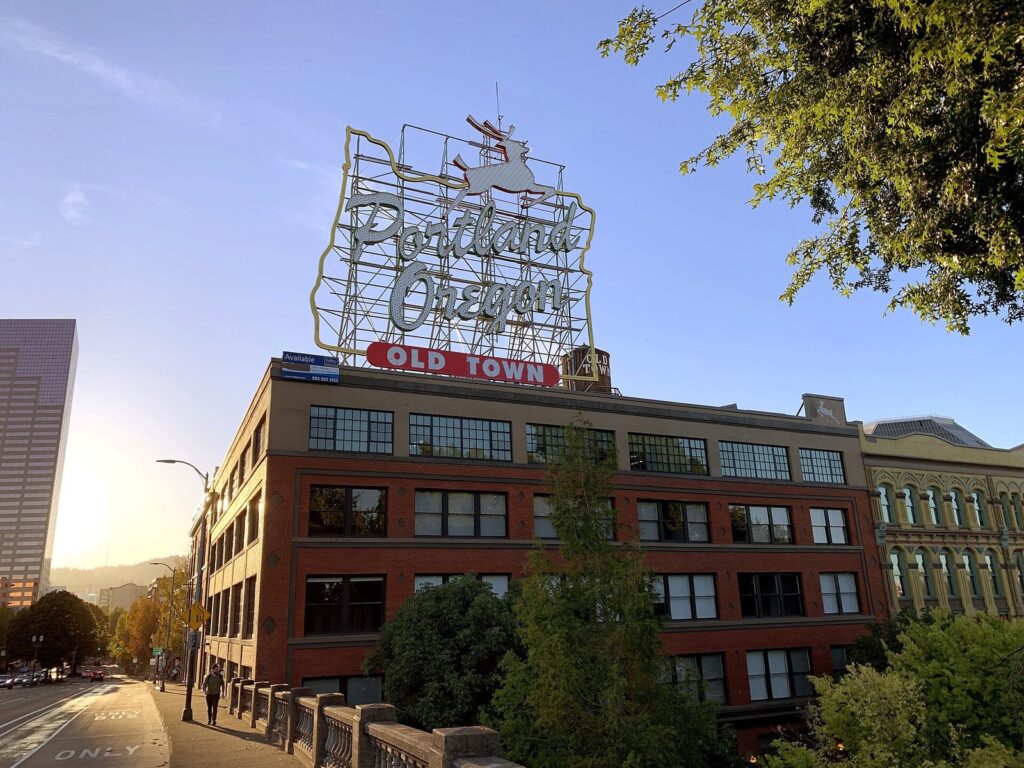
Your first Portland trip at a glance
These are the defaults that suit most first-timers, and the situations where you’d choose differently.
| Decision | Best bet for most first-timers | Choose differently if… |
|---|---|---|
| When to go | July to October | You want lower demand and don’t mind rain: November to March |
| How long | Three days | You want the coast, Mount Hood or the Gorge too: add a day for each |
| Where to stay | Downtown or the Pearl District | You’re here for a convention or east-side concerts |
| Airport to hotel | MAX Red Line: $2.80, about 40 minutes | You land after midnight or with a mountain of luggage |
| Car | None for city days | You’re doing day trips; rent for those days only |
| Book ahead | Japanese Garden (10 days out), Oregon Zoo (up to 30 days), dinner reservations | You’re happy to improvise; most of the city needs no ticket |
| Daily transit | $5.60 cap per adult | You’ll walk all day: $0 |
| Taxes | No sales tax; about 16% on hotel bills | Your stay ends in 2027: about 17.25% |
Step 1: When should a first-timer visit Portland?
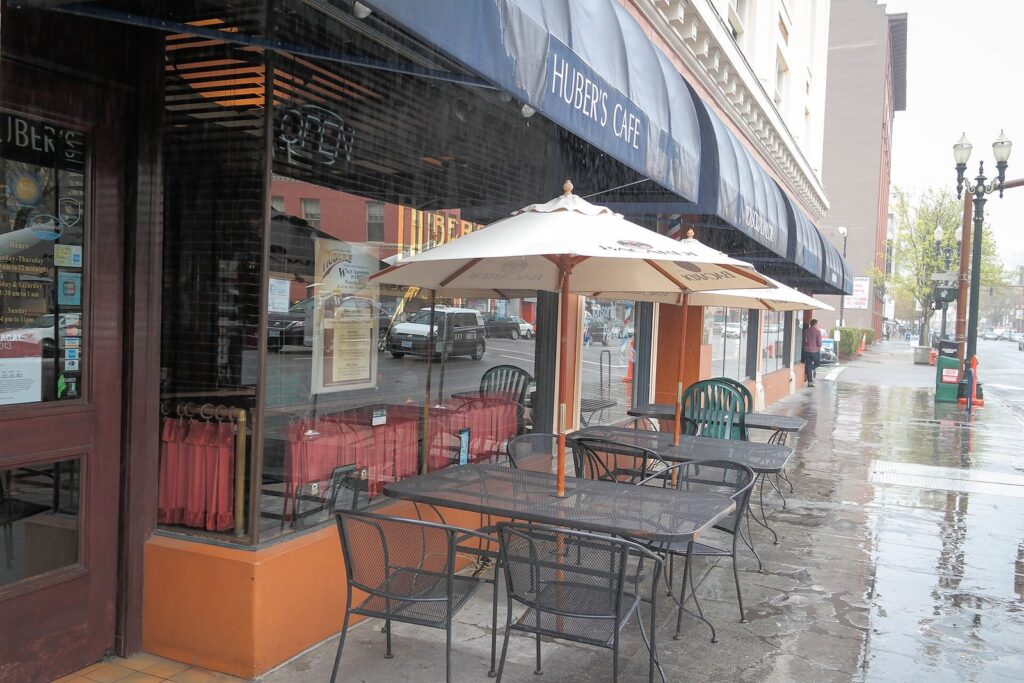
Portland’s weather is a frequency story, not a volume story. In NOAA’s 1991-2020 normals for the airport, measurable rain falls on about 19 days in an average December and January and about 18 in November, but on fewer than four in July and August. Average highs run from about 47°F in December and January to 82°F in August. Snowfall averages just 4.2 inches a year, so snow is an event, not a season.
That gives a first trip four realistic windows, each with its own trade.
| Window | Weather (NOAA normals) | Why go | Watch out for |
|---|---|---|---|
| July and August | Highs near 82°F; under 4 rain days a month | The surest dry days for the Gorge, the rivers and patios | Peak demand; summer parking permits at Multnomah Falls |
| September and October | Highs of 77°F, then 64°F; about 7, then 13-14 rain days | Warm early fall, then color from mid-October | The rain returns in October |
| November to March | Highs of 47-57°F; 16-19 rain days | Lower demand and holiday events | Short days; chains or traction tires for Mount Hood roads |
| April to June | Highs of 62-74°F; 9-17 rain days | Gardens in bloom; the Rose Festival (May 22 to June 28 in 2026) | Showers, and busy festival weekends |
Checkpoint: If your dates are fixed in winter, plan two indoor-friendly days for every outdoor one, and save the Gorge for whichever day the forecast looks least wet. If your dates are flexible, September is the month that most often gives you summer weather without summer’s crowds. Our month-by-month guide to the best time to visit has the events calendar.
Step 2: How many days does a first trip need?
Three days is the honest minimum for a first visit that feels like Portland rather than a layover. The city’s best sights aren’t far apart, but they’re spread across the West Hills, downtown and the east side’s neighborhoods, and each of those deserves daylight. Here’s how the days stack up.
- One day: Washington Park in the morning, downtown and Powell’s after lunch, the river loop at dusk. You’ll see the headline sights and none of the neighborhoods.
- Two days: Add an east-side day on Hawthorne, Division, Alberta or Mississippi, with lunch at a food cart pod and Mount Tabor for sunset.
- Three days: Add Forest Park and Pittock Mansion, or a Columbia River Gorge loop if the weather cooperates.
- Four days or more: Add the Oregon Coast, Mount Hood or Willamette Valley wine country, each a full day out and back.
Checkpoint: Before you lock in dates, lay your days over the weekly closures in Step 8. A Monday arrival with a Tuesday Japanese Garden plan is the most common first-timer mistake on this list. Our Portland, Oregon itinerary turns each of these into an hour-by-hour plan.
Step 3: Where should a first-timer stay?
Choose an area first and a hotel second. If you won’t have a car, the rule is simple: stay within a few blocks of a MAX or streetcar stop. Downtown has every MAX line and puts the waterfront, Powell’s and the art museum on foot. The Pearl District and Old Town sit on the streetcar, close to Union Station and Lan Su Chinese Garden. Across the river, the Lloyd District around the Oregon Convention Center has MAX’s Red, Blue and Green lines, which makes it a practical base for a convention or an early flight.
Hotel prices in Portland move with demand rather than with the calendar alone. Summer, big conventions, the Rose Festival and major concerts or games push rates up; rainy midweek nights in winter pull them down. Whatever the room costs, expect taxes of about 16% on top (more on that in Step 7). Our guide to where to stay in Portland, Oregon compares the areas and hotels in detail.
Checkpoint: Read the address before you book. Every Portland address carries one of six prefixes, N, NE, SE, S, SW or NW, and the prefix tells you where you’ll be. Burnside Street divides north from south and the Willamette River divides east from west, so SW and NW mean the west side (downtown, the Pearl, Old Town), while SE and NE mean the east side. South Portland became the sixth sextant on May 1, 2020, when more than 6,000 addresses east of SW Naito Parkway changed from SW to S.
Step 4: What should you book before you go?
Portland needs less advance booking than most big cities. Washington Park’s gardens, Forest Park, Powell’s, the food carts and the river loop take no tickets at all. A handful of things do, and they’re worth sorting before you fly.
| What | When to book | Why |
|---|---|---|
| Portland Japanese Garden | Tickets open up to 10 days ahead | Adult admission is $22.50; closed Tuesdays |
| Oregon Zoo | Up to 30 days ahead | Advance online tickets are required; adult admission is $26 |
| ZooLights (November 20, 2026 to January 3, 2027) | As soon as you have dates | Dated tickets, $13-$35 for adults depending on the night |
| Dinner at the best-known restaurants | As early as each restaurant allows | Weekend tables go first; food carts never need a booking |
| Multnomah Falls parking (summer) | Recreation.gov; the 2026 season ran May 22 to September 7 | $2 permit plus a $2 fee for the I-84 lot, 9 a.m. to 6 p.m. |
| Amtrak, if you’re arriving by rail | When you book the rest of the trip | Amtrak Cascades runs daily between Eugene and Vancouver, B.C. |
| A rental car | For day-trip days only | Downtown street parking costs about $3.40 an hour |
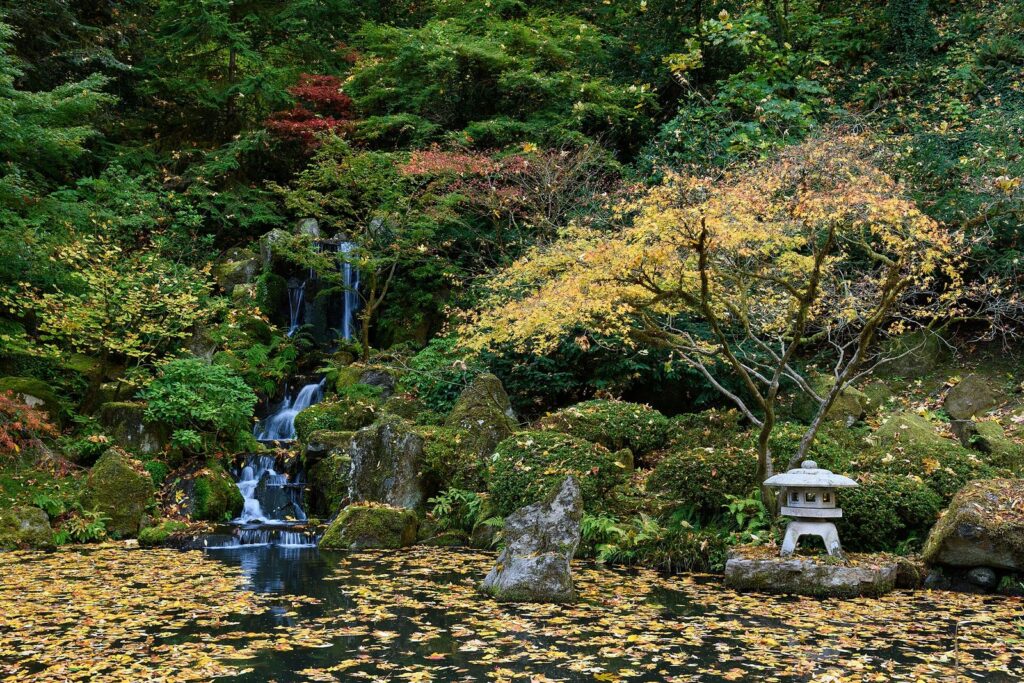
Checkpoint: Set a phone reminder for 10 days before your Japanese Garden day. Plan earliest for late-October weekends, when the Garden says its fall color is usually at its strongest.
Step 5: How do you get from PDX to your hotel?
Most first-timers fly into Portland International Airport (PDX), and the cheapest way downtown is also the simplest. The MAX station sits at the west end of the terminal near baggage claim, and only Red Line trains serve the airport, so any train on the platform is the right one. Tap a contactless card, phone or Hop card on the green reader ($2.80 for 2.5 hours), and you’ll reach downtown in about 40 minutes. Trains run about every 15 minutes most of the day.
Mind the edges of the day. The first train arrives at the airport at 4:43 a.m., and the last leaves toward downtown and Beaverton at 12:27 a.m. From about midnight, TriMet runs MAX Bus service in place of the last few Red Line trips; the buses match the late trains’ schedule but don’t run all night. If you land later than that, or you’re hauling more than you can carry up a hotel’s front steps, take a rideshare or taxi. At PDX those load inside Level 1 of the Short-Term Parking garage, in the Transportation Plaza, not at the terminal curb, and the garage columns are labeled by provider.
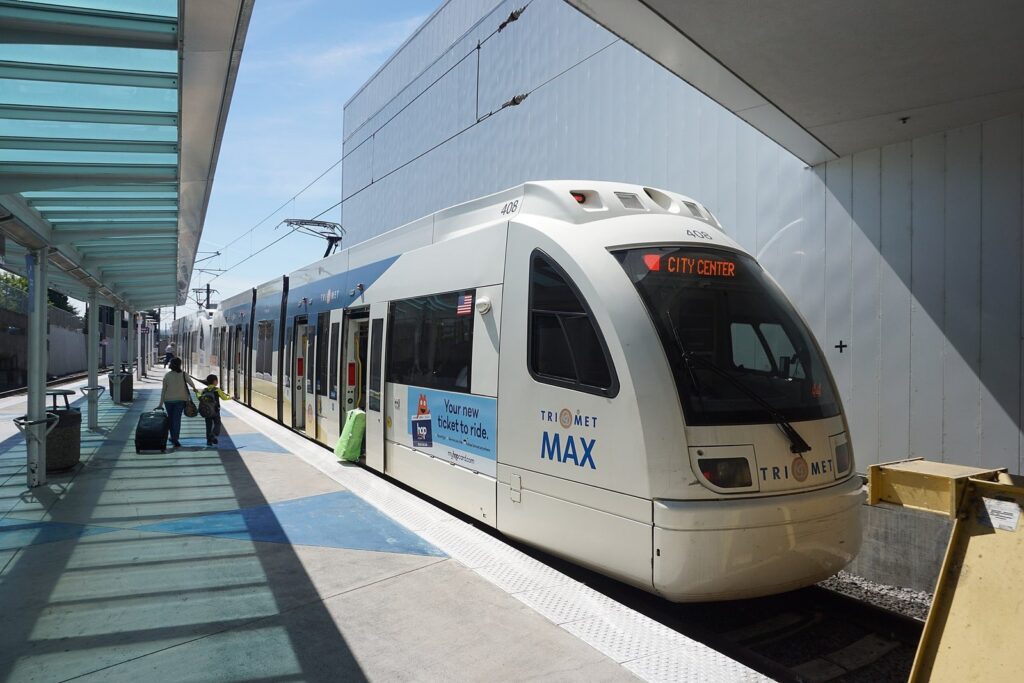
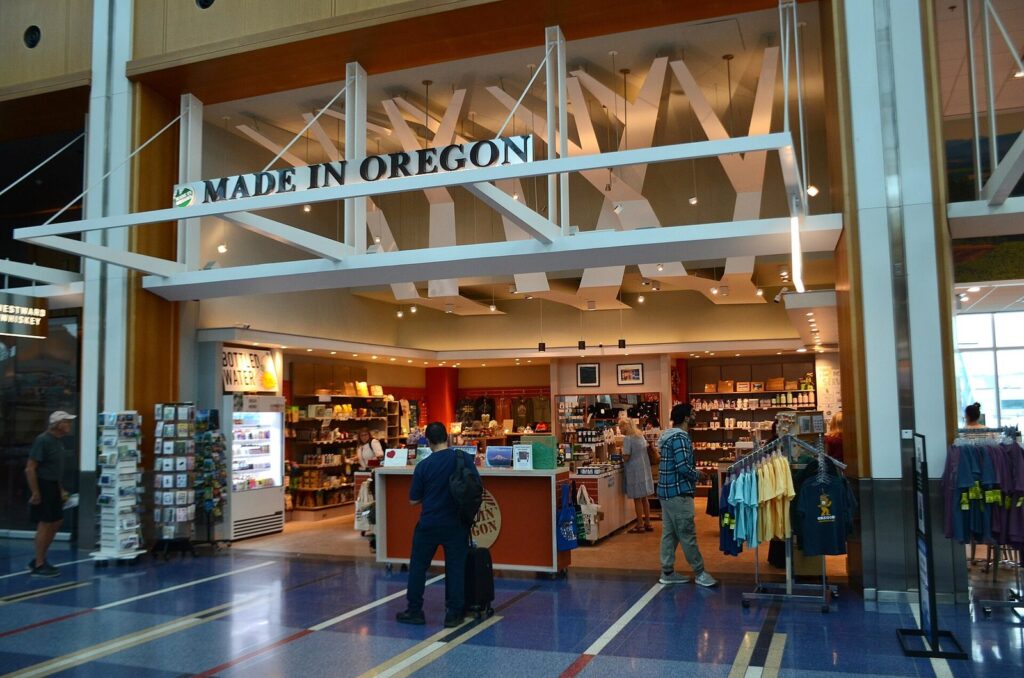
The airport itself is worth a minute on the way out. The new main terminal began opening on August 14, 2024, under a nine-acre mass timber roof, and the Port of Portland has since called the project complete. Under its street-pricing policy, PDX shops and restaurants charge the same prices as their off-airport locations, so the coffee costs what it would in town.
Coming by train instead? Union Station, at 800 NW 6th Ave. in Old Town, is served by Amtrak Cascades, the Coast Starlight and the Empire Builder, and it’s a short walk or streetcar ride from downtown hotels.
Step 6: Do you need a car in Portland?
Not for the city. TriMet’s fare system is built for visitors: tap the same card or phone each time you board, and adult fares stop at $5.60 a day and $100 a month. One fare covers MAX light rail, buses and the Portland Streetcar, which runs seven days a week on its NS Line and A and B loops. BIKETOWN e-bikes cost $1 to unlock plus 35 cents a minute. Shared e-scooters from Lime and Lyft require riders to be 18, and they’re banned from sidewalks and crosswalks.
Driving downtown costs real money. Street meters in the Downtown district rose 20 cents an hour on July 1, 2026, to about $3.40, plus small per-transaction fees, and the city’s five SmartPark garages raised hourly rates the same day. Our guide to getting around Portland has the lines, garages and apps.
A car earns its keep on day-trip days, and Oregon has two rules that catch visitors out:
- Pumping gas. In Multnomah County and 15 other counties, stations may offer self-serve at up to half their pumps, with attendants at the rest; self-serve is allowed only while an attendant is on duty, and both kinds of pump must charge the same price. In 20 rural counties, including Hood River, Wasco, Clatsop and Tillamook, you may pump your own at any station at any hour.
- Winter mountain driving. When signs require them, cars must carry and use chains or traction tires; failing to use them carries a specific fine of $800. From November 1 to April 30, Mount Hood’s Sno-Parks also require a permit: $4 for a day, $9 for three consecutive days or $25 for the season.
You can skip the car even for some day trips. The Columbia Gorge Express runs seven days a week from Gateway Transit Center to Troutdale, Multnomah Falls, Cascade Locks and Hood River, and the Mt. Hood Express bus runs daily from Sandy to Government Camp and Timberline with a $5 day pass.
Step 7: What will a first trip to Portland cost?
Portland’s costs split cleanly into what’s fixed and what’s flexible. Transit and admissions are fixed, so here are the fall 2026 prices for the things first-timers actually buy.
| Item | Price (adult, fall 2026) | Worth knowing |
|---|---|---|
| TriMet fare | $2.80 for 2.5 hours; $5.60 a day maximum | Children 6 and under ride free with a paying rider |
| Portland Aerial Tram | $9 round trip | A fare is required at both terminals; no Sunday service |
| Portland Japanese Garden | $22.50 | Youth 6-17 $16.50 |
| Portland Art Museum | $27.50 | Free 10 a.m.-7 p.m. on the first Thursday; 17 and under always free |
| Oregon Zoo | $26 | Children 2-11 $21 |
| OMSI | $22.50 | Planetarium, submarine and theater cost extra |
| Lan Su Chinese Garden | $18 | Youth 6-18 $15 |
| Pittock Mansion | $17 | The grounds and view are free |
| Washington Park parking | $2.40 an hour, $9.60 a day | MAX and the free shuttle skip it |
Add those four big-ticket museums and gardens together, the Japanese Garden, the art museum, the zoo and OMSI, and an adult spends about $100 before transit. That’s the number to watch, because the free list is long: our guide to free things to do in Portland, Oregon maps the gardens, trails and museum days that cost nothing.
Taxes: zero at the register, more at the hotel
Oregon has no general sales tax, so shop and restaurant prices are what you pay. Hotels are the exception. Portland’s local lodging taxes add 14.5% (a 6% city tax, a 5.5% Multnomah County tax and a 3% tourism improvement fee), and the state adds 1.5% through December 31, 2026, for about 16% in all. From January 1, 2027, the state rate becomes 2.75%, and a stay that begins in 2026 but ends on or after January 1 pays 2.75% on the whole stay, so a New Year’s trip lands at about 17.25%. Short-term rentals also owe a $4-a-night fee.
Hotels and food: the flexible part
Rooms are where budgets swing, and the drivers are the ones in Step 3: season, conventions and big events. Food is the other lever. Food cart pods give you a full lunch for a fraction of a sit-down bill, and the best-known restaurants sit at the other end of the scale. A first trip that mixes the two, carts at lunch and one splurge dinner, is the classic Portland compromise.
Checkpoint: Price your hotel with tax included before you compare. A rate that looks cheaper on a booking site can stop being cheaper once 16% to 17.25% lands on top.
Step 8: Which days are things closed?
Portland’s attractions keep a weekly rhythm that trips up first-timers more than the weather does. Plan your days around it.
| Day | Closed or limited | Good instead |
|---|---|---|
| Monday | Portland Art Museum; OMSI (with some exceptions); Leach Botanical Garden; the Oregon Rail Heritage Center | Washington Park, Forest Park, Powell’s, Lan Su (open daily) |
| Tuesday | Portland Japanese Garden; Leach; Pittock Mansion opens at noon from September to March | The Rose Garden, Hoyt Arboretum, the art museum |
| Wednesday | Mount Tabor’s park roads closed to cars all day | Walk or bus up Mount Tabor instead |
| Thursday | Nothing major | On the first Thursday: the art museum free 10 a.m.-7 p.m. and Pearl galleries in the evening |
| Saturday | Busy everywhere | Portland Saturday Market (10 a.m.-5 p.m., through December 19, 2026) and the PSU farmers market |
| Sunday | No Aerial Tram; no Saturday Market (Saturdays only in 2026) | Forest Park, Powell’s and the river loop |
Holidays add their own gaps. The tram doesn’t run on holidays, the Washington Park shuttle skips Thanksgiving and Christmas Day, and Pittock Mansion closes on Thanksgiving, Christmas, New Year’s Day, Martin Luther King Jr. Day and Juneteenth. The Oregon Zoo closes on November 26 and December 25, 2026, and opens only Friday through Monday from December 1 to 17.
Step 9: What should you pack for Portland?
Pack for drizzle, not downpours. Outside July and August, a light waterproof shell with a hood does more than an umbrella on a breezy bridge, and layers handle the gap between a 46°F morning and a 64°F October afternoon. Bring shoes that can take wet pavement and muddy trails; Forest Park and the Gorge stay damp for much of the year.
Summer needs its own kit. August averages highs of 82°F, but heat waves happen, and the airport’s record high is 116°F, so carry water and sun protection on Gorge hikes. Winter snow is rare in the city, about 4.2 inches a year on average, but if Mount Hood is on your list, the chain rules in Step 6 apply.
Step 10: Which local rules and surprises should you know?
The water fountains are a landmark
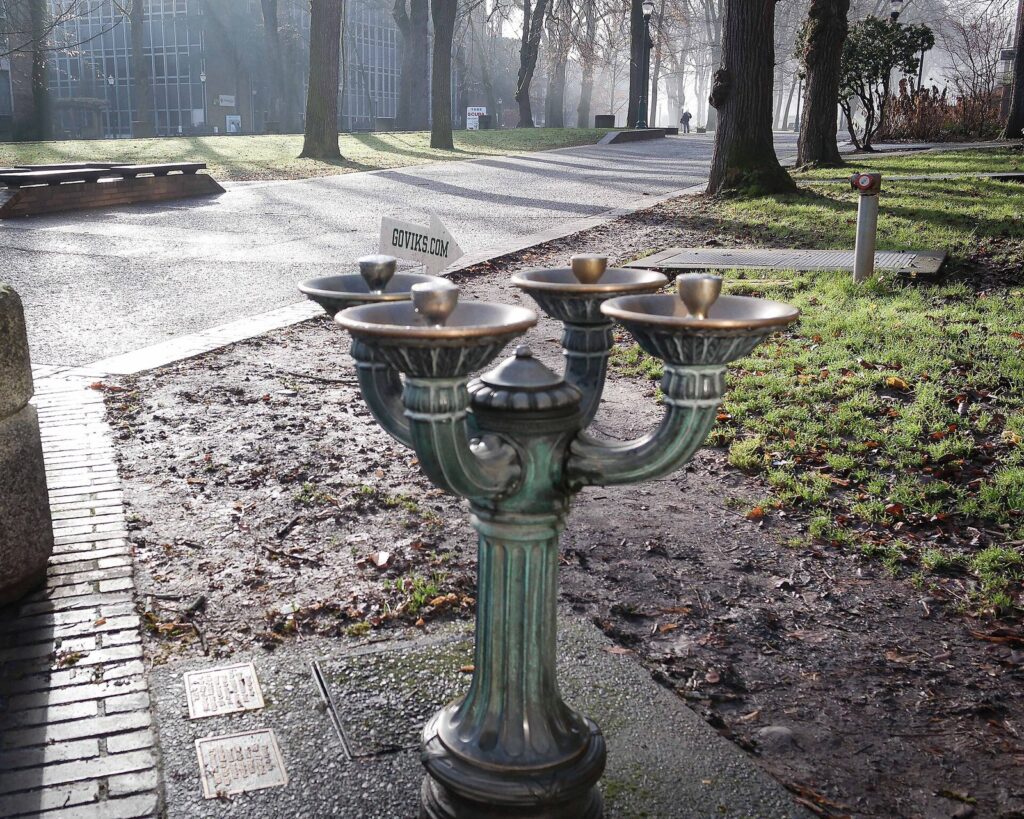
Downtown’s bronze, four-bowl drinking fountains are Benson Bubblers. In 1912, businessman Simon Benson gave the city $10,000 for 20 of them, and the Portland Water Bureau now maintains 52 four-bowl fountains plus 74 one-bowl versions. They run around the clock for most of the year, apart from cold snaps and very windy days, so fill your bottle and save the cost of a drink.
Cannabis is legal, with limits
Adults 21 and older can use recreational cannabis in Oregon, but not in a public place, and that includes bars and other liquor-licensed businesses; use is limited to private property. It’s also illegal to take cannabis out of Oregon or to bring it in from another state, Washington included, so whatever you buy stays here. Check your hotel’s smoking policy before assuming your room counts as private property.
A few more first-timer surprises
- The Aerial Tram isn’t free going down. Older guides say otherwise, but its fare page requires a fare at both terminals.
- Saturday Market means Saturday. In 2026 it runs on Saturdays only, from 10 a.m. to 5 p.m., through December 19.
- The Portland Children’s Museum has closed for good. Older lists still include it.
- You can swim in the Willamette, carefully. Poet’s Beach, by the Marquam Bridge, has a roped swim area in summer, with no lifeguard and weekly water testing by the city.
- E-scooters stay off sidewalks. Shared scooters are allowed on streets, bike lanes and multi-use paths, and must be locked to a bike rack or sign after each ride.
How accessible is Portland for first-time visitors?
Better than its hills suggest, as long as you lean on transit. TriMet says all of its buses, trains, transit centers and stations are accessible to people using mobility devices. MAX trains and streetcars have a ramp that extends for boarding when you need it, every bus and train has priority seating by the doors, and mobility devices don’t need to be secured on MAX. Stations have Braille and raised-letter signs, plus textured tiles that warn of the platform edge. The Honored Citizen fare is $1.40 a ride, capped at $2.80 a day.
TriMet’s LIFT paratransit is a shared-ride service for people who can’t use regular buses and trains because of a disability, but riders must meet eligibility rules and apply before using it, so contact TriMet well before your trip if you’ll need it. At the attractions, Washington Park’s deep MAX station is served by elevators, the Oregon Zoo is KultureCity-certified and lends free sensory bags at the entrance, OMSI offers quiet rooms and select low-sensory hours, and the Central Library’s 2024 renovation improved ADA access. For nature without stairs, Tryon Creek State Natural Area has a quarter-mile paved, all-accessible trail, and Hoyt Arboretum has paved paths among its trails.
Bringing kids on a first trip?
Portland goes easy on families’ budgets in a few useful ways. Children 6 and under ride TriMet free with a paying rider, and the youth fare for ages 7 to 17 is $1.40, with proof of eligibility needed on board for 15- to 17-year-olds. The Portland Art Museum is free for anyone 17 or younger every day, which makes it the cheapest big museum in town for a family.
The paid family favorites have their own youth prices: in fall 2026, $21 for children 2 to 11 at the Oregon Zoo, $15.50 for ages 3 to 13 at OMSI and $16.50 for ages 6 to 17 at the Japanese Garden. OMSI’s quiet rooms and select low-sensory hours help children who find crowds hard, and the zoo lends free sensory bags at the entrance. One correction to older family lists: the Portland Children’s Museum has closed for good. Our Portland with kids guide sorts the options by age.
What should first-timers prioritize, and what can wait?
On a first trip, spend your time on the things Portland does that other cities don’t. That means the gardens of Washington Park, an hour lost in Powell’s, lunch at a food cart pod, the river loop across the bridges, one east-side neighborhood explored on foot, and, with a third day, Forest Park or the Gorge. Our Portland food carts guide picks the pods, and our neighborhoods guide helps you choose the district.
Some things can wait for a second visit. OMSI is excellent with kids and optional without them. Driving the Historic Columbia River Highway in a rush defeats the point of it; give the Gorge a full day or save it. And don’t build a day around anything on the Step 8 closure list without checking the calendar twice. For the full menu of sights, paid and free, start with our list of the best things to do in Portland.
Your first-trip countdown checklist
Here’s the whole plan as a timeline, so nothing that needs a booking slips through.
| When | Task | Why it matters |
|---|---|---|
| Two to three months out | Set dates against the weekly closures and big events; book your hotel and compare prices with tax included | Festivals and conventions move room prices; taxes add 16% to 17.25% |
| 30 days out | Buy Oregon Zoo tickets, and ZooLights tickets for a holiday trip | The zoo requires advance online tickets and sells them up to 30 days ahead |
| Two to three weeks out | Reserve the dinners you care about; book Amtrak if you’re arriving by train | Weekend tables at the best-known restaurants go first |
| 10 days out | Book the Portland Japanese Garden | Tickets open 10 days ahead, and it’s closed on Tuesdays |
| A week out | Check the forecast and reshuffle outdoor days; in summer, sort the Multnomah Falls parking permit; in winter, check TripCheck before any mountain drive | Rain days and road conditions decide which day gets the Gorge |
| The day before | Add a contactless card to your phone wallet and note the first and last airport trains | A tap pays the fare, and the daily cap tracks itself |
| Arrival | Walk to the west end of the terminal for MAX, or to Level 1 of the Short-Term Parking garage for a rideshare | Neither waits at the terminal curb |
Portland First-Time Visitor FAQ
Do you need cash in Portland?
Rarely. TriMet fares are a tap of a contactless card or phone, the Aerial Tram sells tickets online or by card at either terminal, and street parking can be paid at the meter, by text or with the Parking Kitty app. A little cash is still handy for small purchases and tips, but you can get through a typical first trip without visiting an ATM.
Can you drink the tap water in Portland?
Yes. The Portland Water Bureau runs the Benson Bubblers downtown precisely so people can drink from them, and they flow around the clock most of the year. Carry a refillable bottle; between the bubblers and your hotel tap, there’s little reason to buy bottled water on a city day.
Can you take cannabis home from Oregon?
No. Oregon law makes it illegal to take cannabis out of the state or bring it in, and that applies even when you’re heading to Washington, where it’s also legal. Adults 21 and older can buy and use it in Oregon, but only on private property, never in public places such as parks, streets or bars.
Is downtown Portland safe for first-time visitors?
Treat it like any big American downtown: keep bags and valuables out of sight in parked cars, stick to busy, well-lit streets at night and call 911 in an emergency. Visible homelessness surprises some first-timers; it calls for ordinary courtesy and awareness, not a change of plans. Transit is the easiest way to move between areas after dark.
What’s the cheapest time for a first trip to Portland?
November through March, outside the holidays, is the quietest stretch, so rooms are easiest to find then. You trade dry weather for it: those months average 16 to 19 days of measurable rain. If you can stretch the budget a little, September usually pairs warm, dry days with a calmer city than July and August.
Is Portland walkable for first-time visitors?
The center is. Downtown, Old Town and the Pearl District sit close together on flat ground, and the river loop links both banks of the Willamette on paved paths. The hills begin west of downtown, where Washington Park and Pittock Mansion sit, so use MAX and the park shuttle for those, and the streetcar or a bus for the east-side neighborhoods.
Related Portland Guides
- Portland, Oregon Travel Guide: How to Plan Your Trip: the full planning overview this checklist hangs from
- Portland, Oregon Itinerary: 1, 2, 3 and 4 Days: hour-by-hour plans for the days you’ve chosen
- Where to Stay in Portland, Oregon: the best areas and hotels by trip type
- Getting Around Portland, Oregon: MAX, the streetcar, bikes and parking in detail
- Best Time to Visit Portland, Oregon: month-by-month weather and events
Sources and verification
The details on this page were checked between September 23 and October 1, 2026 against the agencies and operators listed below; the guide is compiled from their published information and claims no first-hand visits.
- NOAA: U.S. climate normals, 1991-2020
- TriMet: fares, MAX Bus, accessibility and LIFT paratransit
- TriMet: how to take MAX to and from PDX
- Portland International Airport: rideshares and shops and dining
- Amtrak: Portland Union Station
- Portland Streetcar, BIKETOWN pricing and PBOT e-scooter rules
- City of Portland: July 1, 2026 parking rate changes
- City of Portland: transient lodgings tax and Oregon Department of Revenue: state lodging tax
- City of Portland: South Portland sextant
- Oregon State Fire Marshal: self-serve fueling, TripCheck: chain law and ODOT: Sno-Park permits
- Columbia Gorge Express and Mt. Hood Express
- Portland Japanese Garden, Oregon Zoo, ZooLights and Oregon Zoo accessibility
- Portland Art Museum, OMSI, Lan Su Chinese Garden and Pittock Mansion
- Portland Aerial Tram: fare and Explore Washington Park: parking
- ODOT: waterfall corridor permits
- Portland Saturday Market
- Oregon Health Authority: cannabis laws
- Portland Water Bureau: Benson Bubblers
- Friends of Tryon Creek and Multnomah County Library
Portland Tourism Guide is an independent publication, not affiliated with Travel Portland, the City of Portland or any business named here.
Photo credits
- White Stag sign, Old Town: photo by PortlandAppraisalBlog, Wikimedia Commons (CC BY-SA 4.0)
- Portland Japanese Garden: photo by King of Hearts, Wikimedia Commons (CC BY-SA 4.0)
- MAX Red Line at PDX: photo by Michael Barera, Wikimedia Commons (CC BY-SA 4.0)
- Made in Oregon store at PDX: photo by Steve Morgan, Wikimedia Commons (CC BY-SA 4.0)
- Downtown Portland in the rain: photo by Visitor7, Wikimedia Commons (CC BY-SA 3.0)
- Benson Bubbler: photo by Visitor7, Wikimedia Commons (CC BY-SA 3.0)