This 3 days in Portland, Oregon itinerary gives you one day for Washington Park, downtown and the Pearl District, one for the river, the Aerial Tram and the east side, and one for the Columbia River Gorge, with a Forest Park day ready if the Gorge weather turns. Every block below comes with door-to-door travel time, a meal stop, a restroom plan and a rain swap. Car-free, the city days cost $5.60 a person in transit, because TriMet caps adult fares at that amount per day.
It’s built for first-timers and anyone who wants a plan they can actually follow on foot and by MAX, with a car needed only for the Gorge loop, and even that has a bus alternative. The one thing to get right before you go is the start day, because Portland’s closures fall on Mondays, Tuesdays and Sundays. Hours, prices and closures were checked between September 23 and October 1, 2026 against the operators’ and agencies’ own websites. For shorter or longer trips, see our Portland itineraries for one to four days.
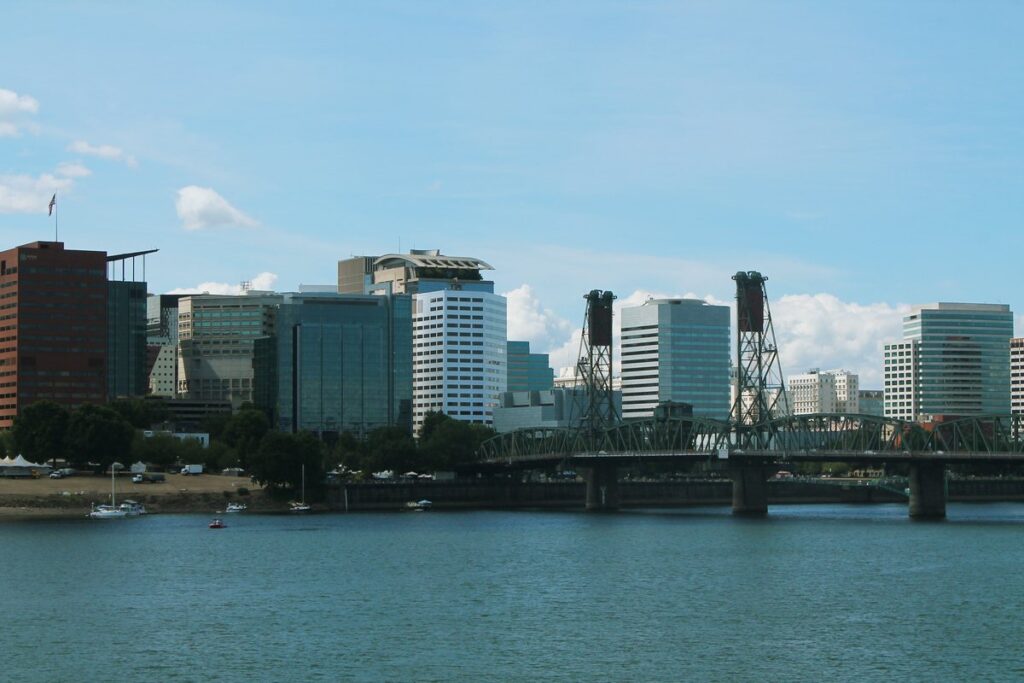
The three days at a glance
| Day | Area | Main stops | Getting around | Admissions (adult) | If it rains |
|---|---|---|---|---|---|
| Day 1 | West Hills, downtown, Old Town and the Pearl | Rose Garden, Japanese Garden, art museum, Lan Su, Powell’s | MAX, then walking | About $68, plus $5.60 transit | Swap the Rose Garden for more time in the museum |
| Day 2 | South Waterfront, the river and the east side | Aerial Tram, Tilikum Crossing, OMSI or the Esplanade, Hawthorne, Mount Tabor | Streetcar, tram, walking and bus line 14 | $9 tram, plus $22.50 if you choose OMSI | OMSI and a covered food cart pod |
| Day 3 | Columbia River Gorge | Vista House, Latourell, Multnomah and Horsetail falls, Hood River | Car, or MAX plus the Columbia Gorge Express | Free sights; parking fees and a bridge toll by car | Forest Park, Pittock Mansion and NW 23rd instead |
Which day should you start the itinerary?
Portland’s weekly closures decide this more than your flight does. Day 1 needs the Portland Japanese Garden (closed Tuesdays) and the Portland Art Museum (closed Mondays). Day 2 needs the Aerial Tram, which doesn’t run on Sundays or holidays, and OMSI, which closes on Mondays with some exceptions. The Gorge doesn’t care what day it is.
| Start day | Does it work? | What to change |
|---|---|---|
| Wednesday | Yes | Nothing |
| Thursday | Yes, and it’s the best start on the first Thursday of the month | The art museum is free from 10 a.m. to 7 p.m. that day |
| Friday | Yes | Day 2 falls on Saturday, when the tram runs 9 a.m. to 5 p.m. |
| Saturday | With a swap | Day 2 would land on Sunday with no tram, so do the Gorge on Sunday and the river day on Monday, skipping OMSI |
| Sunday | With a trim | Day 2 on Monday means no OMSI; walk the Esplanade instead |
| Monday | With a trim | The art museum is closed on Mondays, so give Day 1’s afternoon to Lan Su and Powell’s |
| Tuesday | With a swap | Run Day 2 first, since the Japanese Garden is closed on Tuesdays, then Day 1 on Wednesday |
Landing the morning of Day 1?
The MAX Red Line makes a morning arrival easy to fold in. Its station sits at the west end of the PDX terminal near baggage claim, trains run about every 15 minutes most of the day, and the ride to downtown takes about 40 minutes for a single $2.80 fare. The same line continues west to Washington Park, so drop your bags at a hotel near a Red Line stop and ride on to the gardens. If you land after lunch, start Day 1 at the art museum and Lan Su, and move the Rose Garden and the Japanese Garden to the morning of Day 3, swapping the Gorge for the Forest Park day.
Day 1: Washington Park, the museum and Old Town
Day 1 is the west-side day: gardens in the morning while the light is soft, culture after lunch, and the Pearl District for dinner. You’ll walk about four to five miles in total if you take MAX between the hills and downtown, and you won’t need a car at any point. Book the Japanese Garden in advance; tickets open up to 10 days ahead.
9:00 a.m.: MAX to Washington Park (about 10 minutes)
From any downtown MAX stop on the Red or Blue line, the ride to Washington Park station takes about 10 minutes. The platform sits 260 feet underground, the deepest transit station in North America, and elevators bring you up to a plaza where the free Washington Park shuttle loop starts. From October through March the shuttle runs from 10 a.m. to 4 p.m. every 30 minutes; from April through September, from 9:30 a.m. to 7 p.m. every 15 minutes. It doesn’t run in bad weather, so if it’s pouring, plan to walk.
9:30 a.m.: The International Rose Test Garden (free, 45 minutes)
Take the shuttle or walk to the Rose Test Garden, which opens at 5 a.m. and charges nothing. More than 10,000 bushes of over 610 varieties bloom from late May into October; in winter you get pruned beds and the view. It closes from 5 to 10 a.m. every other Wednesday from May through August for maintenance, so a summer Wednesday start should flip this stop and the next.
10:15 a.m.: The Portland Japanese Garden (about 1.5 hours)
The Japanese Garden sits just uphill from the roses. Adult admission is $22.50 (seniors $19.50, students $18.50, ages 6 to 17 $16.50), and it’s closed on Tuesdays. Its hours change with the seasons, so check its website for your dates. Allow an hour and a half; less feels rushed, more is a pleasure if your legs agree. Use the restrooms at the garden before you leave, since the next stretch is transit and lunch.
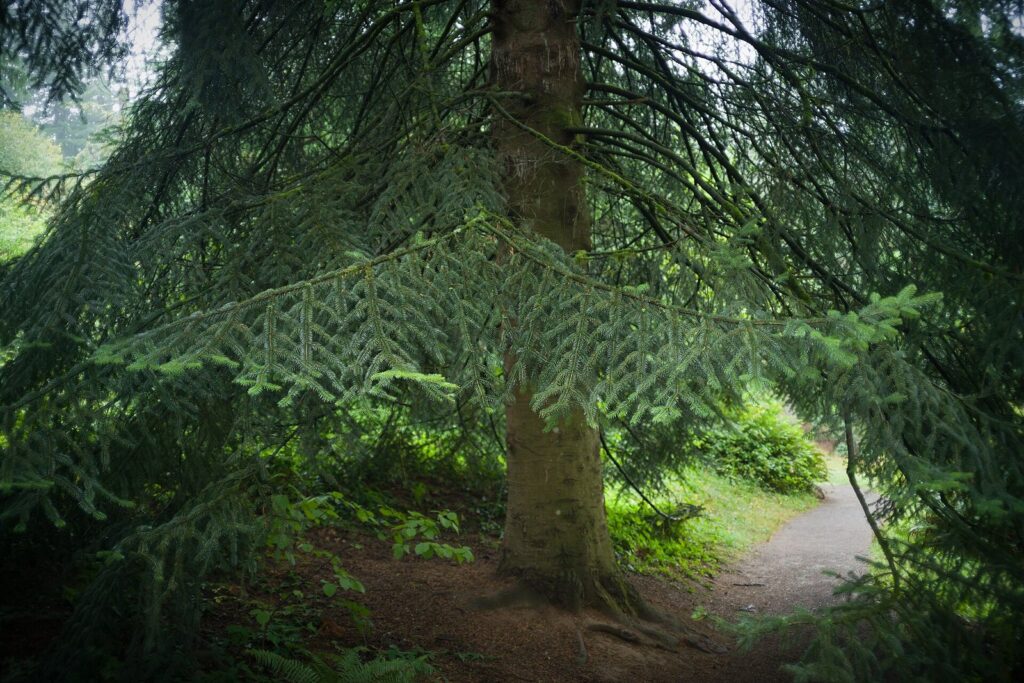
Optional add-on: If you have energy left, ride the shuttle to Hoyt Arboretum, which is free every day, with 12 miles of trails and a visitor center open from 10 a.m. to 4 p.m. In October its Maple Trail is the arboretum’s main fall show. Budget 45 minutes, and push lunch back.
12:15 p.m.: MAX back downtown and lunch at Midtown Beer Garden
Ride MAX back downtown (about 10 minutes) and walk to Midtown Beer Garden, at 431 SW Harvey Milk St. on the corner of SW Fifth Avenue. It’s the city’s oldest food cart pod, running since the early 1980s and renovated in 2023, with more than 20 carts, covered seating for about 300 and restrooms. Skip older advice about the pods at SW Third and Washington and SW Second and Oak: in July 2026 their owner said it would close both later in the year.
1:30 p.m.: The Portland Art Museum (about 2 hours)
Walk a few blocks to the South Park Blocks. The Portland Art Museum is Oregon’s largest, with more than 42,000 works in two historic buildings now linked by the Mark Rothko Pavilion, which opened November 20, 2025. It’s open Tuesday through Sunday from 10 a.m. to 5 p.m. Adult admission is $27.50, but it’s free for anyone 17 or younger, and free for everyone from 10 a.m. to 7 p.m. on the first Thursday of each month. A Portland Loo, the city’s free-standing public restroom, stands in the South Park Blocks at SW Columbia Street and is generally open around the clock.
3:45 p.m.: Lan Su Chinese Garden (about 1 hour)
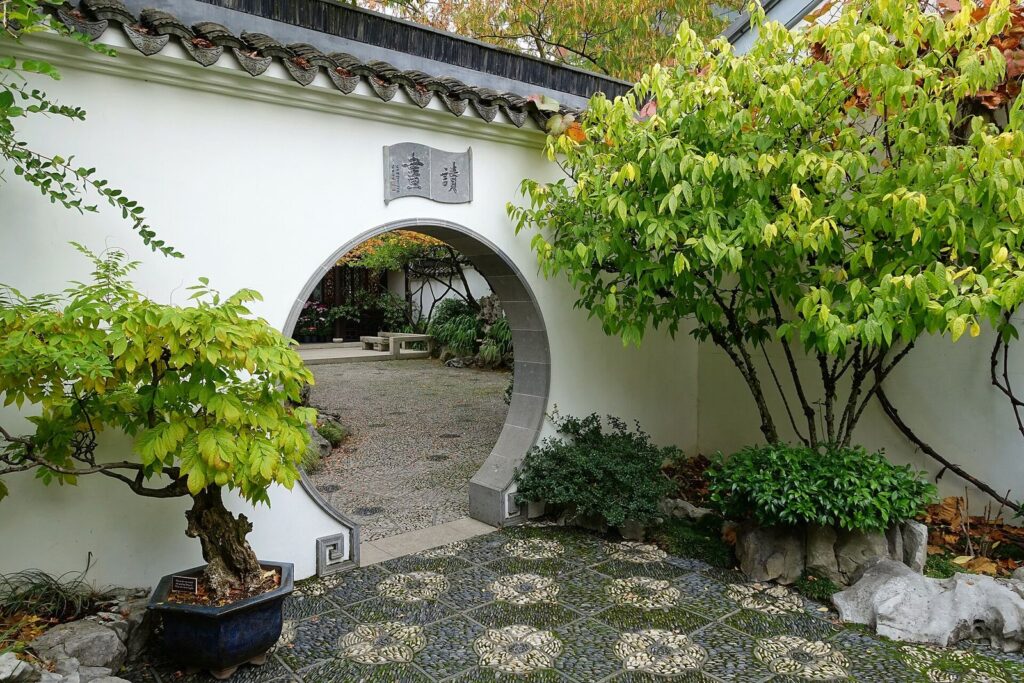
Lan Su, at 239 NW Everett St. in Old Town, is about 1.3 miles from the museum, roughly a 25-minute walk, so take a MAX train north on the Transit Mall if your feet are done. It’s open daily from 10 a.m. to 5:30 p.m., with last entry at 5, and adult admission is $18. Stop at the Yun Shui Teahouse inside if the weather has turned. Two of the 24-hour downtown Loos are close by, in the North Park Blocks at NW Couch Street and at NW Glisan Street and Fifth Avenue.
5:00 p.m.: Powell’s and the Pearl District
Walk west along Burnside to Powell’s City of Books, at 1005 W Burnside St., which is open until 9 p.m. daily, so it’s the right place to spend the end of the afternoon. Then drift north into the Pearl for dinner. Two easy choices: Deschutes Brewery’s Portland Public House, at 210 NW 11th Ave., and Jake’s Famous Crawfish, at 401 SW 12th Ave., a seafood restaurant open since 1892. Our Portland restaurants guide has the reservation-worthy alternatives.
Day 1 rain swap: Cut the Rose Garden to a quick look and give the time to the art museum, which can easily fill three hours. The Japanese Garden is beautiful in light rain; in a downpour, go straight to the museum and fit Lan Su in later.
Day 2: The tram, the river and the east side
Day 2 crosses the Willamette on foot and finishes on a volcano. Run it Monday through Saturday, never on a Sunday or a holiday, when the tram doesn’t operate. You’ll ride the streetcar, the tram and one bus, and walk about five miles if you include Mount Tabor.
9:00 a.m.: Streetcar to South Waterfront and the Aerial Tram
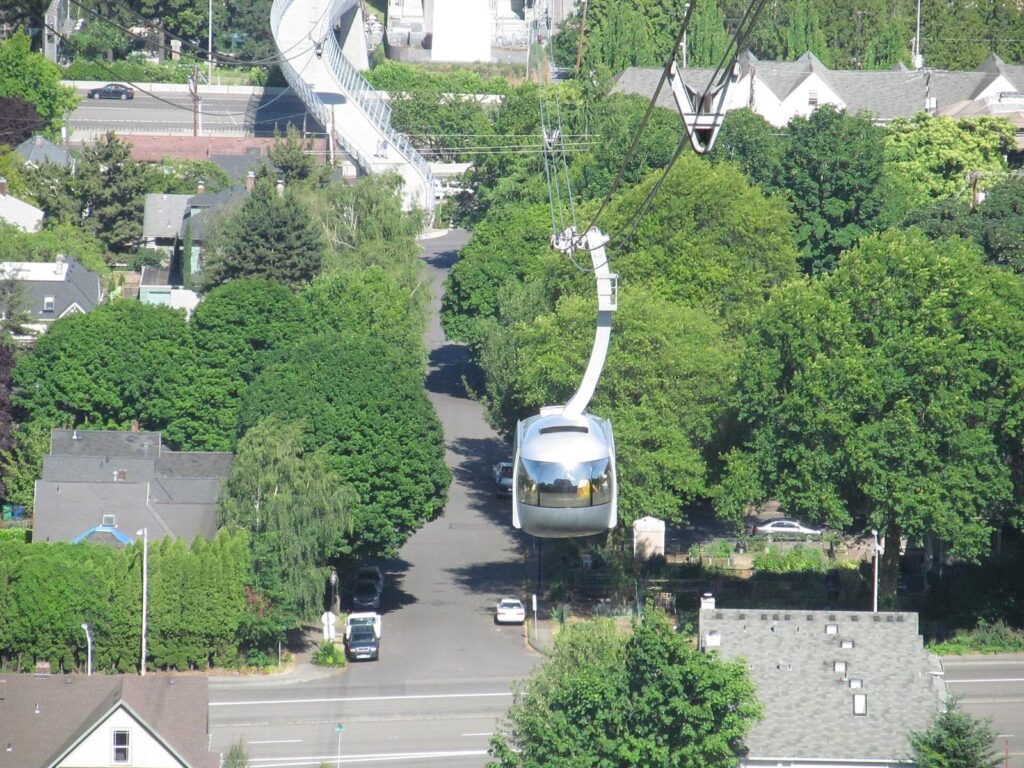
Ride the Portland Streetcar’s NS Line south to South Waterfront; a TriMet fare covers it. The tram’s lower terminal is at 3303 S Bond Ave. The tram runs weekdays from 5:30 a.m. to 9:30 p.m. and Saturdays from 9 a.m. to 5 p.m., and the $9 round trip is valid through the end of the day. A fare is required at both terminals, so the ride down isn’t free, whatever older guides say. The cabin climbs 500 feet over a 3,300-foot line, and on a clear morning the deck at the top looks straight at the city and, beyond it, the Cascades.
10:15 a.m.: Walk Tilikum Crossing to OMSI or the Esplanade
From the tram’s lower terminal, walk east across Tilikum Crossing, the car-free bridge for transit, bikes and people on foot; it’s roughly 15 minutes to the east bank. There you have a choice. OMSI, the science museum, is open Tuesday through Sunday from 9:30 a.m. to 5:30 p.m. (7 p.m. on Saturdays) and costs $22.50 for adults, with the planetarium, submarine and theater extra; give it two hours, and use its restrooms. Or skip it and walk north on the Eastbank Esplanade, which runs 1.5 miles to the Steel Bridge and includes a 1,200-foot floating walkway.
12:30 p.m.: Lunch at Hawthorne Asylum
From OMSI it’s roughly a 15- to 20-minute walk to Hawthorne Asylum, at 1080 SE Madison St. at SE 10th Avenue. More than 20 carts surround a large, permanently covered and heated seating area with fire pits, which makes it the rain-proof lunch on this route. Each cart sets its own hours. If you’d rather stay on the boulevard, Cartopia, at 1207 SE Hawthorne Blvd., had seven carts in September 2026 and opens at 11 a.m. daily.
1:45 p.m.: Hawthorne and Ladd’s Addition (about 2 hours)
Walk east on SE Hawthorne Boulevard for its shops, then cut south into Ladd’s Addition, between Hawthorne and SE Division Street from SE 12th to SE 20th avenues, an early planned neighborhood laid out on diagonal streets around a central circle with small rose gardens. When you’re done, frequent bus line 14 runs along Hawthorne, and the McMenamins Bagdad Theater, a historic single-screen movie palace with a pub, makes a good rainy-afternoon bolt-hole farther east on the boulevard.
4:30 p.m.: Mount Tabor for sunset
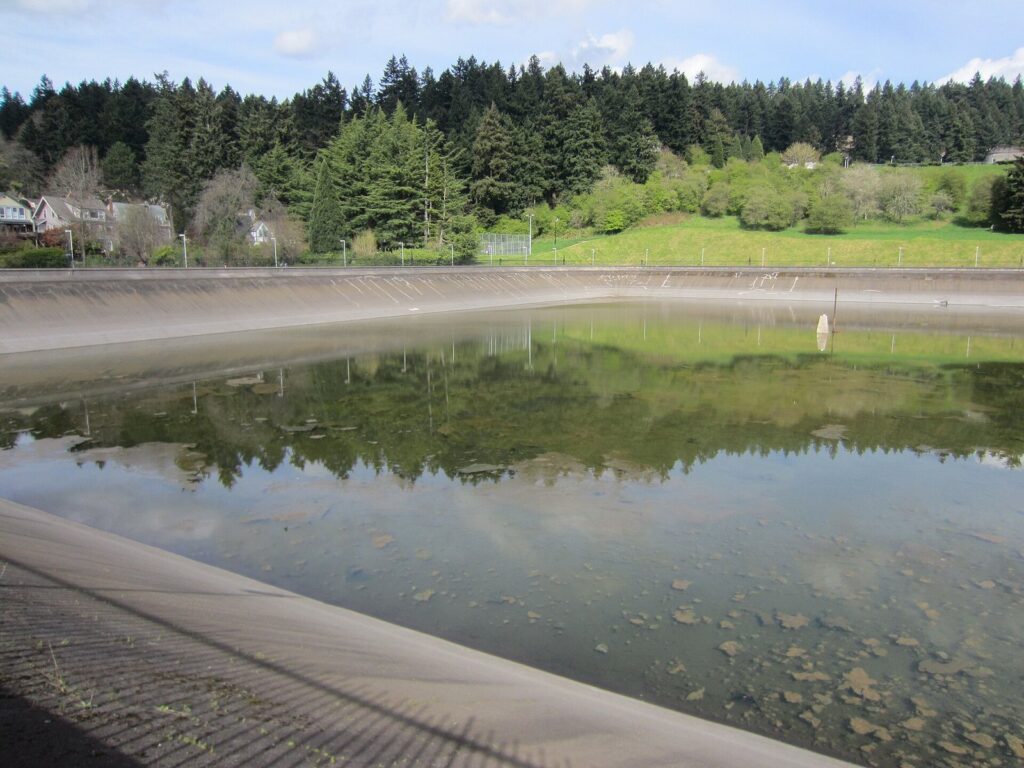
Mount Tabor is a volcanic cinder cone inside the city, with open reservoirs the city built in 1894 and 1911; the three that remain open no longer supply drinking water. The park is open from 5 a.m. to 10 p.m., and three mapped loops of about one to three miles start at the kiosk in the main parking lot. Time your arrival for the last hour of light. Note that the park roads are closed to cars all day on Wednesdays.
7:00 p.m.: Dinner on the east side
Ken’s Artisan Pizza, at 304 SE 28th Ave. in the Kerns neighborhood, has made Neapolitan-style pies since 2006 and sits on the way back toward downtown. For a booked table instead, our restaurants guide covers the east side’s best-known dining rooms. Ride a bus or MAX back to your hotel; after about midnight, MAX Bus service replaces the last few trips on most MAX lines.
Day 2 rain swap: The tram is enclosed, but low cloud can hide the view, so in heavy rain go straight to OMSI, eat at Hawthorne Asylum’s covered pod and trade Mount Tabor for a film at the Bagdad.
Day 3 by car: the Columbia River Gorge waterfall loop
Rent a car for this day only. The western Gorge starts about 30 minutes east of downtown, and the Historic Columbia River Highway threads its waterfalls before you rejoin I-84 for Cascade Locks and Hood River. Leave by 8:30 a.m. so the waterfalls come before lunch and Hood River after it.
| Leg | Drive time (approximate) | Stop |
|---|---|---|
| Downtown to Corbett and Crown Point | About 30 minutes | Vista House (free) |
| Crown Point to Multnomah Falls, on the old highway | 20-30 minutes, plus stops | Latourell, Bridal Veil, Multnomah and Horsetail falls |
| Multnomah Falls to Cascade Locks | About 20 minutes | Bridge of the Gods and the town waterfront |
| Cascade Locks to Hood River | About 25 minutes | Lunch, the waterfront and the Fruit Loop orchards |
| Hood River to Portland | About an hour | I-84 west |
Vista House and the waterfalls
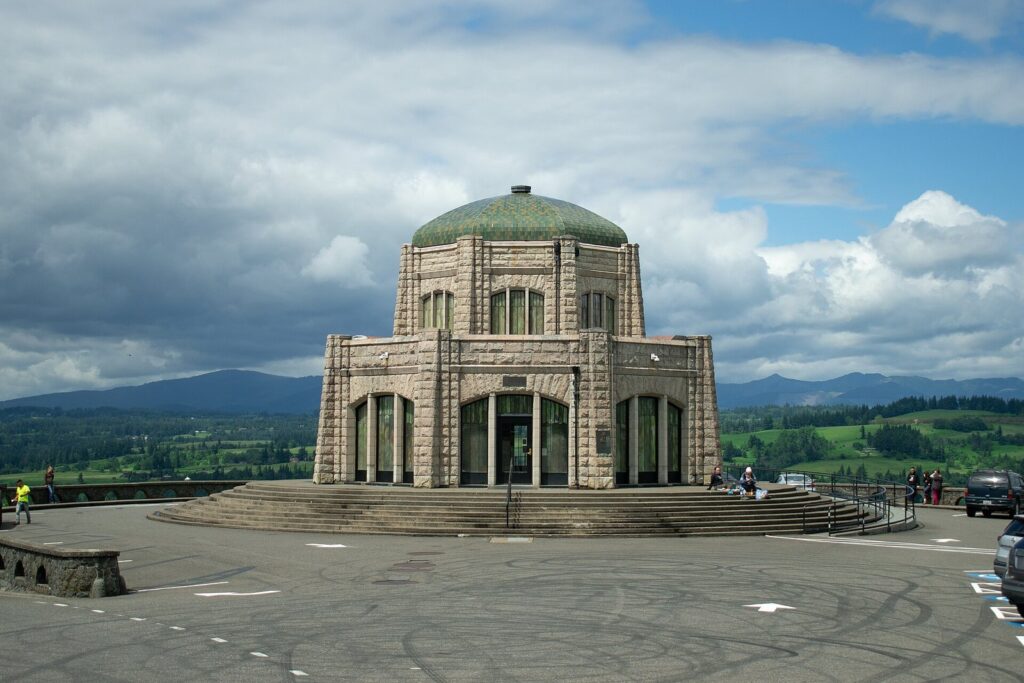
Vista House at Crown Point, opened in 1918, is free to enter. Its hours change by season, and the park closes when winds top 50 mph. Latourell Falls and Bridal Veil Falls now carry a state park day-use parking fee, $10 a day for Oregon residents and $12 for out-of-state visitors, after Oregon State Parks stopped waiving it at 22 more parks on March 30, 2026.
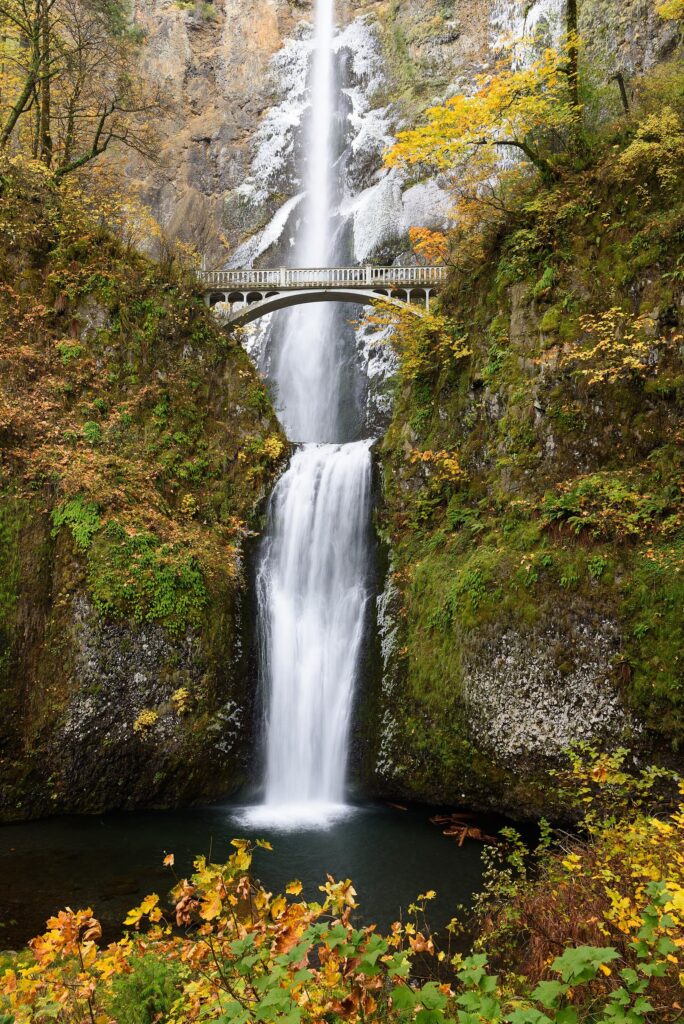
Multnomah Falls is free to see. In 2026, a timed use permit was required to park in the I-84 Exit 31 lot from May 22 to September 7 between 9 a.m. and 6 p.m. ($2 plus a $2 Recreation.gov fee), while drivers arriving on the Historic Columbia River Highway needed no permit. Outside that season, the lot works first come, first served. The falls’ restrooms are closed for renovation through November 2026, with limited portable toilets on site, and the historic lodge at the base has a restaurant, snack bar, espresso and a Forest Service visitor center. A few minutes east, the Horsetail Falls loop is open in 2026 and passes behind Ponytail Falls.
What’s closed in the Gorge
Check before you plan a hike. The Eagle Creek and Wahclella Falls trails are closed by Forest Service order through October 31, 2026, because of storm hazards. The Historic Columbia River Highway State Trail is closed between Eagle Creek and Cascade Locks after December 2025 storms and landslides, and the creek route into Oneonta Gorge remains closed in 2026, although the Oneonta Trail is open.
Cascade Locks and Hood River
At Cascade Locks, the Bridge of the Gods toll is $3, or $1.25 with a BreezeBy tag, if you want the view from the Washington side. Hood River is the lunch stop. From June through October some fruit is always in season on the Fruit Loop, the signed orchard drive south of town, and fall is apple and pear season. Head home on I-84; it’s about an hour back to Portland.
Day 3 without a car: MAX and the Columbia Gorge Express
You can do a shorter Gorge day without renting anything. Take MAX to Gateway Transit Center and board the Columbia Gorge Express, which runs seven days a week to Troutdale, Multnomah Falls, Cascade Locks and Hood River. On the timetable that was still posted in September 2026, the first bus left Gateway at 7:20 a.m., about 13 to 14 trips a day ran toward Hood River, and the last of 12 or 13 return trips left Hood River at 6:40 p.m. Tickets are sold through the Token Transit app or as a GOrge Pass; check the fare on Columbia Area Transit’s website before you go.
One warning: in extreme congestion, the bus can skip the Multnomah Falls stop because it can’t safely exit the freeway. On a busy summer weekend, ride to Hood River first and catch the falls on the way back, or go on a weekday. The car-free version trades Vista House and the old highway’s smaller falls for a relaxed afternoon in Hood River.
Day 3 in the city: Forest Park, Pittock Mansion and NW 23rd
If the Gorge forecast is grim, stay in town for a hike that works in drizzle. Start at the Lower Macleay trailhead at the end of NW Upshur Street, less than a mile from the streetcar’s stop at NW 23rd Avenue and Marshall Street. The trail follows Balch Creek for 0.8 mile to the Witch’s Castle, a mossy stone ruin, and the Wildwood Trail continues to the Pittock Mansion overlook, which the Forest Park Conservancy puts at 2.5 miles with nearly 450 feet of climbing.
Pittock Mansion’s grounds are a free public park until 9 p.m., and the house is open from 9 a.m. to 4 p.m. ($17 for adults; it opens at noon on Tuesdays from September to March). Walk back down the way you came and spend the afternoon on NW 23rd Avenue’s shops and cafes, then ride the streetcar back downtown. Our Portland hiking guide has longer options.
Where are the restrooms along the route?
Restrooms are the unglamorous part of any itinerary, and Portland has a city-designed answer: the Portland Loo, a free-standing public restroom. Five downtown Loos are generally open 24 hours a day, at the North Park Blocks at NW Couch Street, the South Park Blocks at SW Columbia Street, Tom McCall Waterfront Park at SW Taylor Street and at Ash Street, and the original Loo at NW Glisan Street and Fifth Avenue. Loos elsewhere in the city generally keep park hours and may close seasonally.
Beyond the Loos, plan around the places on this route that have their own: Midtown Beer Garden’s food cart pod, the paid attractions while you’re inside them (the Japanese Garden, the art museum, Lan Su and OMSI) and restaurants where you’re eating. On the Gorge day, remember that Multnomah Falls’ restrooms are closed through November 2026.
What if it rains? A swap for every block
Portland’s rain is usually frequent rather than heavy, so most days need small adjustments rather than a new plan. NOAA’s normals for the airport show measurable rain on about 13 or 14 days in an average October and 18 or 19 in November and December, against fewer than four in July and August.
| Planned block | Rain swap |
|---|---|
| Rose Test Garden | A quick look, then more time at the Japanese Garden or the art museum |
| Hoyt Arboretum | Skip it; head downtown early |
| Lunch at Midtown Beer Garden | Keep it: the seating is covered |
| Tilikum Crossing and the Esplanade | Streetcar across the river to OMSI |
| Hawthorne and Ladd’s Addition | Hawthorne Asylum’s heated pod and a film at the Bagdad Theater |
| Mount Tabor at sunset | Dinner early; the view won’t show up anyway |
| Gorge by car | Waterfalls run fuller in wet weather, but skip Vista House in high wind, or switch to the Forest Park day |
What does this 3-day plan cost?
Here are the fixed costs per adult at fall 2026 prices, before food and lodging. Oregon has no sales tax, so meals and shopping cost what the menu or tag says; hotels add about 16% in lodging taxes, rising to about 17.25% for stays that end on or after January 1, 2027.
| Day | Car-free | With the car day |
|---|---|---|
| Day 1 | $5.60 transit, $22.50 Japanese Garden, $27.50 art museum, $18 Lan Su: $73.60 | Same |
| Day 2 | $5.60 transit, $9 tram, $22.50 OMSI (optional): $14.60 to $37.10 | Same |
| Day 3 | $5.60 transit plus the Gorge Express fare | Rental car and fuel, $12 state park parking for out-of-state cars, $3 Bridge of the Gods toll |
The cheapest version of this plan, skipping OMSI, timing Day 1 for the art museum’s free first Thursday and choosing the Forest Park day for Day 3, costs about $66 in fixed costs over three days. Our guide to free things to do in Portland, Oregon has more ways to trim it.
Doing this itinerary with kids
The plan works for families with a few swaps. Children 6 and under ride TriMet free with a paying rider, and the youth fare for ages 7 to 17 is $1.40. The Portland Art Museum is free for anyone 17 or younger, so Day 1’s priciest stop costs only the adult tickets. On Day 2, OMSI stops being optional: youth tickets for ages 3 to 13 were $15.50 in fall 2026, and the museum offers quiet rooms and select low-sensory hours for children who find crowds hard.
The Oregon Zoo, a short walk from Washington Park station, can replace the Japanese Garden on Day 1 for younger children; it requires advance online tickets, at $26 for ages 12 and up and $21 for ages 2 to 11. On the Gorge day, Multnomah Falls and the Horsetail Falls loop suit most school-age legs. Our Portland with kids guide has more swaps by age.
How does the plan change by season?
- Summer (July and August): The driest stretch, with highs near 82°F. Start Day 3 early, and if you drive the I-84 route to Multnomah Falls during the permit season, reserve the timed permit on Recreation.gov.
- Fall (September to November): The Japanese Garden says its color is usually vivid from mid to late October and at or near its strongest from late October to early November, so book that ticket the moment its 10-day window opens. Hoyt’s Maple Trail peaks around the same time.
- Winter (December to March): The park shuttle keeps its shorter 10 a.m. to 4 p.m. schedule, days are short, and Vista House’s wind closures are more likely. On December 7, 2026, the Christmas Ships parade the Willamette from 7 to 9 p.m., a free show from the waterfront after Day 1’s dinner.
- Spring (April to June): Gardens bloom, and the Rose Festival runs from late May through June (May 22 to June 28 in 2026); expect busier waterfront weekends.
For month-by-month weather and events, see our guide to the best time to visit Portland, and for the full set of plans, from a long layover to a week, return to our Portland, Oregon itinerary hub.
3 Days in Portland Itinerary FAQ
Is three days enough for Portland?
For a first visit, yes. Two days cover the west side and the east side at a reasonable pace, and the third gives you the Columbia River Gorge or Forest Park. What three days won’t cover is a second day trip; the Oregon Coast, Mount Hood and wine country each need a full extra day.
Can you do this itinerary without a car?
Days 1 and 2 are designed for transit and walking, and TriMet’s $5.60 daily cap keeps them cheap. Day 3 works by MAX and the Columbia Gorge Express to Multnomah Falls and Hood River, or as the city-based Forest Park day. You give up Vista House and the old highway’s smaller waterfalls without a car.
Where should you stay for a three-day Portland trip?
Downtown or the Pearl District, within a few blocks of a MAX or streetcar stop, so that both city days start at your door. If you’re renting a car only for Day 3, pick it up that morning rather than paying to park it for three nights. Our where to stay in Portland guide compares the areas.
What should you book before this trip?
The Portland Japanese Garden, which sells tickets up to 10 days ahead, and any dinner reservations you care about. In summer, add the Multnomah Falls timed permit if you’ll drive the I-84 route. Everything else on this plan, from the tram to Lan Su, can be bought on the day.
How much walking is this plan?
Expect roughly four to five miles on each city day, more if you add Hoyt Arboretum or Mount Tabor’s longer loops, and about five miles round trip on the Forest Park alternative. Every leg can be shortened with MAX, the streetcar or a bus, and the river loop is flat and paved.
Related Portland Guides
- Portland, Oregon Itinerary: 1, 2, 3 and 4 Days: shorter and longer versions of this plan
- Portland, Oregon First-Time Visitor Guide: the planning steps before the trip
- Columbia River Gorge from Portland: routes, permits and a realistic Gorge day
- Getting Around Portland, Oregon: MAX, the streetcar, bikes and parking
- Portland, Oregon Food Carts Guide: more pods to swap into the lunch stops
Sources and verification
The details on this page were checked between September 23 and October 1, 2026 against the agencies and operators listed below; the guide is compiled from their published information and claims no first-hand visits.
- TriMet: fares and MAX Bus
- Explore Washington Park: by transit and free shuttle
- Portland Parks & Recreation: International Rose Test Garden
- Portland Japanese Garden: hours and admission
- Hoyt Arboretum
- Portland Art Museum: admission
- Lan Su Chinese Garden: visit
- Powell’s City of Books
- Portland Parks & Recreation: the Portland Loo
- Portland Streetcar and Portland Aerial Tram: fare
- OMSI: visit
- Portland Parks & Recreation: Eastbank Esplanade and Mt. Tabor Park
- Oregon State Parks: Vista House and day-use parking changes
- ODOT: waterfall corridor permits
- U.S. Forest Service: Multnomah Falls and Eagle Creek and Wahclella closure
- Multnomah Falls Lodge
- Port of Hood River: bridge tolls and Hood River Fruit Loop
- Columbia Area Transit: Columbia Gorge Express
- Forest Park Conservancy: Lower Macleay Trail and Pittock Mansion
- NOAA: U.S. climate normals, 1991-2020
- Christmas Ships: parade schedule
Portland Tourism Guide is an independent publication, not affiliated with Travel Portland, the City of Portland or any business named here.
Photo credits
- Hawthorne Bridge and downtown Portland: photo by formulanone from Huntsville, United States, Wikimedia Commons (CC BY-SA 2.0)
- Hoyt Arboretum: photo by sunoochi from Sapporo, Hokkaido, Japan, Wikimedia Commons (CC BY 2.0)
- Lan Su Chinese Garden: photo by Daderot, Wikimedia Commons (CC0)
- Portland Aerial Tram: photo by Doug Kerr from Albany, NY, United States, Wikimedia Commons (CC BY-SA 2.0)
- Mount Tabor reservoir: photo by Another Believer, Wikimedia Commons (CC BY-SA 3.0)
- Vista House, Crown Point: photo by Josh B, Wikimedia Commons (CC BY-SA 2.0)
- Multnomah Falls: photo by King of Hearts, Wikimedia Commons (CC BY-SA 4.0)