The best day trips from Portland, Oregon are the Columbia River Gorge, where Multnomah Falls is about 30 miles east; the north Oregon coast at Cannon Beach, about 80 miles west; Mount Hood and Timberline Lodge, about 60 miles east; and Willamette Valley wine country, under an hour southwest. Closer in, Sauvie Island’s farms and beaches are about 20 minutes from downtown. For a longer day, Silver Falls State Park and Mount St. Helens each justify an early start. If you can do only one, do the Gorge: it’s the closest big landscape to the city and the only one with a frequent bus.
This guide compares them on the things that decide a day out: drive and transit time, season, what you’ll pay in permits and parking, and who each trip suits. The caveat that changes plans in 2026 and 2027: Mount St. Helens’ Johnston Ridge Observatory stays closed until 2027 while its washed-out road is rebuilt, and Oregon State Parks now charges a day-use parking fee at more parks, including Silver Falls and Ecola. Permits, fees, closures and bus service were checked September 24, 2026 against the agencies’ and operators’ own websites.
On this page: Compare the trips · Time and transport · What it costs · Columbia River Gorge · The coast · Mount Hood · Wine country · Silver Falls · Sauvie Island · Mount St. Helens · Half-day trips · Sample days · Which trip for whom · By season · Rain or overnight · FAQ
Which day trip from Portland should you take?
Each direction out of Portland leads to a different landscape, which makes the choice easier than it looks. East is the Gorge and Mount Hood, west is the coast, southwest is wine country, south is Silver Falls, and north across the Columbia is Mount St. Helens. Here’s how they compare.
| Trip | Direction and drive | Without a car? | Best season | Fees to plan for | Best for |
|---|---|---|---|---|---|
| Columbia River Gorge | East; about 30 miles to Multnomah Falls, 60 to Hood River | Yes: MAX plus the Columbia Gorge Express | All year; waterfalls peak in spring | Timed-entry permit for the Multnomah Falls lot in season (2026: May 22-Sept. 7) | First-timers, waterfalls |
| North coast (Cannon Beach, Astoria) | West; about 80 miles to Cannon Beach | Yes, barely: two POINT buses a day | Summer; winter for storms | State park day-use permit at Ecola ($10 Oregon residents, $12 visitors) | Beaches, tide pools, sea stacks |
| Mount Hood | East; about 60 miles to Timberline Lodge | Limited, via a county bus from Sandy | Summer for trails; winter for snow | Sno-Park permit Nov. 1-April 30 ($4 a day) | Mountain views, snow play |
| Willamette Valley wine country | Southwest; about 25-30 miles to the Dundee Hills | Only on a tour | Late summer and fall harvest | Tasting fees; a designated driver | Wine lovers |
| Silver Falls State Park | South; about 60 miles | No | Winter and spring flow; fall color | State park day-use permit ($10 or $12) | Hikers who want ten waterfalls |
| Sauvie Island | Northwest; about 10 miles to the bridge | Hard; most people drive or bike | Summer berries and beaches; October pumpkins | ODFW parking permit at wildlife-area lots ($10 a day) | Families, farms, birds |
| Mount St. Helens | North into Washington; about 2 hours to the west side’s viewpoints | No | Summer and early fall | Johnston Ridge closed until 2027 | Volcano history |
Verdict: for a first visit, the Gorge wins on distance, scenery and transit. The coast is the better second trip, and Mount Hood is the one to save for a clear day, since the mountain disappears in cloud more often than visitors expect.
How long does each day trip take, door to door?
Drive times below assume light traffic from downtown. Real days run longer, because Portland’s exits jam on summer Fridays and Sundays and the best parking lots fill by mid-morning.
| Destination | Drive each way | Transit option | Realistic day | Traffic to expect |
|---|---|---|---|---|
| Multnomah Falls | 35-45 min | MAX to Gateway Transit Center, then the Columbia Gorge Express | 4-6 hours | I-84 on summer weekends |
| Hood River | About 1 hour | Columbia Gorge Express | 7-9 hours | I-84 on summer weekends |
| Cannon Beach | About 1.5 hours | POINT NorthWest bus from Union Station, two a day | 9-10 hours | US 26 west on Friday evenings, east on Sunday afternoons |
| Astoria | About 2 hours | POINT NorthWest bus | 10 hours | US 26 or US 30 |
| Timberline Lodge | About 1.5 hours | Mount Hood Express bus from Sandy | 7-9 hours | US 26 through Sandy; snow and chains in winter |
| Dundee Hills wineries | 45-60 min | Organized tours only | 6-8 hours | OR 99W through Newberg on weekends |
| Silver Falls | About 1.5 hours | None | 7-8 hours | I-5 south at rush hour |
| Sauvie Island | 20-25 min | Weekday commute-time buses only | 3-6 hours | US 30 and the island bridge on October weekends |
| Mount St. Helens (west side) | About 2 hours | None | 9-10 hours | The I-5 bridge to Washington at rush hour |
Two rules keep these days pleasant. Leave by 8 a.m., especially for Multnomah Falls, the coast and Mount Hood on weekends. And don’t combine directions: the coast and the Gorge are more than 100 miles apart, and trying both in one day means spending most of it on the highway.
What does a day trip from Portland really cost?
Fuel and food are the big costs, and they vary too much to quote. The fees are fixed, though, and they catch visitors who assumed the outdoors was free. Here’s what to budget in fall 2026.
| Fee | Where it applies | Price | How to pay |
|---|---|---|---|
| Oregon State Parks day-use permit | Silver Falls, Ecola and a growing list of parks (more added in March 2026) | $10 a day for Oregon residents, $12 for visitors; 12-month permit $60 or $75 | Fee machine, posted QR code or online the same day |
| Sno-Park permit | Winter parking at Mount Hood’s Sno-Parks, Nov. 1-April 30 | $4 a day, $9 for three days, $25 for the season | DMV, online or retail agents (who may add a fee) |
| ODFW Wildlife Area parking permit | Sauvie Island’s wildlife-area lots and beaches | $10 a day, $30 a year | ODFW license outlets and online |
| Multnomah Falls timed-entry permit | The I-84 lot at Exit 31, in season only | Reserve on Recreation.gov (2026 season: May 22-Sept. 7) | Online, before you go |
| Federal recreation pass | Many Mount Hood and Gorge trailheads on national forest land | Varies by pass | Online or at ranger stations and retailers |
Two money details are worth knowing. State parks stay free if you arrive on foot, by bike or by public transit, since the fee is for parking, not entry. And Oregon’s fuel rules differ by county: in rural counties such as Hood River, Clatsop and Tillamook you can pump your own gas at any station, at any hour, while stations in the Portland area may offer self-serve at up to half their pumps, at the same price as the attended ones.
Going car-free changes the math. A TriMet fare is $2.80 for 2.5 hours and caps at $5.60 a day, which covers the MAX ride to the Gorge bus; the Columbia Gorge Express and the POINT coast bus sell their own tickets, with fares on their operators’ sites. If you rent a car, rent it for the day trips only; for the city days, our Portland travel guide explains why you won’t need one.
The Columbia River Gorge: the easiest big day
The Gorge is a river canyon up to 4,000 feet deep cut through the Cascades, and its western end, with the densest cluster of waterfalls in the region, starts about half an hour east of downtown. The classic route leaves I-84 for the Historic Columbia River Highway, climbs to Vista House at Crown Point, then drops past Latourell, Wahkeena and a string of smaller falls to Multnomah Falls, before rejoining the interstate east to Hood River for lunch.
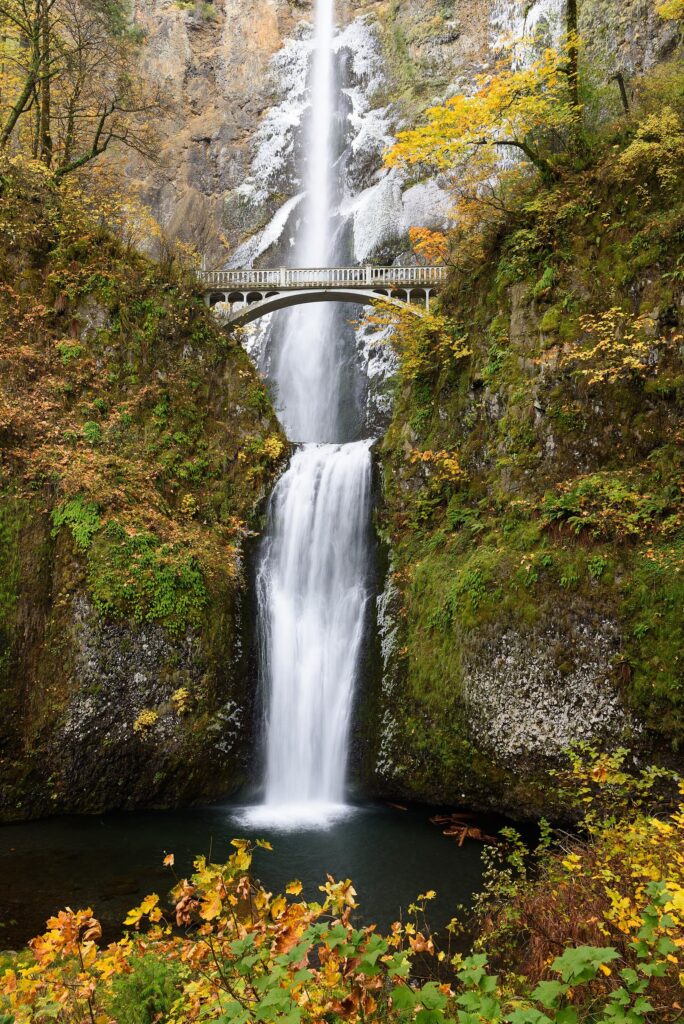
Multnomah Falls’ I-84 lot needed a timed-entry permit from May 22 to September 7 in 2026, with separate rules on the historic highway approach; outside that season, no permit is needed. Without a car, ride any MAX Red, Blue or Green Line train to Gateway Transit Center and board the Columbia Gorge Express, which runs seven days a week to Troutdale, Multnomah Falls, Cascade Locks and Hood River. Its spring 2026 timetable, still posted in September, listed about a dozen trips each way. In extreme congestion the bus can skip the Multnomah Falls stop, so ride an early one on summer weekends.
Verdict: the best first day trip for nearly everyone. Think twice if you want solitude on a summer Saturday; come on a weekday or in the rain, when the falls are fuller and the paths are emptier. Our Portland itineraries include a timed Gorge day by car and by bus.
The north Oregon coast: Cannon Beach, Ecola and Astoria
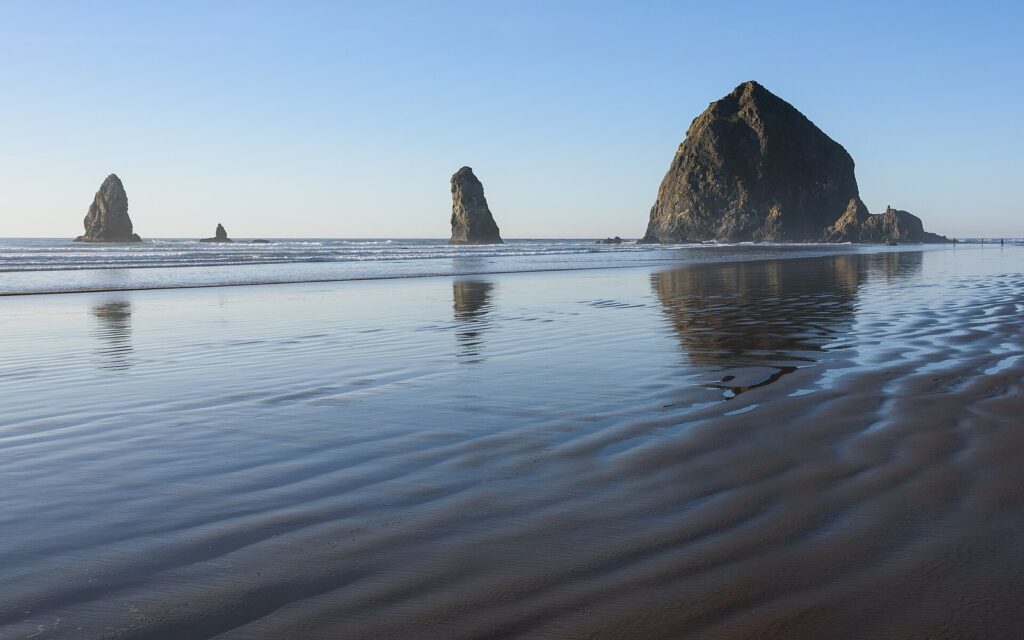
The nearest stretch of coast is the north end, reached on US 26 through the Coast Range. Cannon Beach, about 80 miles and 1.5 hours from downtown, is the classic target: a long sand beach below Haystack Rock, tide pools at its base at low tide, and a small town of galleries and cafes. Ecola State Park, just north, adds headland viewpoints and forest trails, and it now requires Oregon’s day-use parking permit ($10 for residents, $12 for visitors).
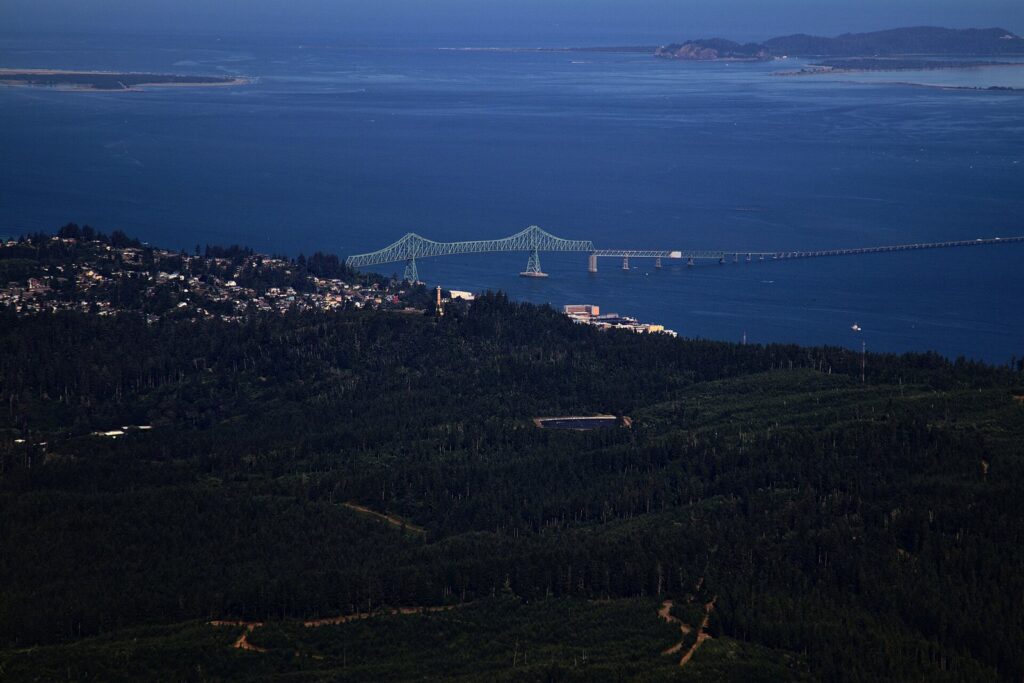
Astoria, at the mouth of the Columbia about two hours away, is the history option: a hillside port town with Victorian houses, the Astoria Column on the ridge above town and the Astoria-Megler Bridge running more than four miles across the river to Washington. Combining Astoria and Cannon Beach makes a long loop, about 25 miles apart on US 101, and it works best if you drive out one highway and back the other.
Car-free is possible but tight. The POINT NorthWest bus runs daily, including holidays, from Portland’s Union Station to the north coast, serving 10 communities along US 26 and US 101, but with two buses a day in each direction, a same-day return leaves limited time on the beach. Check the timetable before committing.
Coast safety, every season: sneaker waves can surge far up the beach without warning and are most common from fall through spring. Never turn your back on the ocean, stay off logs at the waterline, and check the tide before heading to the rocks.
Mount Hood: Timberline Lodge and the mountain loop
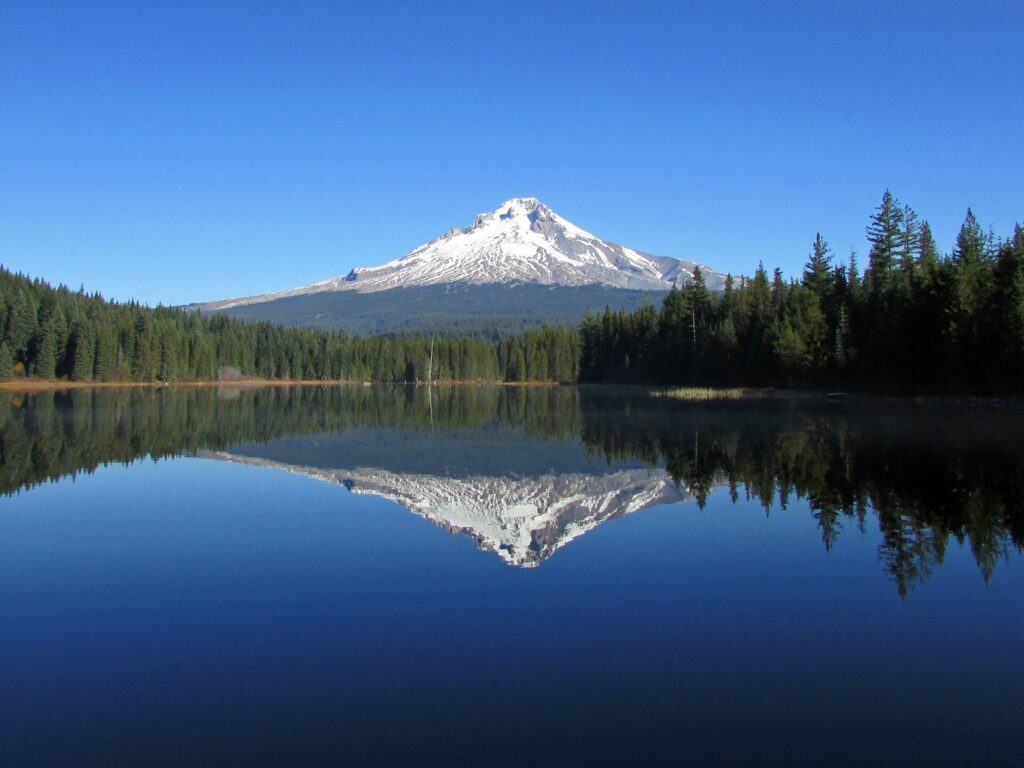
Mount Hood, Oregon’s highest peak, rises about 60 miles east of downtown, and on a clear day it’s visible from half the city. The day trip follows US 26 through Sandy and Government Camp to Timberline Lodge, the stone-and-timber lodge built by Depression-era work crews in the 1930s, which sits high on the mountain’s south side. Trillium Lake, just below Government Camp, is where most of the reflection photos are taken.
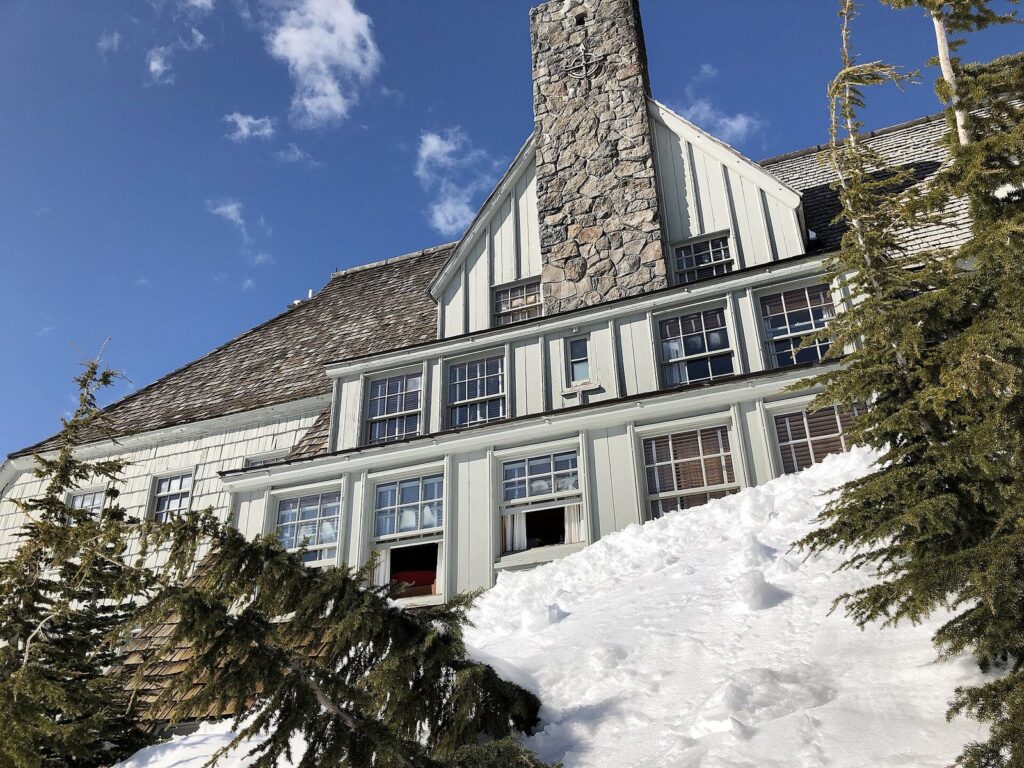
Winter changes the rules. From November 1 to April 30, parking at the mountain’s Sno-Parks requires a permit ($4 a day, $9 for three days, $25 for the season), and on US 26 you should carry chains or traction tires and check ODOT’s TripCheck before leaving. In summer, many trailheads on national forest land require a federal recreation pass. Without a car, Clackamas County’s Mount Hood Express bus connects Sandy with Government Camp and Timberline; check its current schedule, since it varies by season.
Verdict: spectacular on a clear day and underwhelming in cloud, so keep it flexible and go on the best forecast of your trip.
Willamette Valley wine country
Oregon’s best-known wine region starts less than an hour southwest of Portland, where the Dundee Hills and the towns of Newberg, Dundee and McMinnville hold hundreds of wineries, most of them focused on pinot noir. A day here is a drive between two or three tasting rooms with lunch in between, so a designated driver, a tour or a hired car is part of the plan, not an option. Many tasting rooms work by reservation, especially on weekends. McMinnville adds a non-wine stop: the Evergreen Aviation & Space Museum, home of Howard Hughes’s giant wooden flying boat, the Spruce Goose.
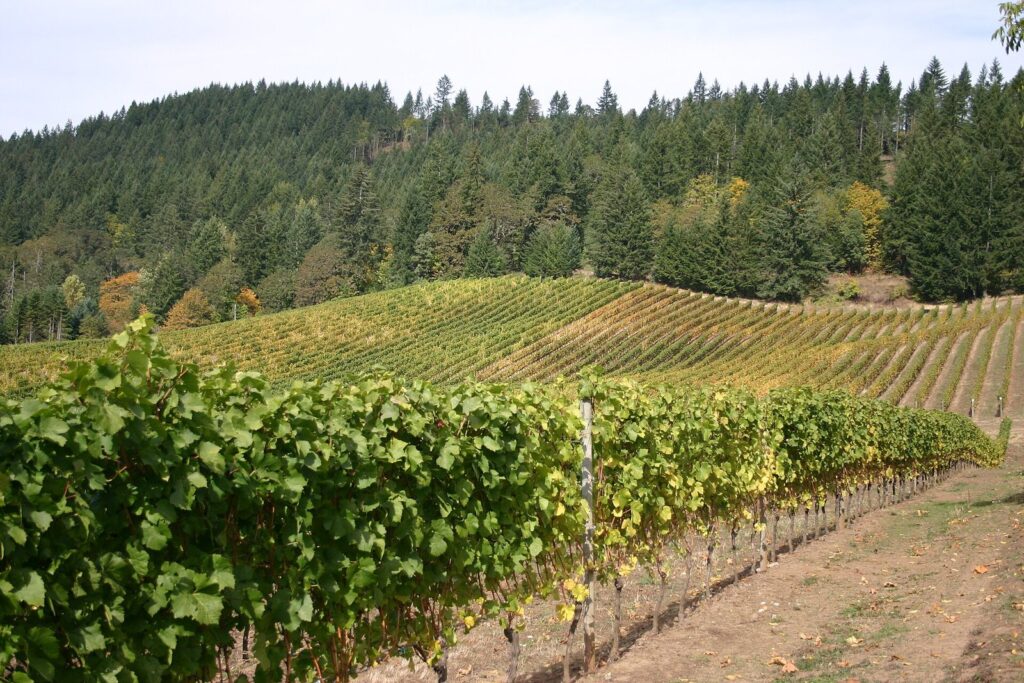
Think twice if you’re going on a fall weekend without reservations. Harvest season is beautiful and busy, and OR 99W through Newberg slows to a crawl on Saturday afternoons.
Silver Falls State Park: ten waterfalls on one trail
Silver Falls, Oregon’s largest state park, sits in the foothills east of Salem, about 1.5 hours south of Portland. Its signature hike, the Trail of Ten Falls, is a 7.2-mile loop through a forested canyon past ten waterfalls, including South Falls, which drops 177 feet, and several you can walk behind. Shorter options reach South Falls from the main day-use area in a few minutes. Pets aren’t allowed on the canyon trail, so plan accordingly if you travel with a dog.
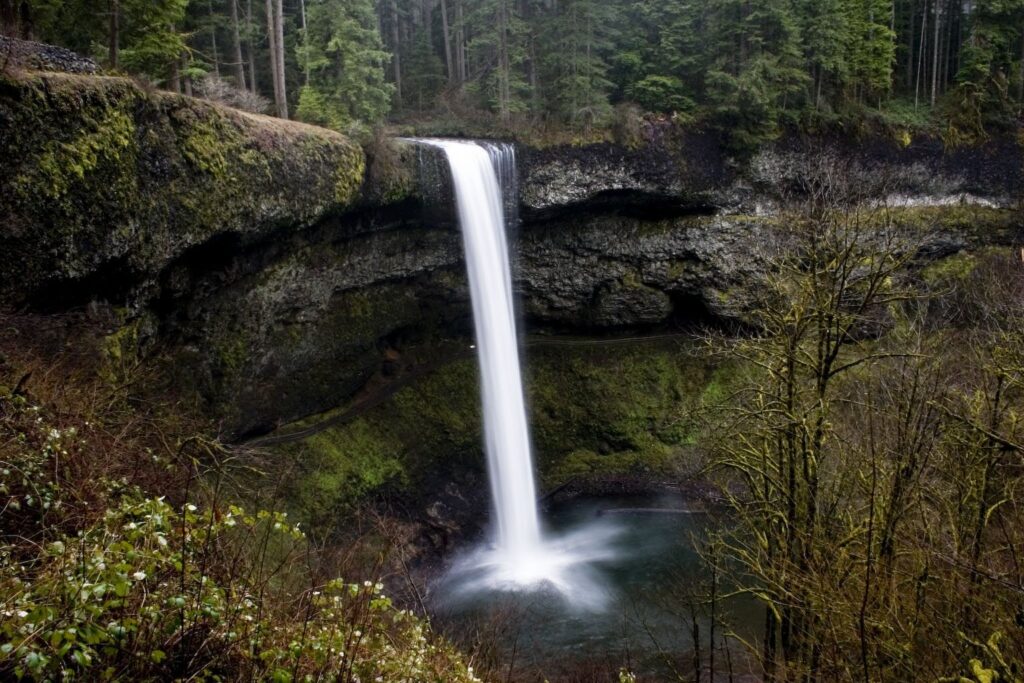
The park requires Oregon’s day-use parking permit: $10 a day for residents and $12 for visitors, bought at the fee machine, by QR code or online. There’s no transit, so this is a car trip. Winter and spring deliver the fullest falls, fall adds color, and summer brings the biggest crowds and the lowest water.
Verdict: the best pure hiking day trip from Portland, and a good alternative to the Gorge when you’ve already seen Multnomah Falls.
Sauvie Island: farms, beaches and birds
Sauvie Island, one of the largest river islands in the country, sits where the Willamette meets the Columbia, about 10 miles northwest of downtown on US 30. It’s mostly farmland and wildlife area, with u-pick berry and flower farms in summer, pumpkin patches and corn mazes in October, sandy Columbia River beaches, and flat roads that suit cycling. Much of the island is a state wildlife area known for its birds, especially in the migration seasons.

Parking at the wildlife area’s lots and beaches requires an ODFW Wildlife Area parking permit, $10 a day or $30 a year. In summer 2026 a separate beach permit applied on weekends at Walton, Collins and North Unit beaches, so check ODFW’s page for 2027 rules before a summer visit. Farms have their own parking. Transit is thin: since TriMet’s August 2026 changes, bus service to the island runs only at weekday commute times, so most visitors drive or bike over the bridge.
Verdict: the easiest half-day escape from the city, and the best one for families with young children.
Mount St. Helens: worth it now?
Mount St. Helens, about two hours north in Washington, erupted on May 18, 1980, and the blast zone is the reason to go. The classic day trip followed State Route 504 up the Toutle River valley to Johnston Ridge Observatory, which looks straight into the crater. That trip is on hold. A debris slide on May 14, 2023 destroyed the Spirit Lake Outlet Bridge at milepost 49, and the highway has been closed at the milepost 45.2 gate ever since. Construction of a new bridge began April 15, 2026 and is expected to finish in fall 2026, but Washington’s transportation department puts the observatory’s reopening in 2027, after the Forest Service restores power and repairs the building.
Until then, the west side is a partial trip: the lower highway’s viewpoints still show the mountain on clear days, but not the crater-edge view that made it famous. The south side, reached through Woodland and Cougar, has the Ape Cave lava tube and other lava-flow trails; check the Forest Service’s page for seasons and any reservation rules before you go.
Verdict: for most visitors in late 2026, the Gorge or Silver Falls is the better long day. Revisit Mount St. Helens once Johnston Ridge reopens.
Shorter trips: half a day or less
Not every outing needs a full day. These work as half-days or as stops on the way to something else:
- Fort Vancouver National Historic Site, across the Columbia in Vancouver, Washington, is a reconstructed Hudson’s Bay Company fur-trading post, about 20 minutes from downtown outside rush hour.
- Oregon City, 20-25 minutes south, was the end of the Oregon Trail, and its overlooks face Willamette Falls, the big horseshoe waterfall on the Willamette.
- Multnomah Falls alone is a three- to four-hour outing by car, or a half-day on the Gorge Express.
- Sauvie Island, described above, fills a morning or an afternoon.
If you’re choosing where to stay with day trips in mind, our guide to where to stay in Portland covers which side of town faces which highway.
Three sample day plans
These are starting points, timed for a fall weekday with light traffic. Add an hour for summer weekends, and swap stops freely; the point is the order, which keeps you ahead of the crowds and out of rush hour on the way home.
The coast: Ecola, Cannon Beach and (maybe) Astoria
| Time | Stop | Notes |
|---|---|---|
| 8:00 a.m. | Leave Portland on US 26 west | About 1.5 hours to Cannon Beach |
| 9:30 a.m. | Ecola State Park | Headland viewpoints and forest trails; day-use permit $10 or $12 |
| 11:00 a.m. | Cannon Beach and Haystack Rock | Time the beach walk to low tide |
| 1:00 p.m. | Lunch in town | Cafes along Hemlock Street |
| 2:30 p.m. | Optional: north to Astoria | About 25 miles on US 101; the Astoria Column and the bridge view |
| 5:00 p.m. | Head home | US 30 from Astoria, or US 26 from Cannon Beach |
Mount Hood: Trillium Lake, Timberline or the full loop
Leave by 8 a.m. on US 26 east through Sandy. Stop at Trillium Lake first, while the air is still, for the reflection; then drive up to Timberline Lodge for the building itself and, on a clear day, the view south along the Cascades. Lunch at the lodge or in Government Camp. From summer through mid-fall, turn the day into a loop: continue east on US 26, take OR 35 north around the mountain’s east side to Hood River, and return west on I-84 through the Gorge, about 165 miles in all. OR 35 can require chains or close in winter, so check TripCheck before committing to the loop from November on.
Wine country: the Dundee Hills and McMinnville
Book two tasting appointments before you go, one late in the morning and one mid-afternoon, and put lunch between them. A sensible day starts in the Dundee Hills, less than an hour from downtown, moves on to McMinnville’s small downtown for lunch and the Evergreen Aviation & Space Museum, and finishes with the second tasting on the way back. With a designated driver, allow six to eight hours door to door; on a tour, the operator handles the timing and the driving.
Which day trip suits you?
| If you are | Go to | Why | Skip |
|---|---|---|---|
| A first-time visitor with one free day | The Columbia River Gorge | Close, spectacular, works by bus | Mount St. Helens until 2027 |
| Without a car | The Gorge on the Columbia Gorge Express | About a dozen trips each way | Wine country, Silver Falls |
| Traveling with young kids | Sauvie Island or Cannon Beach | Farms, sand and short walks | The Trail of Ten Falls in full |
| A hiker | Silver Falls, or Mount Hood in summer | Long trails with big payoffs | The coast’s town strips |
| A wine lover | The Dundee Hills and McMinnville | Oregon pinot noir at the source | Weekend afternoons without bookings |
| Visiting in winter | The Gorge’s waterfalls, or Mount Hood’s snow | High water; snow play with a Sno-Park permit | Mountain trails; exposed coast beaches in storms |
| A photographer | Trillium Lake, Crown Point, Haystack Rock | Reflections, river views, sea stacks | Midday light at the coast |
| Short on time | Multnomah Falls or Sauvie Island | Both fit in half a day | Astoria, which needs a full day |
For the full picture of what to do in the city itself, see our list of things to do in Portland, Oregon.
When is the best time for day trips from Portland?
| Season | Best picks | Watch for |
|---|---|---|
| Winter (December-February) | Gorge and Silver Falls waterfalls at full flow; Mount Hood snow; coast storm watching | Sno-Park permits and traction devices on Mount Hood; icy trails; sneaker waves |
| Spring (March-May) | Waterfalls at their peak, wildflowers in the Gorge, quiet wine country | Rain; Multnomah Falls permits starting in late May (May 22 in 2026) |
| Summer (June-August) | The coast, Mount Hood trails, Sauvie Island beaches and berries | Traffic, full parking lots, summer beach permits on Sauvie Island, late-summer wildfire smoke |
| Fall (September-November) | Wine harvest, Hood River’s orchards, Sauvie Island pumpkins, Gorge color | Harvest-weekend crowds in wine country; the first mountain snow in November |
Late summer smoke deserves a word. In some years wildfires close trails and fill the Gorge and the Cascades with haze in August and September. Check the Forest Service and air-quality reports before a mountain or Gorge day at that time of year, and keep the coast in reserve, since it often stays clearer.
Rainy days and overnight stays
If it rains: go to the waterfalls. The Gorge and Silver Falls are at their best in wet weather, when the falls run full and the trails empty out; bring a rain shell and shoes with grip, and skip viewpoints like Crown Point if the clouds are down. The coast in steady rain is atmospheric from a cafe window and miserable on a long beach walk, so save it for a drier day unless storm watching is the point. Wine country and McMinnville’s aviation museum are the indoor options.
When to stay the night: the outings that strain as day trips are Astoria combined with Cannon Beach, the full Mount Hood Loop on short winter days, and anything pairing Hood River’s orchards with Gorge hikes. One night in Hood River, on the coast or on the mountain turns each into an easy trip. Budget for lodging taxes outside Portland too: Oregon’s statewide lodging tax is 1.5% for stays ending by December 31, 2026 and 2.75% after that, and many cities and counties add their own.
Driving tips for day trips from Portland
- Check TripCheck before every mountain or Gorge drive. ODOT’s site shows closures, chain requirements and road cameras.
- Fuel up in the city or in rural counties. Self-serve is legal around the clock in rural counties such as Hood River, Clatsop and Tillamook, and part-time or partial in the Portland area.
- Expect dead zones. Cell coverage drops in parts of the Gorge, the Coast Range and on the mountain, so download maps before you go.
- Time the return. US 26 east from the coast on Sunday afternoons and I-84 west from the Gorge on summer weekend evenings are the slowest drives of the week.
- Don’t circle full lots. At Multnomah Falls, Ecola and Trillium Lake, a full lot means move on to the next stop and come back later.
What to bring on a day trip from Portland
- Layers and a rain shell, in every season. The coast and the mountain run colder and windier than the city.
- Traction devices for Mount Hood from November through spring, plus a Sno-Park permit if you’ll park at a Sno-Park.
- The right permit or pass: Oregon State Parks day-use, ODFW for Sauvie Island, a federal pass for national forest trailheads.
- An offline map, since cell service fades in the Gorge, the Coast Range and on the mountain.
- Water and snacks for trail days; services are thin between towns.
- A tide table for coast days, and a plan to be off the rocks well before high tide.
Day Trips from Portland, Oregon FAQ
What is the best day trip from Portland, Oregon?
The Columbia River Gorge. Multnomah Falls is about 30 miles east, the waterfalls along the old highway fill a morning, and Hood River makes a good lunch stop about an hour from downtown. It works in every season and, unlike the coast or Mount Hood, it has a frequent bus, the Columbia Gorge Express, for travelers without a car.
Can you take day trips from Portland without a car?
Yes, to a few places. MAX plus the Columbia Gorge Express reaches Multnomah Falls and Hood River seven days a week. The POINT NorthWest bus reaches Cannon Beach and Astoria, but with two buses a day each way. A county bus serves Mount Hood from Sandy. Wine country, Silver Falls and Mount St. Helens realistically need a car or a tour.
Is Johnston Ridge Observatory open in 2026?
No. The road to it, State Route 504, has been closed at milepost 45.2 since a May 2023 slide destroyed a bridge. A replacement bridge is under construction and expected to finish in fall 2026, but the observatory itself isn’t scheduled to reopen until 2027, after the Forest Service completes its own repairs.
How far is the Oregon coast from Portland?
Cannon Beach, the closest classic coast town, is about 80 miles and 1.5 hours west on US 26. Astoria, at the mouth of the Columbia, is about two hours. Weekend traffic can add an hour, especially heading west on summer Fridays and back east on Sunday afternoons.
Do I need a pass or permit for day trips near Portland?
Often. Oregon State Parks charges $10 a day for residents and $12 for visitors at parks like Silver Falls and Ecola. Sno-Parks need a permit from November 1 to April 30, Sauvie Island’s wildlife-area lots need an ODFW permit, many national forest trailheads need a federal recreation pass, and Multnomah Falls’ main lot needs a timed-entry permit in summer.
Can I see the Gorge and Mount Hood in one day?
Yes, by driving the Mount Hood Loop: US 26 to Government Camp and Timberline, OR 35 north to Hood River, then I-84 west through the Gorge, about 165 miles in all. It’s a full day with short stops and works best from summer to mid-fall. In winter, OR 35 can require chains or close, so check TripCheck first.
What’s a good half-day trip from Portland?
Sauvie Island, about 20 minutes away, for farms, beaches and birds; Multnomah Falls, about 40 minutes by car; or Fort Vancouver National Historic Site across the Columbia. All three fit into a morning or an afternoon and leave the rest of the day for the city.
Related Portland Guides
- Portland, Oregon Itinerary: timed plans with a Gorge day by car or by bus.
- Where to Stay in Portland, Oregon: bases that face the highways to the Gorge, the coast and wine country.
- Portland, Oregon Travel Guide: when to go, getting around and the full trip budget.
- Things to Do in Portland, Oregon: the city’s sights for the days you stay in town.
Sources and verification
Permits, fees, closures and transit details on this page were checked on September 24, 2026 against the agencies and operators listed below. The guide is compiled from those sources and claims no first-hand visits.
- Oregon State Parks: day-use parking permits
- Oregon DMV: Sno-Park permits
- ODOT TripCheck
- Oregon Department of Fish and Wildlife: parking at Sauvie Island Wildlife Area
- WSDOT: rebuilding SR 504 to Mount St. Helens
- USDA Forest Service: Johnston Ridge Observatory
- Recreation.gov (Multnomah Falls timed entry)
- Columbia Area Transit: Columbia Gorge Express
- POINT: NorthWest bus, Portland to Astoria
- TriMet fares
- TriMet: August 2026 service changes
- Oregon State Fire Marshal: self-serve fueling
Portland Tourism Guide is an independent publication, not affiliated with Travel Portland, the City of Portland or any business named here.
Photo credits
- Mount Hood from Trillium Lake: photo by Jeffhollett, Wikimedia Commons (CC BY-SA 4.0)
- Multnomah Falls: photo by King of Hearts, Wikimedia Commons (CC BY-SA 4.0)
- Haystack Rock, Cannon Beach: photo by King of Hearts, Wikimedia Commons (CC BY-SA 4.0)
- Astoria and the Astoria-Megler Bridge: photo by Pete Forsyth, Wikimedia Commons (CC BY 3.0)
- Timberline Lodge: photo by Tim-desser, Wikimedia Commons (CC0)
- Willamette Valley vineyard: photo by David Burn, Wikimedia Commons (CC BY-SA 2.0)
- South Falls, Silver Falls State Park: photo by Kelvin Kay — Kkmd at English Wikipedia, Wikimedia Commons (CC BY-SA 3.0)
- Pumpkin field on Sauvie Island: photo by Turtle21680, Wikimedia Commons (CC0)